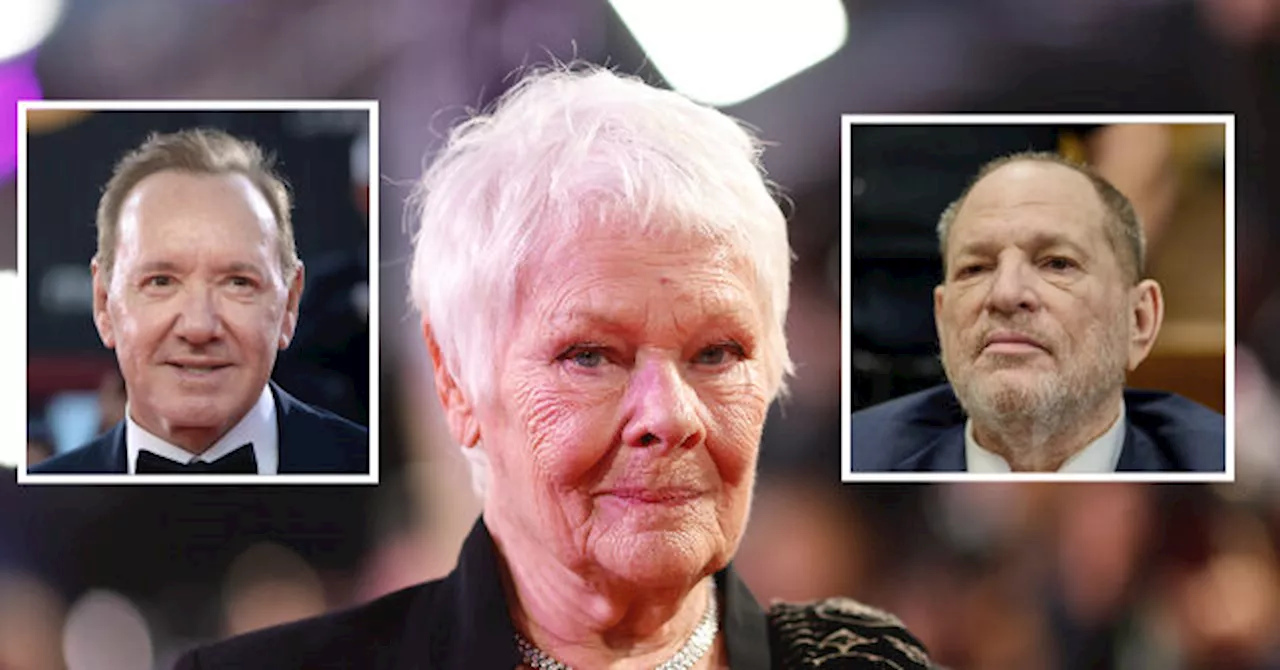
Oscar-winning actress Dame Judi Dench, who turns 91 on March 8, 2024, has expressed her continued friendship with Kevin Spacey and her belief in forgiveness for Harvey Weinstein. Dench, who has retired from acting due to vision loss, remains a practicing Quaker, a faith that emphasizes forgiveness and compassion.
In a recent interview, Dench made headlines by stating, “Kevin has been exonerated, and I hear from Kevin, we text.” This assertion highlights her ongoing support for Spacey, who has faced significant backlash from the entertainment industry following allegations of sexual misconduct. Despite being acquitted in multiple court cases, Spacey remains largely ostracized in Hollywood, a fact Dench acknowledges as she aligns herself against the prevailing sentiments of the #MeToo movement.
Dench also reflected on her past relationship with Weinstein, who is currently serving a prison sentence for sexual assault. While condemning his actions, she pointed out that Weinstein played a crucial role in reviving her film career later in life. “I knew Harvey, and I knew him well and worked with him, and I had none of that experience – very fortunately for me,” she said.
Forgiveness is a central theme in Dench’s philosophy, as she believes it is essential for personal peace. She argued that holding onto bitterness can be detrimental not only to individuals but also to society as a whole. “Forgiveness is a gift we give to ourselves. It’s the road to peace,” she noted, suggesting that while forgiveness does not equate to forgetting, it allows individuals to move forward without being burdened by the past.
Dench’s views challenge the rigid attitudes of some activists within the #MeToo movement, who may feel justified in their refusal to forgive. She emphasizes that victims of abuse deserve understanding and support, but feels that those who have served their time deserve a chance at redemption. “How long does Harvey Weinstein have to serve in prison before he’s allowed a second chance?” she asked, questioning the boundaries of forgiveness in the public sphere.
As the conversation around accountability and forgiveness continues to evolve, Dench’s perspective adds a nuanced layer to the ongoing discourse. Her willingness to maintain friendships with those who have faced serious allegations prompts reflection on the complexities of human relationships and the potential for rehabilitation after wrongdoing.
In a world where public opinion can swiftly turn against individuals, Dench’s stance serves as a reminder of the need for empathy and the possibility of reconciliation. As both Spacey and Weinstein navigate their respective challenges, Dench’s message resonates: forgiveness is not just an act of kindness; it is a necessary step toward healing for everyone involved.