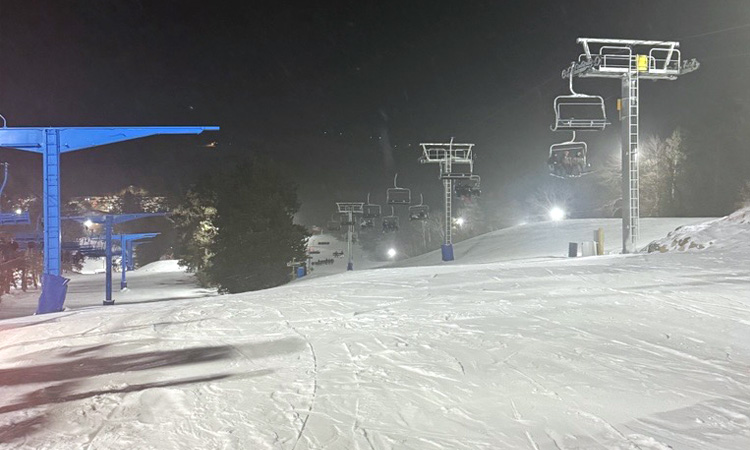
Nightlife in the Twin Cities has noticeably quieted over the past few years, with many bars reducing hours due to labor shortages and lingering pandemic habits. However, one business is defying this trend: Trollhaugen, a family-owned ski and snowboard resort located in Dresser, Wisconsin, approximately an hour northeast of Minneapolis–St. Paul. The resort has gained a reputation for hosting late-night skiing, keeping its slopes open until 3 a.m. on Saturday mornings.
Owner James Rochford, also known as Jim Jr., emphasizes the unique appeal of this model, stating, “It opens up a whole extra day of skiing and snowboarding.” The Rochford family has operated Trollhaugen since the 1960s, and their late-night offerings have proven financially successful. The resort has sold out its “Late Night Fridays,” attracting over 1,000 visitors each week, generating more than $30,000 in revenue per night.
Capitalizing on a Unique Market
Trollhaugen’s location has been crucial to its success. With nearly all other ski resorts in the area closing by 10 p.m., the resort has tapped into a demand for late-night skiing that few others are meeting. The only nearby competitor, Powder Ridge in Kimball, operates until 1 a.m.. As late-night options diminish around the Twin Cities, Trollhaugen continues to thrive, offering food and beverages in its lodge and snack bar until the early morning hours.
Even during the coldest nights, live music from local bands has become a staple of the Trollhaugen experience. “They’re going to come out to hang out with friends,” Rochford says, noting that skiing and snowboarding often become secondary activities for many guests.
A Rich History of Late-Night Skiing
The tradition of late-night skiing at Trollhaugen began in the 1970s, although it was briefly discontinued. It made a comeback in 2002 under the name “Late Nite Fridays.” Initially, the program attracted an average of only 50 skiers, but after adjustments were made, attendance doubled within a year. Early ticket prices were around $15, aimed at college students rather than the family demographic that typically frequented the resort.
Now, tickets for Late Night Fridays are priced at $25, with rental equipment available for an additional $35. The majority of visitors, approximately two-thirds, bring their own gear. According to Marsha Hovey, the resort’s marketing director, tickets often sell out one or two days in advance, and the parking lot fills up quickly by 9 p.m., the official start time for the event.
To maintain a quality experience, Trollhaugen has opted not to expand parking facilities, as crowded conditions could lead to long wait times for lifts. “You’d be getting up on the lift maybe once every 30 minutes, and no one wants that,” Rochford explains. On a recent Friday night, the peak wait time for lifts was just 10 minutes, a remarkable achievement for a popular venue drawing crowds from two states.
Trollhaugen’s successful late-night ski offerings demonstrate how a family-run business can adapt and thrive in a changing landscape, drawing skiers and snowboarders eager for a unique experience after dark.