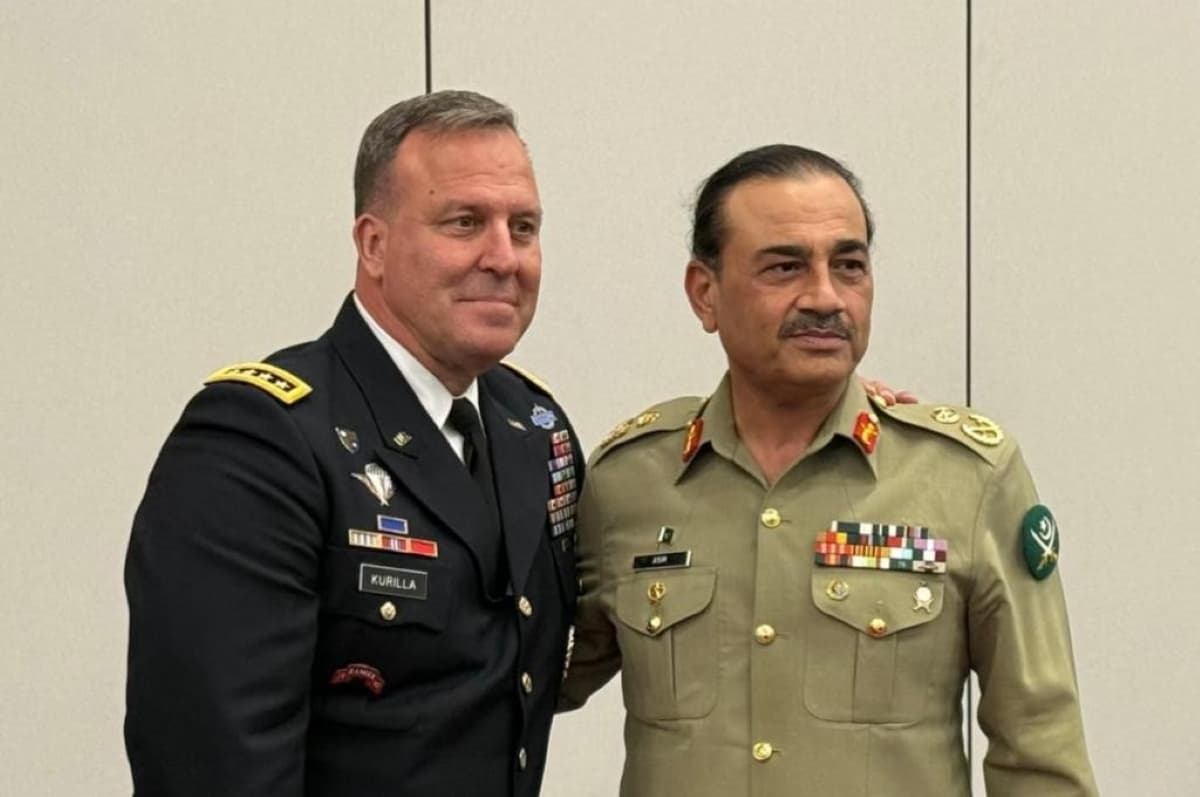
UPDATE: In a developing situation, Field Marshal Asim Munir of Pakistan is consolidating his power just as the United States is enhancing its diplomatic ties with Islamabad. This comes amid growing concerns about Pakistan’s military influence and its implications for regional security.
On October 9, 2023, Pakistan’s parliament passed a sweeping constitutional amendment that grants Field Marshal Munir lifetime immunity from arrest and prosecution. This critical move further entrenches military control over Pakistan’s political and judicial landscape, raising urgent fears about the resurgence of authoritarianism in the country.
The U.S. has ramped up its engagement with Munir, who has made two recent visits to the White House and attended a retirement ceremony for former Central Command chief, General Michael E. Kurilla. As Washington shifts its focus from promoting democracy abroad, it risks overlooking the consequences of Munir’s expanding authority, which many perceive as a precursor to a dictatorship.
Reports indicate that Pakistan’s military is not only tightening its grip domestically but is also allegedly supporting terrorist organizations. Following India’s Operation Sindoor aimed at dismantling terror bases in Pakistan, intelligence sources claim that Islamabad has provided aid to groups like Jaish-e-Mohammed, facilitating their relocation to safer areas within the country. Recent public rallies and recruitment events held by these terror groups under police protection raise alarms about Pakistan’s ongoing support for extremist activities.
Observers have pointed out that the relationship between Pakistan and the Taliban is deteriorating. On the same day as the military strikes in Kabul targeting Tehreek-e-Taliban Pakistan, Afghan Foreign Minister Amir Khan Muttaqi made his first official visit to India, highlighting Islamabad’s waning influence in the region. The Taliban, traditionally viewed as a Pakistani ally, are increasingly pursuing their own national interests, undermining Pakistan’s longstanding strategic depth doctrine that aimed to control Afghanistan.
The implications of these developments extend beyond borders. If Pakistan continues down this path of authoritarianism and military dominance, the potential for internal fragmentation looms large. Growing discontent among Pashtun populations against Punjabi political dominance could lead to increased separatism, threatening to fracture Pakistan along ethnic lines.
As the geopolitical landscape shifts, India is emerging as a dominant power in South Asia. With its robust economy and technological advancements, India is poised to play a pivotal role in shaping regional security dynamics. The U.S. must recalibrate its strategy to avoid prioritizing Pakistan at the expense of its relationship with India, as Islamabad’s influence continues to wane compared to New Delhi’s rising prominence.
In this precarious balance of power, Washington’s engagement with Pakistan must be approached with caution. The question remains: can the U.S. effectively navigate this evolving scenario without undermining its broader strategic interests in the region? The coming weeks will be critical in determining the trajectory of U.S.-Pakistan relations and the implications for South Asian stability.
Stay tuned for more updates as this situation develops.