Alabama Republicans are rapidly moving to reshape the state’s congressional map amid a fierce legal battle over voting rights and district boundaries. Governor Kay Ivey signed legislation allowing for entirely new primary elections if courts clear GOP-preferred maps for the upcoming midterms, effectively nullifying the state’s May 19 primary results in key races.
This legislation targets the state’s congressional district plan, aiming to cut down Alabama’s Democratic representation from two seats, each with significant Black voter populations, to just one. The move follows a recent Supreme Court ruling that dramatically weakened protections under Section 2 of the Voting Rights Act, which historically required majority-minority districts to safeguard political representation for communities of color.
Swift GOP Push After Supreme Court’s Voting Rights Shift
The redistricting controversy stems from a court injunction requiring Alabama to use a court-appointed map drawn last year, which established two Democratic-leaning districts with substantial Black electorates. GOP-drawn maps, rejected previously by courts for violating voting rights, now find new traction after the Supreme Court’s narrowing of Section 2’s scope in the Louisiana v. Callais decision.
On the same day the new legislation was signed, Attorney General Steve Marshall petitioned the Supreme Court to lift the injunction blocking the GOP map’s use. Justice Clarence Thomas has accelerated the process by demanding a response from opposing parties by Monday, signaling fast judicial action.
Meanwhile, the lower court refused to pause its injunction, setting up a looming showdown between Alabama’s judicial levels. Governor Ivey said the state stands ready to act swiftly once courts grant approval, highlighting a tightly coordinated Republican strategy involving all branches of state government.
Protests Erupt Over Alleged Return to Jim Crow Tactics
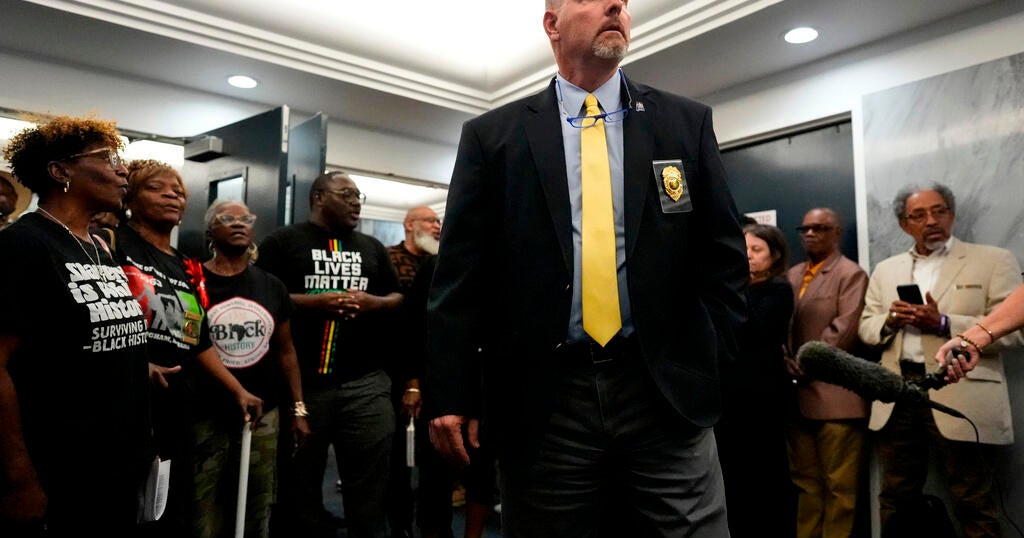
The legislation sparked chaotic protests inside Alabama’s Statehouse, with security forcibly removing at least one demonstrator. Outside the Capitol, chanting crowds linked the GOP’s redistricting effort to historic voter suppression, using slogans like “fight for democracy” and “down with white supremacy.”
Black lawmakers denounced the bill as a regression to the Jim Crow era, which disenfranchised Black voters through discriminatory laws and violence. State Senator Rodger Smitherman fiercely condemned the measure, saying it set the state back “to the days of Reconstruction,” reflecting fears that minority voting power is again under assault.
Southern Redistricting Battle Widens Across States
Alabama is part of a broader trend among southern Republican-controlled states swiftly redrawing maps to dilute Democratic and minority voting strength in light of the Supreme Court’s decision. On the same day, lawmakers in Louisiana and South Carolina introduced similar plans, while Tennessee already enacted districts disrupting a major Black-majority seat in Memphis, triggering legal challenges.
This coordinated redistricting wave significantly shifts the fight for control in the U.S. House of Representatives. The stakes are heightened as these changes could impact the national political balance ahead of midterm elections.
Another Blow for Democrats in Virginia
Compounding Democratic setbacks, the Virginia Supreme Court invalidated a recently approved redistricting plan, citing procedural violations by the Democratic legislature. This decision dashes hopes of gaining up to four new congressional seats under the rejected map and highlights growing Republican advantages in redistricting battles nationwide.
What’s Next?
The next weeks promise relentless legal confrontations with swift court decisions expected. Alabama’s new primary plan hinges on court rulings, while protests and political clashes escalate. The outcome will determine not only state representation but also the broader fight for equitable voting rights and political power across the South and the nation.
Governor Kay Ivey: “Alabama now stands ready to quickly act, should the courts issue favorable rulings in our ongoing redistricting cases.”
North Carolina and other states will watch closely as this pivotal legal and political battle unfolds—potentially setting precedents that affect voting rights and congressional makeup nationwide.