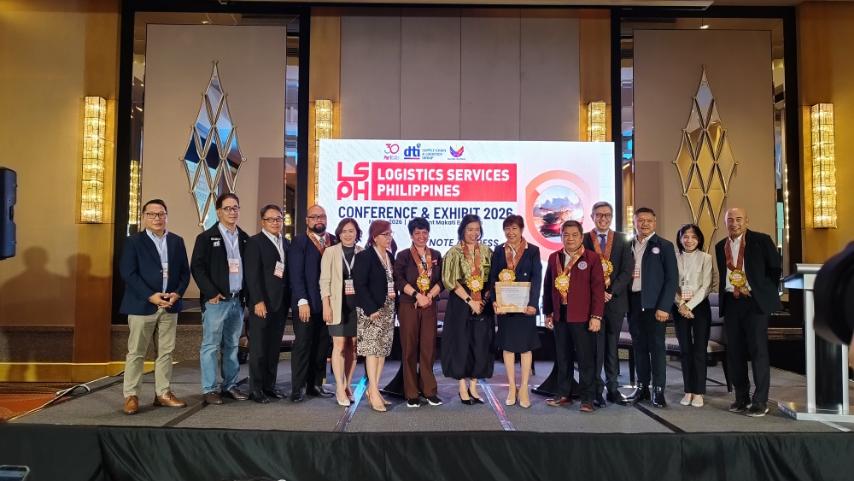
More than 200 government officials and industry leaders gathered in Makati City at the Logistics Services Philippines Conference & Exhibit 2026 on May 6 to tackle urgent supply chain bottlenecks threatening regional trade and commerce. The event spotlighted the vital need for public-private collaboration to resolve mounting logistics challenges impacting the Philippines’ ability to efficiently move goods, a concern that resonates with global markets including US supply chains connected to the Asia-Pacific region.
The conference, hosted at Fairmont Makati and organized by PortCalls alongside the Department of Trade and Industry-Supply Chain and Logistics Group (DTI-SCLG), emerged as a critical platform where policymakers and industry experts zeroed in on key interventions for sector growth. DTI-SCLG undersecretary Mary Jean Pacheco emphasized the event’s goal “to solicit possible interventions to help grow the sector” amid ongoing disruptions and rising costs.
In a compelling keynote, Department of Economy, Planning and Development (DepDev) undersecretary Rosemarie Edillon acknowledged the “regulatory bottlenecks” as a major strain on logistics and urged all stakeholders to prioritize urgent issues that need immediate government action. “Let us know what your pain points are,” Edillon said, stressing the necessity for actionable recommendations to be forwarded to economic development committees for swift response.
Adding to the urgency, DepDev assistant secretary for Investment Programming Group Roderick Planta revealed that a comprehensive Philippine Transportation System Master Plan is underway. This plan will strategically align passenger and cargo transportation infrastructure to address systemic inefficiencies hampering trade velocity.
Supply Chain Fragmentation and Fuel Crisis Threaten Efficiency
Panel discussions revealed acute sector challenges. Rina Papa, chair of the Alliance of Concerned Truck Owners and Organizations, underscored how fragmented logistics policies undermine truckers’ operational efficiency, directly escalating delays and costs. Mark Matthew Parco of the Philippine Liner Shipping Association highlighted the ongoing oil crisis as intensifying shipping challenges, urging strategic responses to mitigate fuel cost impacts nationwide.
Meanwhile, Samuel David, country manager for the International Air Transport Association Philippines, pushed for digitalization reforms, advocating the urgent implementation of electronic air waybills—a modernization step key to reducing paperwork delays in air cargo handling.
Representatives from major port operators, including Reginald Rivera of Asian Terminals Inc. and Josephine Napiere from Philippine Ports Authority, stressed the importance of decentralizing port operations to Batangas and Subic as a direct solution to ease severe congestion in Metro Manila, a significant bottleneck for the entire supply chain.
Infrastructure and Technology Take Center Stage
During an infrastructure-focused panel, Pierre Carlo Curay, president of the Supply Chain Management Association of the Philippines, pinpointed massive infrastructure upgrades as key to slashing logistics costs. Phillip Marsham of International Container Terminal Services, Inc. emphasized how port investments drive economic growth by boosting trade efficiency and employment.
Planta detailed the government’s Philippine Infrastructure Development Agenda, highlighting targeted investments aimed at a sustainable and competitive logistics framework. These plans mirror similar efforts in US ports and infrastructure systems, where modernization is critical to supply resilience.
On digitalization, Department of Information and Communications Technology secretary Henry Aguda outlined government initiatives accelerating data integration and tech adoption across the logistics ecosystem. Private sector IT leaders like Leonardo Sacamos Jr. of FAST Logistics shared real-world advancements, showcasing digital systems that enhance transparency and speed in freight movement.
Trade Facilitation and Green Logistics Drive Future Strategy
Customs officials including Atty. Julito Doria highlighted ongoing trade facilitation programs at the Bureau of Customs, while industry leaders stressed smoother customs procedures as essential to unlocking supply chain efficiencies.
The transition to sustainable energy also took center stage. Patrick Aquino of the Department of Energy detailed government actions on energy use optimization, while Willy Tee Ten, president of the Electric Vehicle Association of the Philippines, presented the private sector’s push for greener transport options—part of a global logistics shift toward sustainability.
Why This Matters for North Carolina and US Interests
North Carolina’s economy, tied heavily to international trade and manufacturing, stands to feel ripple effects from disruptions in Asia-Pacific logistics networks. The Philippine logistics sector is a critical node in global supply chains that feed into US imports, including electronics and consumer goods. Collaboration breakthroughs here could accelerate cargo flows, reducing shipments’ costs and times for American port hubs along the Eastern Seaboard—including those in North Carolina.
The next steps from this conference include actionable policy advocacy to address trucking regulations, fuel support, port infrastructure investment, customs modernization, and digital transformation. Continued engagement between Philippine authorities and private sector stakeholders promises faster resolution of supply chain challenges, which will ultimately support global trade stability—a priority for US market participants and consumers alike.
The Logistics Services Philippines Conference & Exhibit 2026 signals a turning point in aligning public and private strategies at a critical moment when supply chains worldwide are under unprecedented strain.