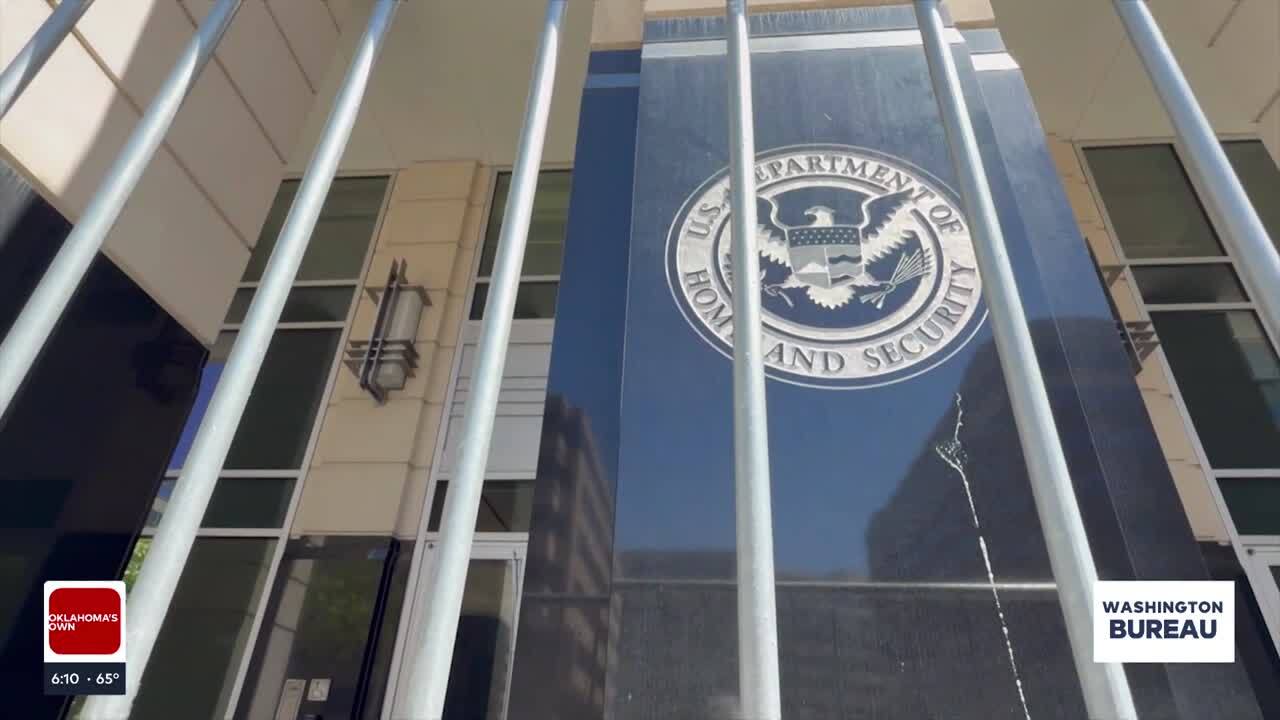
WASHINGTON, D.C. — Republican leaders are leveraging the budget reconciliation process to secure three years of funding for Immigration and Customs Enforcement (ICE) and Customs and Border Protection (CBP) amid the ongoing Department of Homeland Security (DHS) shutdown, bypassing the Senate filibuster that has long stalled legislation.
The filibuster, a Senate procedure requiring a 60-vote supermajority to end debate and pass most bills, has become a powerful tool of the minority party — and a source of growing frustration on Capitol Hill. Oklahoma Congressman Josh Brecheen (R-OK2) openly calls the filibuster an “accident” of Senate history and argues it should be abolished to allow the Senate to function efficiently.
“The filibuster is an accident,” Brecheen told Griffin Media Washington Bureau Chief Alex Cameron. “Nothing in the Constitution speaks of the filibuster. It wasn’t intended by the Founders for simple legislation to require a 60-vote threshold.”
Reconciliation Used to Sidestep the Filibuster
Republicans are currently working to fund ICE and CBP for multiple years through reconciliation, a parliamentary process that only needs a simple majority and can bypass the filibuster’s 60-vote hurdle. The same strategy was used last year to pass then-President Trump’s One Big, Beautiful Bill Act (OBBBA), which allocated $170 billion to ICE and CBP and ensured those agencies’ employees were paid during the DHS shutdown.
This move underscores growing GOP frustration with the Senate’s minority party blocking critical legislation, including key budget and immigration proposals, by wielding the filibuster as leverage.
Brecheen’s Historical Challenge to the Filibuster
Brecheen traced the filibuster’s origins to a Senate mistake in the early 1800s involving Vice President Aaron Burr, who inadvertently set a precedent for unlimited debate, now known as the filibuster. He stressed the Constitution explicitly requires supermajority votes only for ratifying treaties, constitutional amendments, and overriding presidential vetoes — not for ordinary bills.
“Many of us are saying, ‘Come on, United States Senate, let’s execute on the agenda of this Congress’” said Brecheen, urging the Senate to at least adopt a “talking filibuster” to revive debate without complete shutdowns.
He also invoked Federalist Paper 73, where Alexander Hamilton championed the president’s veto power as the constitutional guardrail against excessive lawmaking — not the filibuster. Brecheen argued the filibuster now produces “the tyranny of the few,” frustrating majorities and stalling legislation critical to national security.
Filibuster Debate Hits a New Crescendo Amid Budget Impasse
Across the Senate, both Democrats and Republicans have periodically threatened to eliminate or reform the filibuster. Most senators still cling to it, fearing the opposing party would exploit its removal when back in power. But Brecheen and others see it as a necessary reform in the face of legislative gridlock.
With the DHS shutdown continuing to disrupt government services, GOP leaders hope that reconciliation will ensure swift funding for border agencies without Democrat support. This fight illustrates the broader battle over Senate rules and the future of American lawmaking as the 2026 Congress pushes forward.
Why this matters: The filibuster’s future affects more than border security funding — it shapes how Congress functions amid rising partisanship, impacting legislation from immigration to infrastructure nationally, including policies that affect North Carolinians.
Watch for ongoing Senate debates as the GOP presses its reconciliation strategy and voices like Brecheen’s call for eliminating the filibuster to unlock policy gridlock before key deadlines.