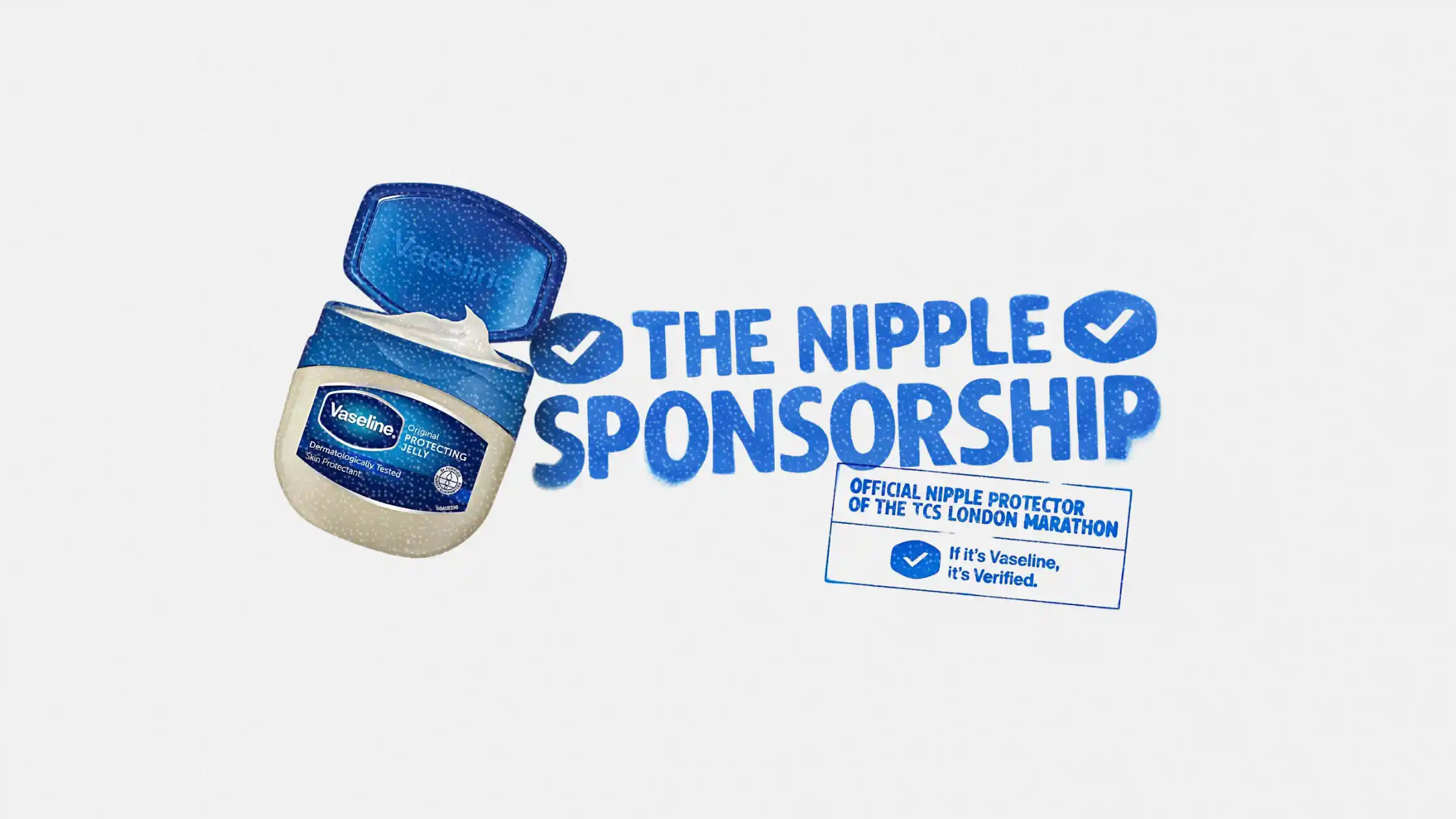
Vaseline is breaking new ground at the 2026 TCS London Marathon by becoming the “Official Nipple Protector,” turning one of running’s most awkward issues—nipple chafing—into a major brand platform that’s sweeping the globe. Over the race weekend, Vaseline directly supported more than 100,000 runners with on-course “Nip stops” where participants could apply petroleum jelly mid-run, addressing a problem most brands avoid but nearly every marathoner faces.
This innovative campaign goes beyond typical sponsorship visibility, embedding Vaseline deeply into the participant experience at one of the world’s premier endurance events. The brand’s activation combined physical support with a robust creator partnership strategy, enlisting top running influencers to openly normalize conversations about nipple care and friction prevention, an issue often considered too uncomfortable even to mention.
Why Runner’s Nipple Became Vaseline’s Winning Marketing Play
According to research cited by Vaseline, 92 percent of marathon runners experience chafing, with 67 percent reporting bleeding, and a full one in three suffering direct nipple irritation. This widespread but taboo problem creates a unique challenge and opportunity for brands: it’s a real pain point runners are largely solving informally—with Vaseline—in ways nobody formally owned.
Vaseline didn’t invent this behavior; it formalized an existing community hack. By openly naming and sponsoring “runner’s nipple,” the brand seized narrative ownership, moving from a generic skincare utility to the default solution for a serious athlete concern. This shift elevates Vaseline’s position, ensuring it dominates a topic most brands would avoid.
From London Marathon to a Global Marketing Phenomenon
Vaseline’s nipple sponsorship is not a one-off stunt but the latest evolution of its “Verified” platform, where user-submitted skincare hacks are scientifically tested and scaled. As nipple protection repeatedly emerged as a standout use case, Vaseline expanded the “Nipple Sponsorship” campaign worldwide, activating at marathons and endurance events in major cities such as Singapore, Barcelona, Madrid, Rotterdam, Sydney, and Hong Kong.
This reflects a broader trend in brand innovation: instead of inventing new behaviors, smart marketers are documenting what users already do, validating it, and turning it into powerful branded assets. Vaseline’s strategy moves it from a product to a cultural touchstone, turning everyday athlete behavior into global brand equity.
Marketing Lessons from Vaseline’s Bold Strategy
Experts say this campaign offers urgent lessons for brands struggling to cut through noise. First, own the uncomfortable truth: taboo topics can create instant memorability and differentiation.
Second, start with observing real user behavior rather than forced messaging. Vaseline’s insight came from widespread athlete practices—not guesswork.
Third, formalize unofficial product usage into brand positioning, turning what’s informal into a distinct market advantage. Fourth, build repeatable global platforms rather than one-off stunts, ensuring ongoing brand relevance in multiple markets.
Finally, combine real utility with storytelling that sparks conversation—Vaseline’s campaign solves a real, painful problem while also being culturally provocative enough to generate buzz.
For marketers in all sectors including B2B, particularly martech and SaaS, the takeaway is crucial: your most powerful branding may already lie within how customers use your products, not just how you describe them.
Vaseline’s “Nipple Sponsorship” may seem like a quirky stunt, but it’s a case study in behavior-led brand-building at scale. As competition intensifies and consumer attention shrinks, brands that dare to identify and own authentic, lived customer challenges will dominate. Vaseline’s campaign proves that marketing brilliance often starts with the courage to talk openly about uncomfortable truths.