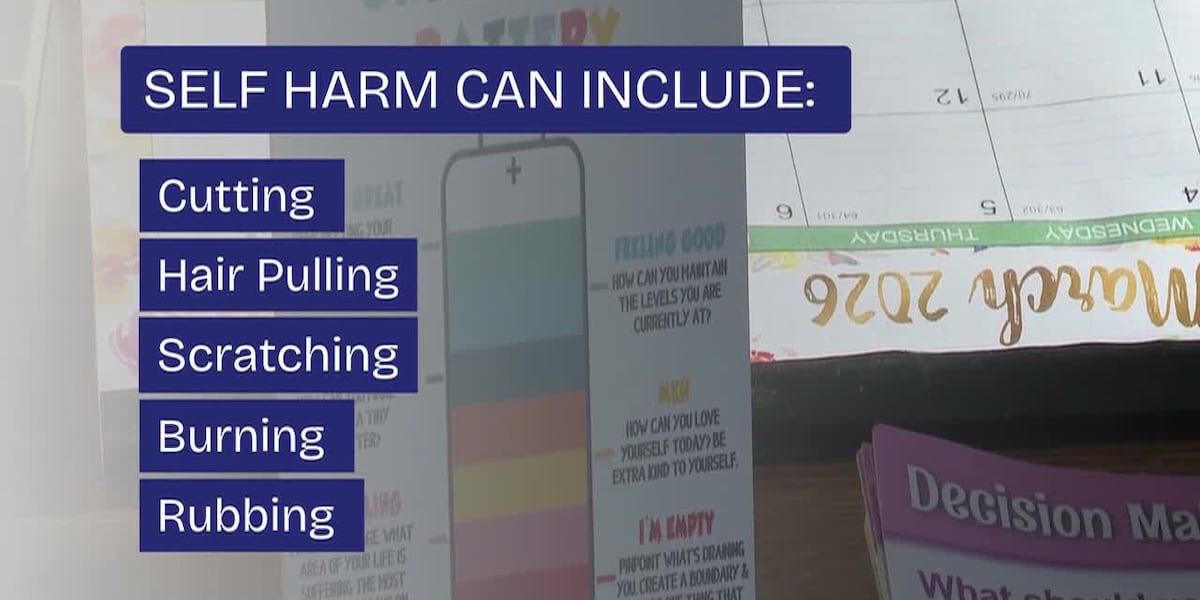
March is recognized as Self-Harm Awareness Month, prompting discussions about the complexities of self-injury and its implications for mental health. Contrary to common misconceptions, experts emphasize that not all individuals who engage in self-harm are suicidal. Self-harm, often referred to as non-suicidal self-injury (NSSI), encompasses a range of behaviors, including cutting, hair pulling, and scratching.
School counselor Christina Bixman explains that while some people may automatically associate self-harm with suicidal thoughts, this is not typically the case. “Self-injury can manifest in various forms,” she notes, adding that it is often a misguided coping mechanism for underlying emotional distress.
Understanding the Roots of Self-Harm
Research indicates that NSSI frequently coexists with other mental health conditions, such as anxiety, depression, and bipolar disorder. Bixman describes self-harm as a coping skill, albeit an unhealthy one. “It’s not a good one, not a safe one, but a coping skill nonetheless,” she says. Recognizing and addressing the root causes of self-injury is crucial for effective intervention.
Dr. Elizabeth Collier, a physician and psychiatrist at Camden Clark Medical Center, highlights the importance of individualized treatment. “Getting them on board and talking about what’s really the root cause of what’s going on, why they’re engaging with this,” she explains is key to recovery. Treatment plans often incorporate distraction techniques and the involvement of supportive individuals to help redirect harmful impulses.
The Importance of Seeking Help
Dr. Collier works primarily with patients aged 18 and older who are at significant risk of self-harm or harming others. Her role includes providing immediate psychiatric intervention in emergency situations and referring patients to community resources for outpatient care.
Both Bixman and Collier stress the importance of reaching out for help. “As soon as you get that out there, things start to get easier because you can share that burden with somebody else,” Bixman states. They encourage anyone struggling with self-harm to seek support, whether from friends, family, or professionals.
For those in need of immediate assistance, online resources are available, including the 988 Suicide Hotline and text support at 741741. These services provide confidential support and can guide individuals toward appropriate treatment options.
As Self-Harm Awareness Month continues, raising awareness about NSSI and its underlying causes remains vital. Understanding these behaviors can foster a more compassionate response and encourage individuals to seek the help they need.