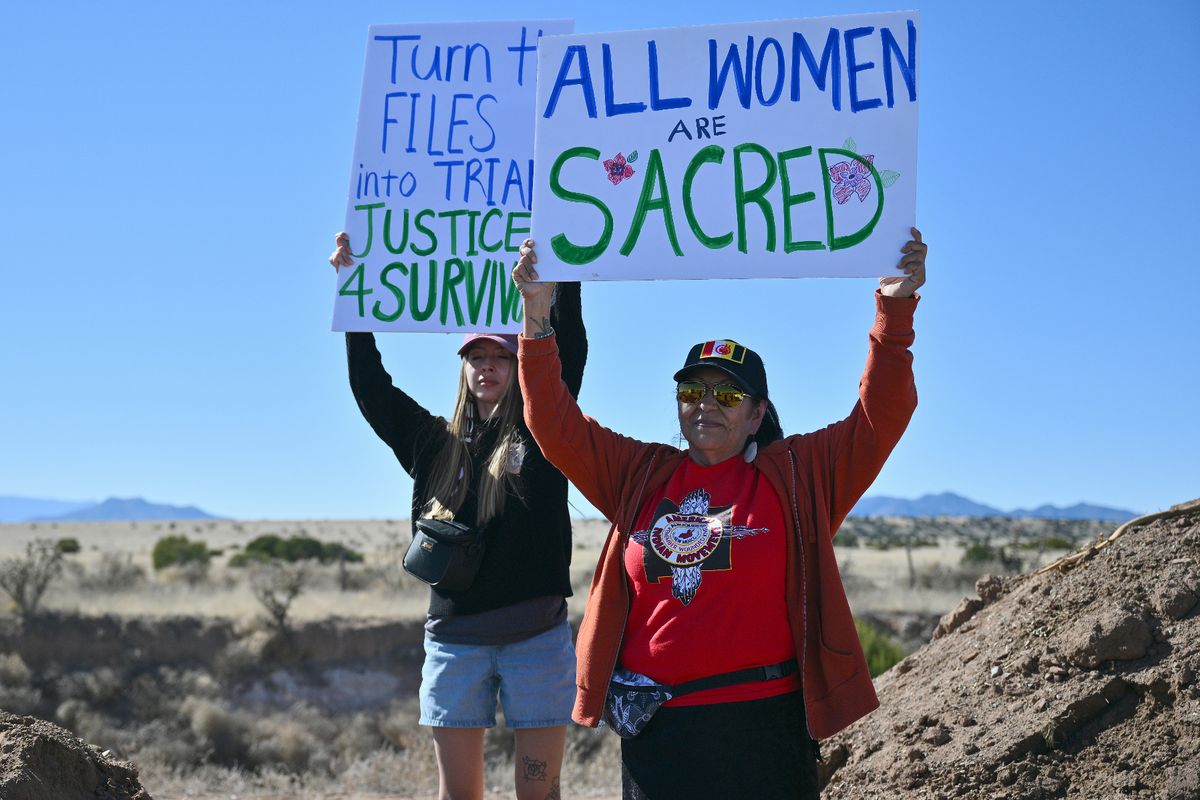
Hundreds of activists gathered on March 10, 2024, outside Jeffrey Epstein’s Zorro Ranch in New Mexico as part of a global mobilization organized by the Women’s March. This demonstration aimed to highlight the ongoing lack of accountability for the late financier’s extensive network of trafficking and sexual abuse of young girls. The protest underscores the frustration of survivors and advocates as federal investigations into Epstein’s network have stalled since his death in 2019.
Activists are calling attention to the fact that more than 150 identified survivors have not received justice, with only two prosecutions stemming from Epstein’s crimes. The Women’s March coordinated over 270 events worldwide, with the most significant turnout occurring at Zorro Ranch, reflecting widespread concern regarding the handling of Epstein’s case and its implications for survivors.
Among the speakers at the rally were family members of survivor Virginia Giuffre, Representative Teresa Leger José, State Senator Linda Lopez of New Mexico, and various representatives from indigenous and religious groups. Rachel O’Leary Carmona, executive director of the Women’s March, delivered a poignant address, including a speech written by Giuffre.
Focus on Accountability and Survivors’ Rights
The demonstration highlighted the work of the New Mexico Commission on Truth and Reconciliation, an organization dedicated to documenting systemic violence against women, children, and Indigenous communities. Following the release of previously sealed files by the Department of Justice in February 2024, New Mexico Attorney General Raúl Torrez reopened the state’s criminal investigation into alleged illegal activities at Zorro Ranch. This development has encouraged survivors to come forward, with Torrez promising a comprehensive public report at the conclusion of the investigation.
O’Leary Carmona emphasized the need for accountability, stating, “The years-long cover-up and protection of Epstein’s allies and co-conspirators exposed a culture of impunity that tells survivors their pain is negotiable when powerful men are involved.” She asserted that without justice for survivors, there could be no true peace or democracy.
In an interview with Newsweek, O’Leary Carmona described New Mexico’s approach as a potential turning point, saying, “The New Mexico Truth and Reconciliation Commission represents something we haven’t seen from federal authorities—a survivor-centered process that is willing to follow the evidence wherever it leads.” She criticized the institutional failures that enabled Epstein’s crimes, stating that the system had historically protected powerful individuals while survivors were marginalized.
Calls for Broader Reform
The Women’s March is advocating for New Mexico’s accountability model to be adopted in other states, including Florida, New York, and the U.S. Virgin Islands, which are all linked to Epstein’s activities. The rally at Zorro Ranch serves as a reminder of the importance of survivor voices and the demand for systemic change in how sexual abuse cases are handled.
As activists continue to push for justice, the rally reflected a broader movement seeking to hold powerful individuals and institutions accountable. The ongoing efforts of survivors and advocates highlight the crucial need for reform and the importance of listening to those who have suffered from abuse.