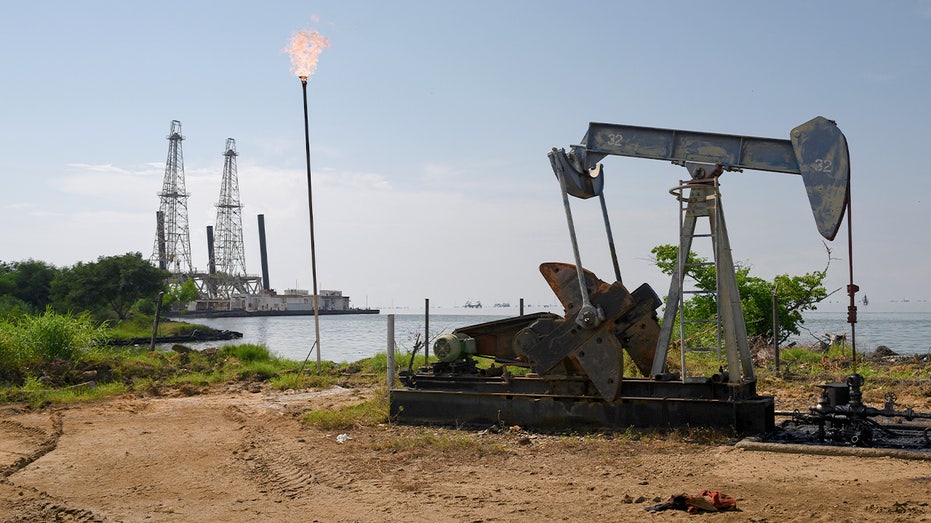
The U.S. has significantly shifted its energy strategy by increasing oil imports from Venezuela, transitioning the country from a sanctioned adversary to a key supplier. Interior Secretary Doug Burgum announced this development during a recent interview, highlighting how this partnership will bolster U.S. energy security and help mitigate disruptions from the Middle East.
Burgum praised the policies of former President Donald Trump, stating that Venezuelan oil is now flowing to the United States with increasing volume. He emphasized that this shift comes as a timely response to ongoing global shipping challenges. “Venezuelan oil can flow to America freely and is starting to flow,” Burgum said. “These are the kinds of things that are going to bring gas prices down in America, because President Trump understands that energy security means national security.”
New Contracts and Economic Impacts
The Interior Secretary’s comments align with recent agreements signed by Venezuela’s state oil company, Petróleos de Venezuela S.A., to supply crude oil and refined products to U.S. Gulf Coast refineries. These contracts are part of a broader initiative to re-establish commercial ties and integrate Venezuelan oil back into U.S. supply chains. This re-engagement marks a significant shift in U.S. foreign policy towards Venezuela, a country previously facing extensive sanctions.
Burgum also pointed out that rising oil prices would encourage domestic drilling activity in the United States. “When you see prices start moving up like this, the American private sector is very responsive,” he remarked, suggesting that increased drilling activity will soon follow as companies react to market signals.
He contrasted the current situation with the previous administration’s energy policies, stating, “Under Biden, there were 67 days in a row where prices were over $100. There’s never been a day so far under President Trump where they’ve gone above $100.” Burgum attributed current price fluctuations to transit issues rather than a lack of global oil supply.
Strategic Energy Security
Burgum underscored the importance of energy independence, asserting that the U.S. must enhance its domestic energy production while capitalizing on international partnerships. “We have the largest reserves with no threat of the chokehold like we have in the Strait of Hormuz,” he added. This perspective reflects an ongoing strategic reorientation aimed at reducing dependence on Middle Eastern oil.
The Interior Secretary’s remarks come as part of a broader discussion on U.S. energy policy and its implications for national security and economic stability. The administration’s approach to Venezuelan oil could reshape the landscape of U.S. energy sourcing in the coming years, fostering greater resilience against global market fluctuations.
As the U.S. continues to navigate complex geopolitical dynamics, the implications of these new agreements will be closely monitored by energy analysts and policymakers alike. With increasing reliance on Venezuelan oil, the U.S. aims to stabilize fuel prices while enhancing its energy security strategy in an ever-evolving global market.