BREAKING: A jury in Syracuse, N.Y., has just convicted Dashontay Kirkland, 34, of second-degree murder after he fatally shot Sidney E. Comrie, 42, on June 24, 2024. The jury rejected Kirkland’s claim that he acted in self-defense to protect his children from imminent danger.
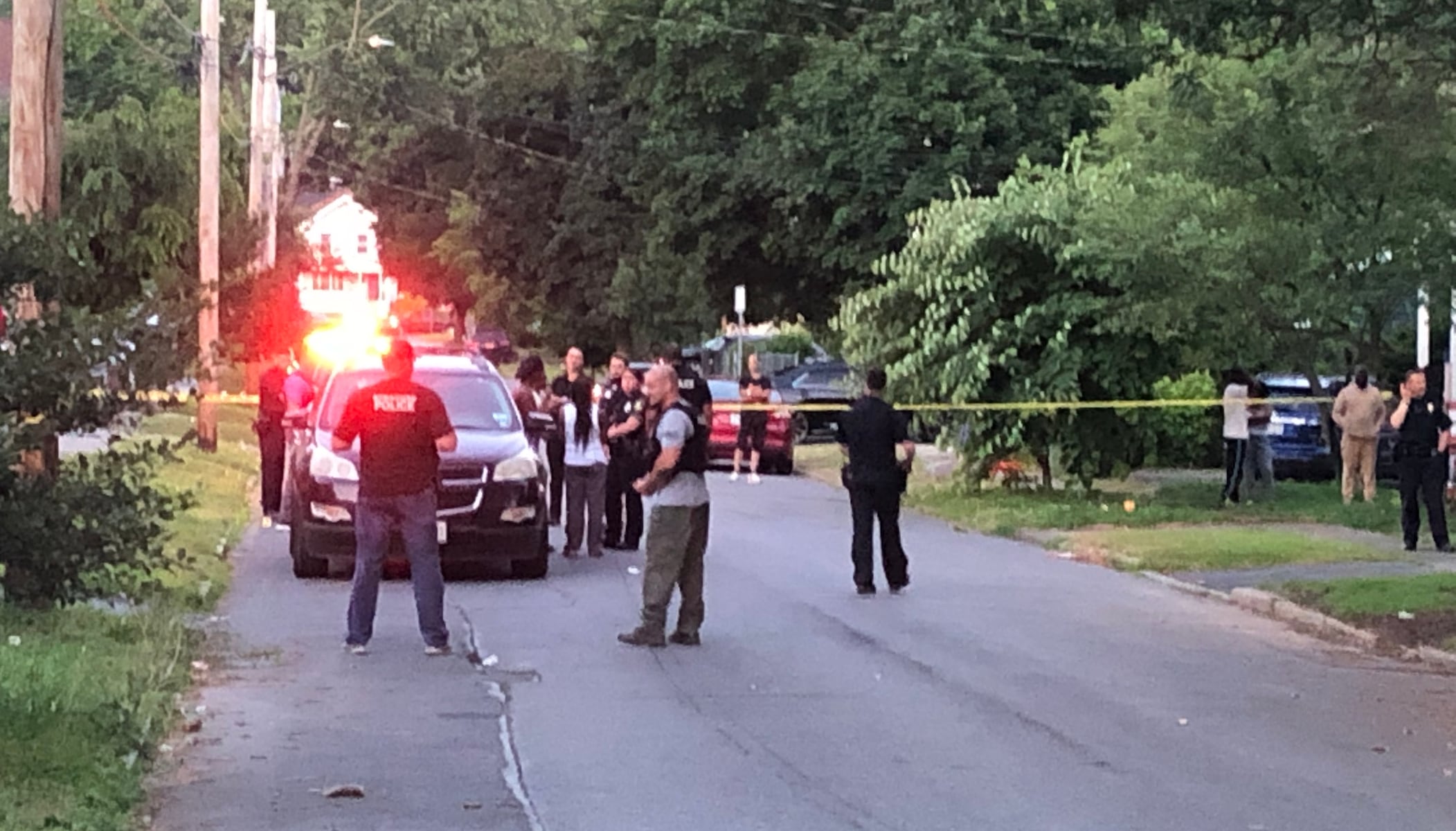
The conviction, announced following several hours of deliberation on Thursday, comes amidst a heated debate over Kirkland’s justification for the shooting, which occurred at 184 W. Calthrop Ave.. Prosecutor Anthony Copani argued that Kirkland undermined his own defense by admitting, “I didn’t have to kill him,” during his testimony. Kirkland maintained that he shot Comrie after being attacked with a knife while attempting to retrieve his children.
The emotional case centers around Kirkland’s assertion that Comrie was a threat to his children. According to Kirkland, he intervened after receiving reports of Comrie being rough with his kids. Kirkland’s attorney, Nicholas DeMartino, argued that Kirkland believed his children were in grave danger. However, Copani emphasized that the jury needed to assess whether there was a legitimate life-threatening situation at the time of the shooting.
Witnesses recounted the chaotic moments leading up to the shooting. Kirkland testified that as he was putting on his son’s shoes, Comrie attacked, prompting a struggle. In a pivotal moment, Kirkland claimed that he eventually lost track of his children and felt compelled to use deadly force. However, Copani pointed out that the struggle had ended and that Kirkland had access to a gun moments later, directly contradicting his self-defense claim.
Further complicating the narrative, an Onondaga County Child Protective Services caseworker testified that there was no evidence supporting Kirkland’s allegations of abuse against Comrie. The case was deemed closed following Comrie’s death.
Kirkland, now facing a sentence of 25 years to life, left the courtroom with his fate sealed by a jury that found he did not have reasonable grounds to believe his children were at risk. The emotional toll of the trial has reverberated throughout the community, igniting discussions about parental rights and self-defense laws.
As this case develops, it raises critical questions about the balance between protecting loved ones and the consequences of lethal actions. The community and families involved are left grappling with the ramifications of this tragic event.
Stay tuned for more updates on this developing story as we continue to follow the aftermath of this conviction and its implications for families and legal standards in self-defense cases.