A new chapter in the fight against antisemitism has begun with the appointment of Rabbi Yehuda Kaploun as the Special Envoy to monitor and combat antisemitism at the US State Department. Following a narrow Senate confirmation vote of 53-47, Kaploun assumes leadership of an office established over two decades ago to address rising global antisemitism.
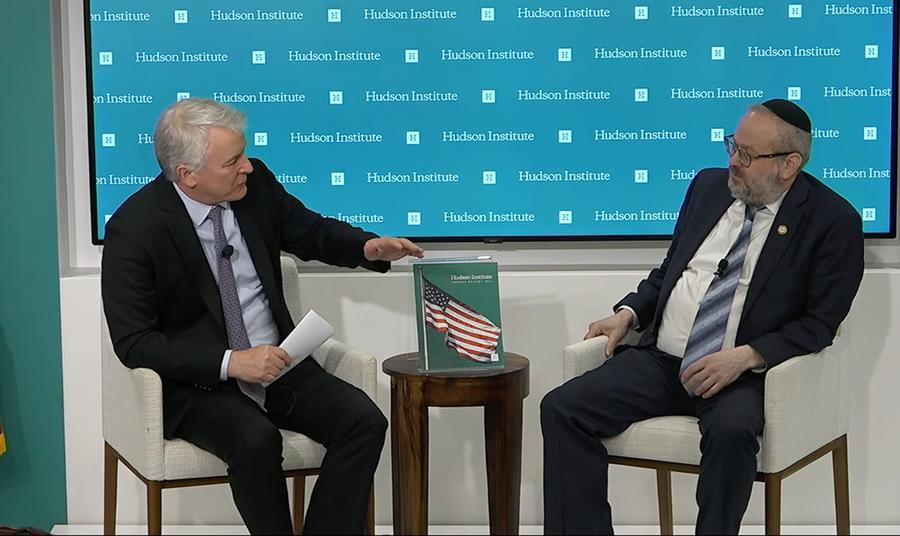
In an interview at the Hudson Institute on December 14, 2023, conducted by senior fellow Michael Doran, Kaploun articulated his vision for combating the resurgence of Jew-hatred, acknowledging the challenges that lie ahead. He emphasized the dual nature of his role: responding to immediate crises while also advocating for long-term policy changes through effective diplomacy.
Kaploun drew attention to the alarming trend of antisemitism, stating, “For people chanting ‘Death to Israel’, the second line is usually ‘Death to America’.” He highlighted a troubling connection between antisemitism and anti-American sentiment, indicating that the same hatred fuels both ideologies.
The envoy identified two critical factors contributing to the current “global wave” of antisemitism. First, he pointed to the misuse of the internet, where misinformation can quickly shape public narratives. “The norm is not the truth anymore, and that lends itself to a rise in antisemitism,” he noted. Second, he expressed concern over a lack of basic education among American students about Jewish history and the values of American citizenship.
Kaploun expressed pride in being American, stating, “The beauty of this country is you can hate me, but you have to protect me.” His optimism extends to the current administration, which he believes is committed to making antisemitism a priority. He praised efforts to “hold people accountable” for antisemitic acts.
The Special Envoy’s responsibilities encompass two main areas. The first involves “reading and reacting” to instances of antisemitism as they arise. The second focuses on influencing policy and using “gentle persuasion, or maybe not so gentle persuasion” to achieve tangible results. Kaploun confirmed that his office will adopt the International Holocaust Remembrance Alliance (IHRA) definition of antisemitism as a foundational guideline, questioning why fewer than 50 countries have embraced this definition.
Kaploun also highlighted several recent victories in the fight against antisemitism. Notably, the Armenian government has committed to joining the IHRA, and the Belgian government has reinstated security funding for synagogues and Jewish schools. Additionally, he noted positive developments in Ireland, where language related to the Boycott, Divestment, Sanctions (BDS) movement has been retracted.
When asked about global allies and opponents in this fight, Kaploun identified countries such as Hungary, Romania, and Albania as supportive in educating their populations about antisemitism. Conversely, he expressed disappointment with Turkey and Pakistan, both of which he believes have significant room for improvement.
Concern for the United Kingdom was particularly pronounced. Kaploun warned that mass migration poses a challenge if individuals are unwilling to respect the rule of law. He urged diplomats to prioritize the safety and security of all citizens, stating, “Governments must ensure that people are safe walking the streets. You know, to walk the street with a yarmulke in England, people are being attacked. That’s not okay.” He called for leadership to strongly condemn antisemitic rhetoric from the highest levels.
Former Special Envoy Gregg Rickman weighed in on the challenges facing Kaploun, highlighting “Jihadi antisemitism” and threats from the left, which he perceives as a concerning alliance. He remarked, “This is not to say that threats from the right don’t exist, but when you look at the vast amount of campus protests from leftist students and provocateurs because of Israel’s self-defensive actions in Gaza, the threat is plain to see.”
The urgency for action against antisemitism is echoed by the rising incidents worldwide. As Rabbi Kaploun takes on this formidable task, he carries the weight of the US government’s support, positioning him to make significant strides in addressing long-standing issues. The international community watches closely as his tenure unfolds, hopeful for progress in the fight against this persistent form of hatred.