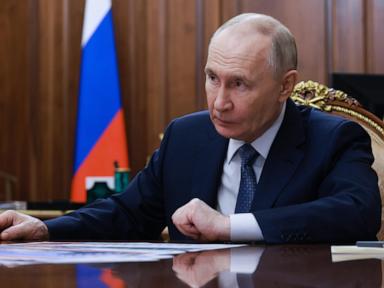
Russian officials appear unwilling to cease their nearly four-year-long invasion of Ukraine, believing they can strategically outmaneuver the United States in ongoing negotiations. This assessment comes from Kaupo Rosin, the head of Estonia’s foreign intelligence service, who recently shared insights during an online briefing ahead of the release of Estonia’s annual security report.
Rosin emphasized that Moscow is engaging in talks with Washington primarily to buy time, stating, “there is absolutely no discussion about how to really cooperate with the U.S. in a meaningful way.” His comments reflect intelligence gathered from “Russian internal discussions,” although specifics on the information’s acquisition were not disclosed.
Russian Stance on Negotiations
Despite public declarations of seeking a negotiated resolution, Russian officials have shown little willingness to compromise on their demands. Recent discussions involving U.S.-brokered talks between envoys from Russia and Ukraine have been characterized as constructive, yet significant progress remains elusive on key issues. According to Rosin, Russian President Vladimir Putin still believes a military victory in Ukraine is achievable.
In response to Rosin’s claims, a White House official highlighted that the president’s negotiators have made “tremendous progress” in the peace talks. The official pointed to recent prisoner exchanges as evidence of advancing efforts, notably an agreement reached in Abu Dhabi that facilitated the release of over 300 prisoners.
Ukrainian President Volodymyr Zelenskyy indicated that the U.S. has set a June deadline for reaching a settlement, a timeline echoed by Donald Trump, who has previously established several deadlines that ultimately went unmet. Critics, including Fiona Hill, a former Russia expert and Trump adviser, argue that the current administration is crafting a narrative that positions Trump as a peacemaker while underestimating Putin’s ambitions.
Understanding the Dynamics of the Conflict
Rosin expressed skepticism about U.S. officials’ belief that Putin genuinely seeks to end the conflict. He noted that the intelligence reports reaching the Russian president may be overly optimistic, leading him to assume a favorable military outcome. Rosin remarked, “the lower you go in the food chain, the more people understand how bad it is actually on the ground,” suggesting a disparity between frontline realities and higher-level perceptions.
Reports have indicated instances of officials misleadingly claiming territorial gains, which may contribute to the inflated sense of success that reaches Putin. Hill also commented on the dynamics of information dissemination, asserting that both Trump and Putin are likely receiving filtered narratives designed to please them.
The ongoing conflict in Ukraine, marked by its complexity and human cost, shows no signs of resolution as both sides remain entrenched in their positions. Without significant shifts in the battlefield or domestic circumstances, Rosin predicts that the conflict will persist for years to come, indicating that Putin continues to believe in his ability to “outsmart everybody.”
The situation remains fluid, with international observers closely monitoring developments as various diplomatic channels remain open. The conflict’s resolution will depend on the willingness of both sides to engage in genuine negotiations rather than tactical maneuvering.