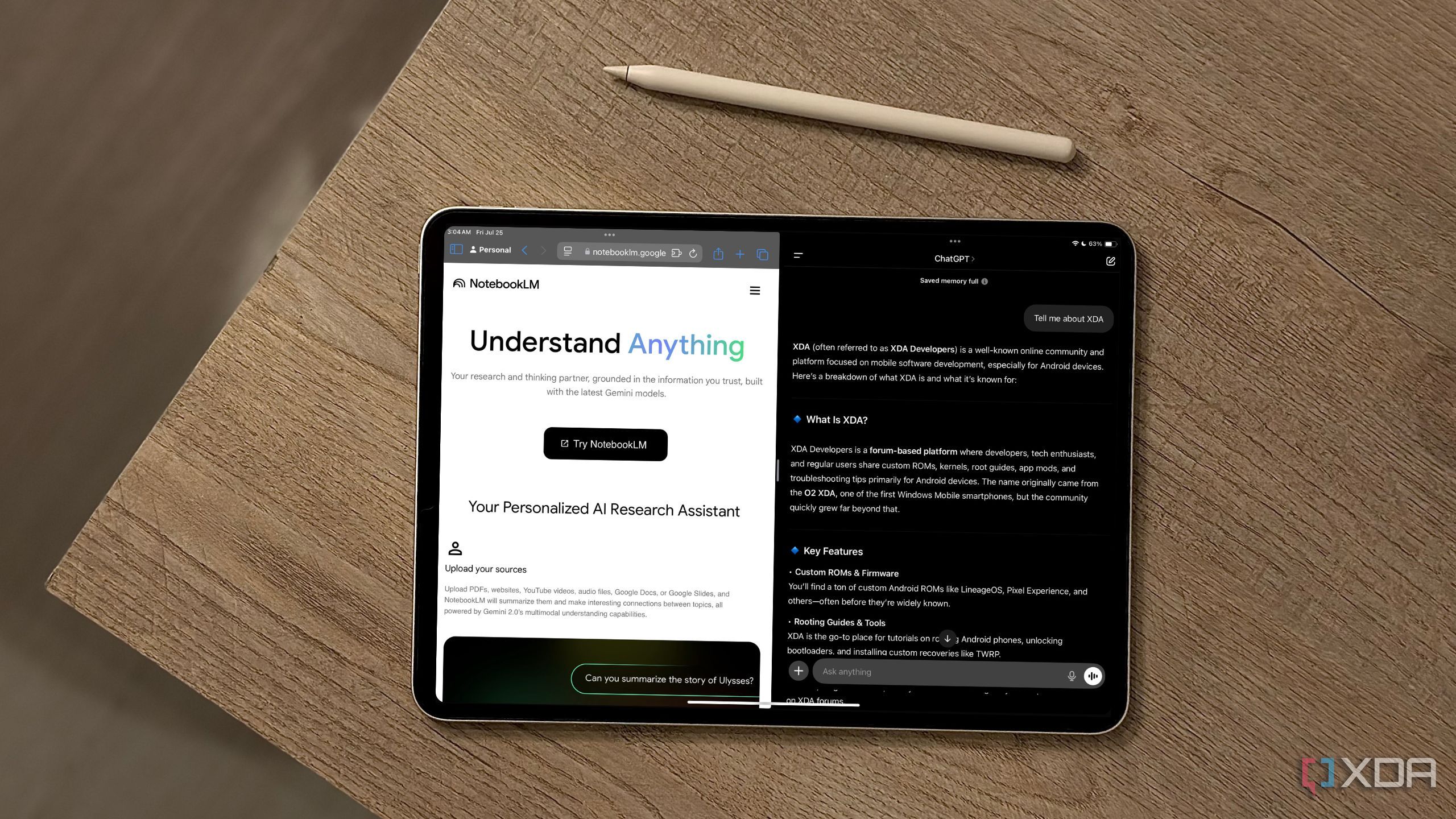
A recent exploration into research tools has revealed significant advantages of NotebookLM over ChatGPT for users seeking to enhance their information-gathering processes. While ChatGPT has long been a go-to resource for many due to its conversational interface and real-time browsing capabilities, its limitations have prompted users to consider alternatives. NotebookLM, designed specifically for academic research, has reshaped how individuals approach their studies by emphasizing source engagement and effective learning techniques.
The evolution of research methodologies is critical in today’s fast-paced information environment. NotebookLM employs retrieval-augmented generation (RAG) technology, which allows users to analyze and index web content comprehensively. This contrasts with ChatGPT, which relies on real-time searches that summarize information rather than deeply parsing and indexing it. The latter’s limitations, including restrictions on document uploads in its free version, have led many to seek a more robust solution for academic research.
Understanding the Shift in Research Tools
For many users, the choice between these two platforms often hinges on their specific research needs. While ChatGPT provides valuable sourcing capabilities and cites references, its tendency to deliver vague responses can hinder in-depth understanding. The free plan permits only three file uploads per day, each with a maximum size of 512MB, making it challenging for extensive research projects. Users have found that NotebookLM encourages a more hands-on approach by requiring them to engage with source material before generating prompts.
NotebookLM’s structure facilitates a more effective learning experience. By prioritizing sources over prompts, users can familiarize themselves with the content, enhancing their comprehension before generating queries. This method is particularly beneficial for those who thrive on bottom-up learning. Additionally, the platform’s citation model links answers directly to specific passages in the source material, expediting the verification process and reducing the risk of integrating assumptions into research findings.
Enhanced Learning Features in NotebookLM
Beyond its research capabilities, NotebookLM offers a suite of features designed to deepen understanding and retention. Tools such as Mind Map, Quiz, and Flashcards enable users to interact with their research actively, transforming information into structured study aids. This layered approach allows individuals to engage with material on their own terms, fostering a more independent learning environment.
While ChatGPT has introduced its own capabilities, such as the Deep Research feature, it is typically better suited for initial information gathering. Users often find that a combination of both tools—utilizing ChatGPT for sourcing and then transitioning to NotebookLM for in-depth analysis—yields the best results. This hybrid strategy empowers users to verify claims and build comprehensive references based on reliable sources.
In conclusion, while ChatGPT remains a valuable resource, the emergence of NotebookLM marks a significant shift in how individuals approach research. Its structured, source-based methodology not only enhances the learning experience but also encourages users to engage more actively with their material. As research needs continue to evolve, tools like NotebookLM are poised to become essential components of effective academic workflows.