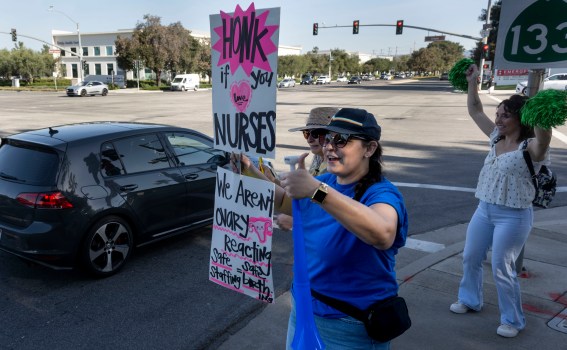
Nurses at Kaiser Permanente have entered the second week of their strike, relying on personal savings to sustain their efforts as they await further support. The walkout, initiated on January 26, 2026, involves approximately 31,000 registered nurses and healthcare professionals across California and Hawaii. The strike aims to secure better wages, improved benefits, and increased staffing levels, as negotiations between the union and Kaiser remain unresolved.
On the picket line at the intersection of Sand Canyon Avenue and Alton Parkway in Irvine, California, registered nurse Sarah Rubino expressed her determination to continue the fight. Joining around 150 other protesters, she highlighted her sacrifices for the cause, including utilizing her rainy day fund to manage expenses. “I began working extra hours after the last strike, taking extra shifts to cover shortages in our postpartum unit,” Rubino stated, noting the financial strain that affected her family during the previous walkout.
The union does not have a dedicated strike fund, leading many nurses to dip into their personal savings. Some have reduced discretionary spending, opting to dine out less frequently or consolidate transportation options. “All of our healthcare professionals have been working extra or picking up part-time jobs just so that we can get a fair contract,” Rubino added.
Another striking nurse, Alice Hunter, shared her experience of budgeting amidst the ongoing strike. At 62 years old, she has a rainy day fund of $5,000 while also supporting her son, who is pursuing nursing education. “I’m just watching my budget and groceries. I’ve cut back with inflation,” said Hunter, a resident of Rancho Santa Margarita.
Kaiser Permanente has stated that it supports both nurses and patients during the strike. In a recent statement, Camille Applin-Jones, senior vice president for Kaiser Permanente Southern California, asserted, “Our contract proposal is the strongest compensation package in Kaiser Permanente’s national bargaining history and keeps employees among the best-paid caregivers in the country.” The organization claims the total pay increase offered, which includes step increases, amounts to roughly 30% over the length of the contract, excluding proposed benefits enhancements.
The current strike follows a record-breaking five-day walkout last October, during which Kaiser implemented contingency staffing measures, including hiring thousands of temporary workers at pay rates ranging from $78 to $130 per hour. Kaiser has not publicly addressed staffing strategies during the present work stoppage.
As the strike continues, significant changes loom for the healthcare landscape in California. Laurel Lucia, deputy executive director for the Labor Center at UC Berkeley, noted potential repercussions from recent federal cuts to Medi-Cal, California’s Medicaid program. These changes could lead to substantial job losses across the sector, with estimates suggesting a potential reduction of between 109,000 and 217,000 jobs statewide.
“The longer the strike persists, the more reputational risks there are for Kaiser, as nurses and other healthcare workers are deeply valued by patients,” Lucia stated. The ongoing negotiations signal a critical moment for the industry amid financial and operational challenges.
As the first wave of striking nurses continues their efforts, a second wave of support is forming. More than 3,000 pharmacy and lab workers represented by the United Food and Commercial Workers union in Southern California have announced their intention to join the strike beginning February 9, unless an agreement is reached. “They call themselves a nonprofit, but their goal, just like any other huge corporation, is to bring in a lot of money and premiums and then scrimp on what they give out in care,” remarked Kathy Finn, president of UFCW Local 770.
In light of the ongoing strike, nurse Gerard Corros, who represents the interests of 2,800 nurses at the bargaining table, is also adjusting his personal finances. He plans to use his fuel-efficient Honda Accord instead of his larger vehicle to save on gas. “We have decided that they are making priorities in profits over patients in the community that we serve,” Corros stated.
As the strike enters its second week, nurses continue to balance their financial strains with their commitment to achieving a fair contract. The actions of these healthcare professionals highlight the ongoing challenges in the sector and the urgent need for negotiations to reach a resolution.