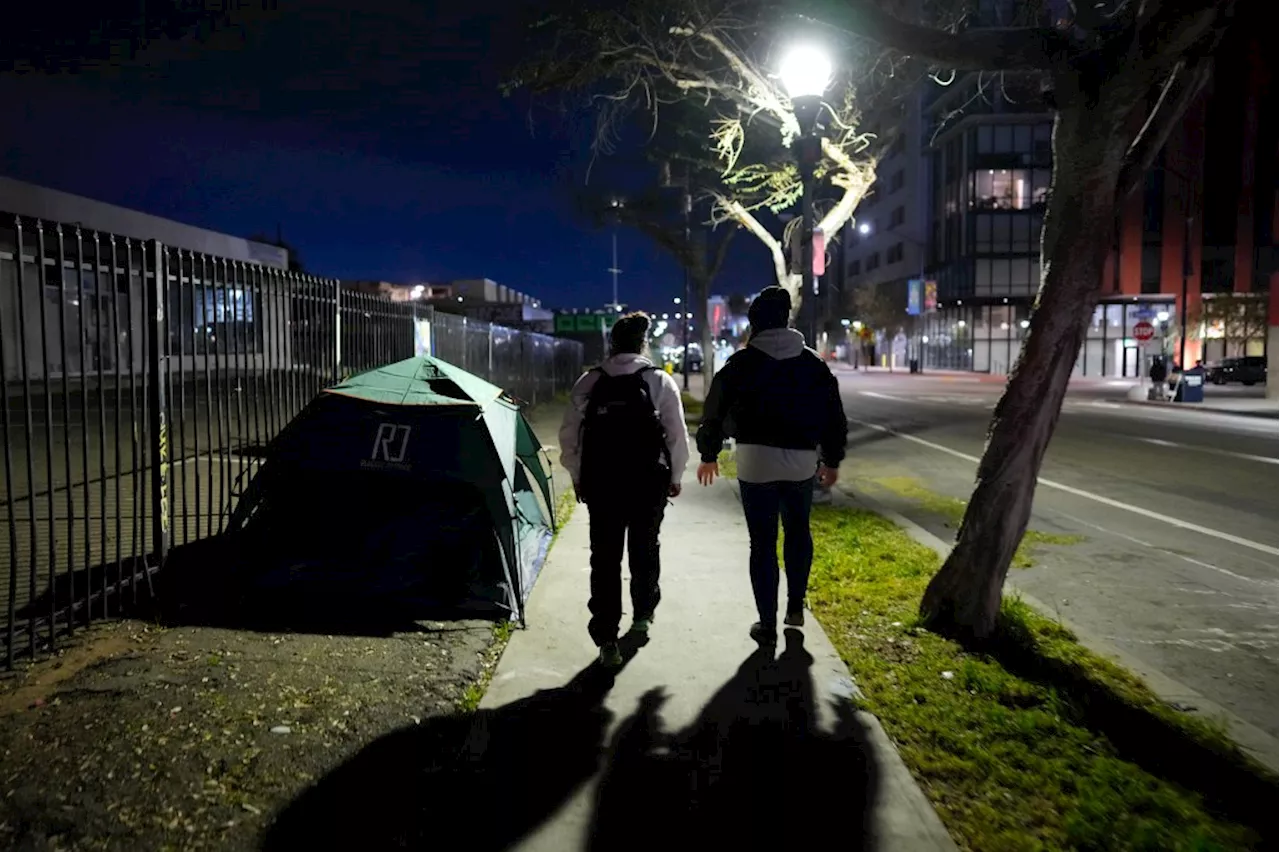
San Diego County initiated its annual point-in-time homeless count on January 26, 2025, deploying approximately 1,700 volunteers to assess the scale of homelessness across the region. This comprehensive effort aims to gather critical data on individuals living on the streets or in shelters, enabling service providers to identify demographic trends and allocate resources more effectively.
Volunteers Engage with the Homeless Community
Early Thursday morning, volunteers canvassed the downtown East Village area, a neighborhood noted for its significant concentration of unsheltered residents. They moved from tent to tent and sidewalk to sidewalk, conducting interviews and gathering vital statistics that will inform future homelessness prevention programs.
The Regional Task Force on Homelessness oversees this process, which entails months of preparation and analysis. According to officials, the data collected during this count plays a crucial role in determining the allocation of state and federal funding for homelessness initiatives.
One participant, Gabriel Perez, who has faced personal challenges since his release from jail, shared his aspirations during the count. “My plan is to get on my feet, be a man and work,” he said. Perez, who has experienced homelessness for about a year and a half, is an experienced landscaper whose life was disrupted by a family tragedy.
Others, like Laura Diaz, have been homeless for longer periods, with Diaz stating she has lived on the streets for approximately six years due to substance abuse issues. “You get used to them,” she noted, referring to her relationships with fellow homeless individuals.
Community Efforts and Observations
Teams from local organizations, including Father Joe’s Villages, played a significant role in the count, with about 50 staff members participating. Carmen Jimenez, a supervisor at Father Joe’s, approached individuals with warmth, asking, “Would you like to participate in the point-in-time count 2026?” In exchange for their cooperation, participants received gift cards and essential items.
Throughout the day, volunteers encountered a mix of responses. While some individuals were open to sharing their experiences, others preferred to remain distant, accepting gifts through small openings in their tents. In some areas, volunteers noted a visible decrease in the number of encampments compared to previous years, which was a hopeful sign according to outreach workers.
In areas like Lemon Grove, outreach workers expressed optimism about a potential reduction in the number of individuals living in encampments. However, some residents still faced challenging circumstances. One woman declined additional resources but accepted a pair of sweatpants from an outreach worker.
The count also highlighted the ongoing struggles of individuals who have been homeless for extended periods. A man named Alex, 39, stated he had been living outside for over ten years, while another individual, Carlos, shared his history as a former social worker and professional baseball player, revealing the complexities of homelessness.
As the data from this year’s count is analyzed, previous counts have indicated trends that raise concerns. The last point-in-time count revealed a total of 9,905 homeless individuals in San Diego County, with a reported decrease of 7% in homelessness across the region compared to the previous year. Families without shelter decreased by 72%, and homeless veterans saw a decline of 25%.
Joshua Bohannan, chief strategy officer for Father Joe’s, acknowledged the challenges ahead. “I expect that to go up again,” he cautioned, underscoring the ongoing need for effective homelessness intervention strategies.
While the annual count provides critical insights into the state of homelessness in San Diego County, the accuracy of the federally mandated tally is occasionally questioned. Despite this, it remains one of the best overall indicators for guiding prevention and assistance programs aimed at addressing homelessness.
As San Diego continues to grapple with the complexities of homelessness, the annual count serves as both a reflection of current challenges and a foundation for future initiatives aimed at supporting the vulnerable population within the community.