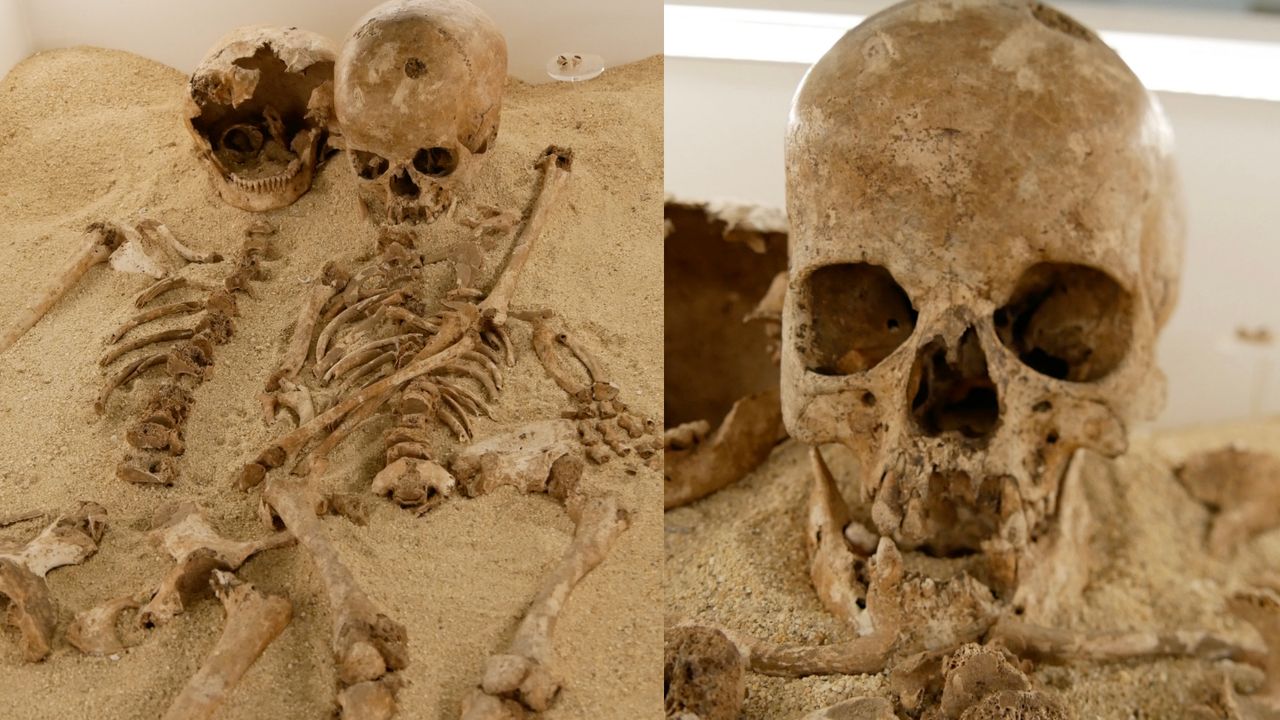
A recent DNA analysis has uncovered that a teenage girl, who lived approximately 12,000 years ago in a cave in Italy, had a rare form of dwarfism known as acromesomelic dysplasia, Maroteaux type (AMDM). The research marks the earliest DNA diagnosis of a genetic disease in anatomically modern humans, providing unprecedented insights into ancient health conditions.
The remains of the girl, referred to as Romito 2, were discovered in the limestone Romito Cave alongside eight other prehistoric hunter-gatherers in 1963. A detailed examination of her skeleton revealed that she stood around 3 feet, 7 inches (110 centimeters) tall, significantly shorter than the average height for individuals of her era. The findings, published in The New England Journal of Medicine, highlight the implications of genetic disorders in early human populations.
According to Adrian Daly, a physician and researcher in endocrinology at the University Hospital of Liège, this diagnosis is groundbreaking. “Identifying with near certainty a single base change in a gene in a person that died between 12,000 and 13,000 years ago is the earliest such diagnosis by about 10 millennia,” he stated. This research provides a critical link between ancient health challenges and modern genetic understanding.
Romito 2 suffered from AMDM, a condition characterized by an extreme shortening of the limbs, particularly affecting the forearms, forelegs, hands, and feet. This genetic disorder results from mutations on both chromosomes of the NPR2 gene, which is crucial for bone growth. The limitations imposed by her condition would have hindered her mobility and daily activities, as noted by Daly and his colleagues.
The study also corrected previous assumptions regarding Romito 2’s gender. Initial research had indicated that the skeleton was male, but DNA testing of material collected from the left inner ear confirmed that Romito 2 was female. She was buried in a curled position alongside another individual, referred to as Romito 1, who was also interred in the cave. Genetic testing revealed that Romito 1 was female and a first-degree relative of Romito 2, likely her mother or sister.
Interestingly, Romito 1 was shorter than average for adults of her time, measuring 4 feet, 9 inches (145 cm) tall. The analysis indicated that she possessed one abnormal copy of the NPR2 gene, which may have limited her growth to a lesser degree than Romito 2, who carried two abnormal copies, resulting in more pronounced dwarfism.
Both individuals belonged to the Villabruna genetic cluster, a population of hunter-gatherers that expanded from Southern Europe into Central and Western Europe approximately 14,000 years ago. Although the researchers found no evidence of close inbreeding among the individuals buried at Romito Cave, they suggested that the population in the region was likely small.
The circumstances surrounding the deaths of Romito 1 and Romito 2 remain unclear, as their remains show no signs of trauma. Notably, Romito 2’s nutritional condition and diet appeared similar to those of other individuals interred in the cave, indicating a community that likely provided care and support.
In conclusion, the discovery of Romito 2 and the identification of her genetic disorder not only enhance our understanding of ancient human health but also highlight the complexities surrounding genetic conditions throughout history. The research paves the way for further studies into the genetic landscape of early human populations.