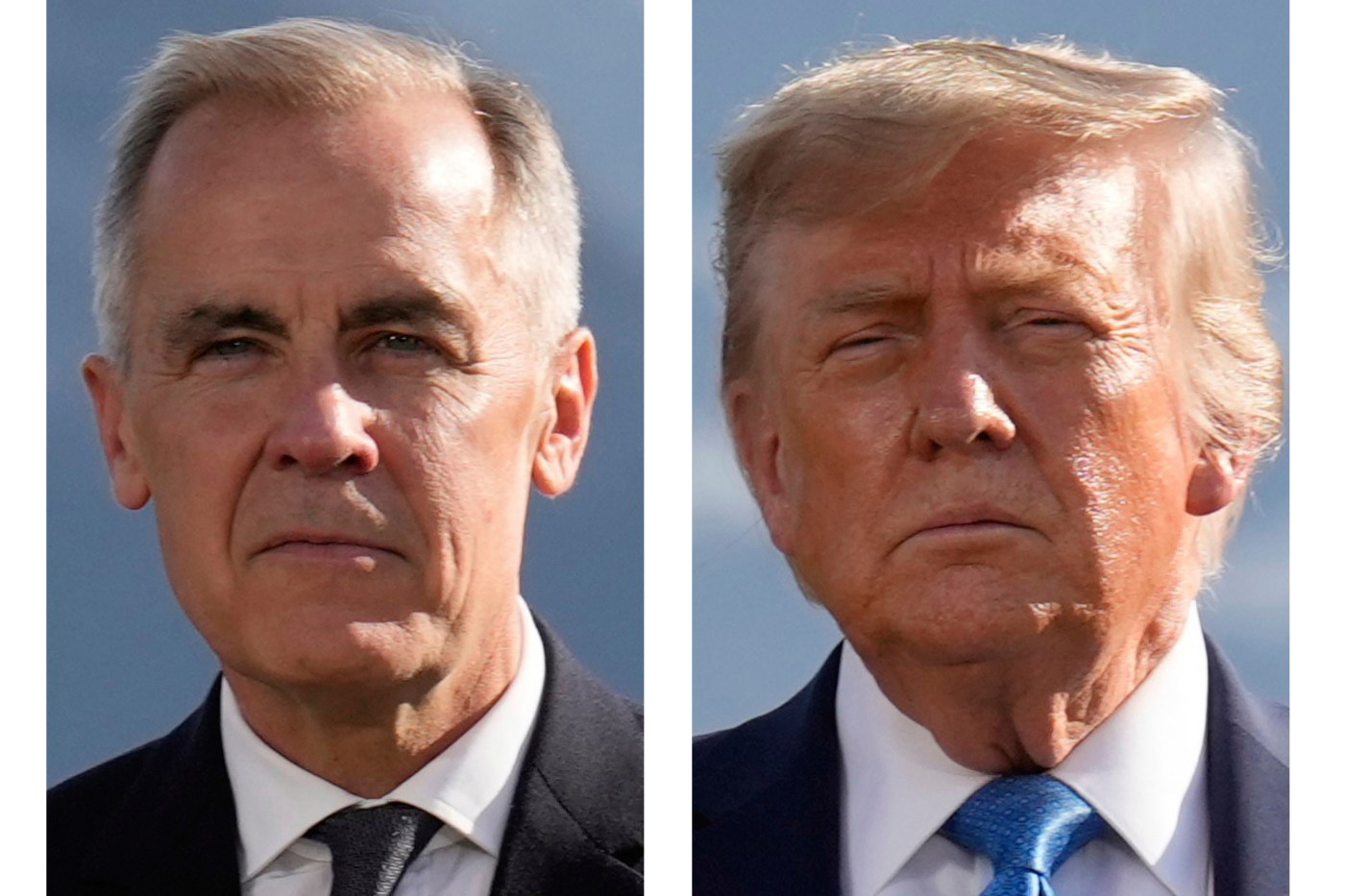
President Donald Trump issued a stark warning to Canada on March 2, 2024, threatening to impose a 100% tariff on Canadian imports should the country proceed with its trade agreement with China. This statement escalates an ongoing feud with Prime Minister Mark Carney, who has emerged as a vocal critic of Trump’s policies and an advocate for strengthening alliances among nations opposing Trump’s approach.
In a social media post, Trump stated, “If Carney thinks he is going to make Canada a ‘Drop Off Port’ for China to send goods and products into the United States, he is sorely mistaken.” This comment follows Canada’s recent negotiations to lower tariffs on Chinese electric vehicles, a move that Trump initially praised. However, tensions have intensified as Carney’s actions have drawn scrutiny from the U.S. administration.
Canada’s Minister of International Trade, Dominic LeBlanc, confirmed that Canada and China had resolved several significant trade issues, but there are no plans for a free-trade agreement at this time. The backdrop of this dispute includes Trump’s controversial proposal to acquire Greenland, which has further complicated U.S.-Canada relations.
Escalating Tensions and Trade Dynamics
During a recent appearance at the World Economic Forum in Davos, Switzerland, Trump remarked, “Canada lives because of the United States,” to which Carney responded emphatically, asserting, “Canada doesn’t live because of the United States. Canada thrives because we are Canadian.” This exchange underscores the growing divide between the two leaders and their respective nations.
Carney’s speech in Davos received considerable acclaim, contrasting sharply with Trump’s remarks and showcasing his role as a leader advocating for a coalition of nations resisting autocratic influences. Political science expert Daniel Béland from McGill University noted that Carney appears to have garnered more respect from Trump in the past; however, following Carney’s recent international engagements, their relationship has soured significantly.
Trump has continued to provoke Canada by referring to Carney as “Governor Carney,” a nickname previously used for former Prime Minister Justin Trudeau. This ongoing name-calling reflects a deterioration in diplomatic relations, and Carney’s recent actions, including a visit to China, have only fueled Trump’s ire.
Carney’s recent announcements included plans to reduce tariffs on Chinese products, a decision that Trump characterized as detrimental. The Prime Minister emphasized that while Canada aims to strengthen its relationship with China, it will not overlook the complexities of its ties with the United States, particularly concerning human rights issues.
Implications for U.S.-Canada Trade Relations
Canada remains a critical trading partner for the United States, with nearly $2.7 billion worth of goods and services crossing the border each day. Approximately 60% of U.S. crude oil imports and 85% of electricity imports originate from Canada. The country is also a leading supplier of essential materials, including steel, aluminum, and uranium.
Despite Trump’s threats, Canada has largely been shielded from the harsher impacts of U.S. tariffs due to the Canada-U.S.-Mexico Agreement, which is set for review this year. Ontario previously aired an anti-tariff advertisement in the U.S., which led to a halt in trade discussions with Canada. Although Trump had threatened to increase tariffs by an additional 10%, he did not follow through with this plan.
As Canada navigates its complex relationship with the U.S., it has also faced challenges from China. Following the imposition of tariffs on Canadian goods, China responded by levying similar taxes on Canadian canola oil and various agricultural products. Nevertheless, as tensions with the U.S. continue to rise, Canada appears to be carving out a more independent foreign policy path, particularly with respect to China.
LeBlanc reiterated Canada’s commitment to ensuring that its trade relationships benefit both Canadian and American workers, highlighting the intertwined nature of the economies. As this trade dispute evolves, the implications for both nations remain significant, potentially reshaping their economic landscape for years to come.