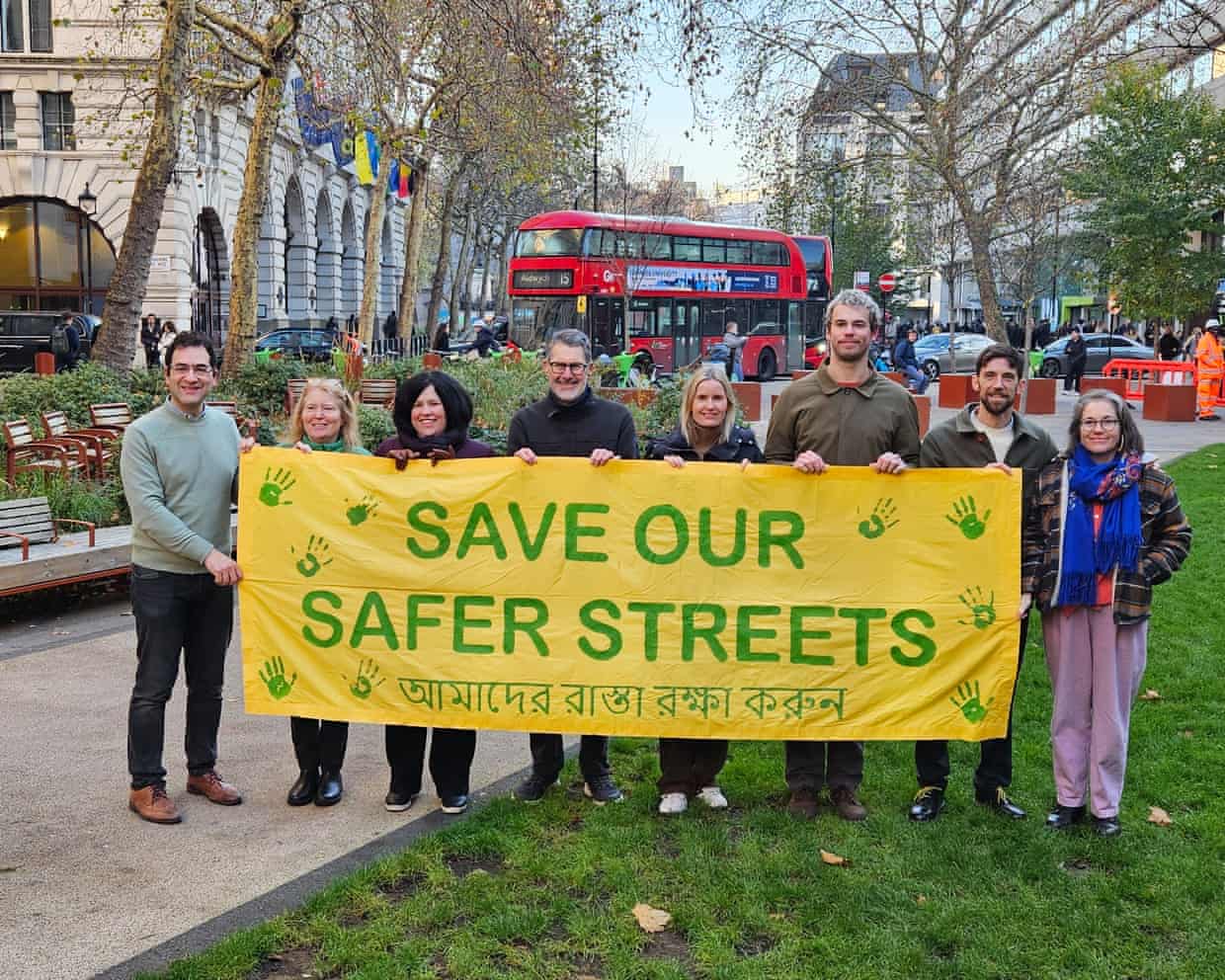
The Court of Appeal has ruled that the Mayor of Tower Hamlets, Luftur Rahman, acted unlawfully in his attempt to remove three low traffic neighbourhood (LTN) schemes. This decision has been welcomed by road safety advocates who have campaigned for over three years to maintain these traffic restrictions in the east London areas of Bethnal Green, Shoreditch, and Columbia Road.
The case arose after Rahman had previously won a ruling in December 2022 at the High Court, where he argued that the LTNs were hindering access for working-class residents who rely on cars. His campaign manifesto pledged to “reopen our roads” and abolish the “failed Liveable Streets scheme,” claiming that the LTNs blocked emergency services and limited access for vulnerable residents.
Advocates for the schemes countered that the LTNs provided essential benefits to local communities. They received backing from local NHS trusts and headteachers of five schools, who asserted that these measures were necessary to protect public spaces from the negative impacts of vehicular traffic. A spokesperson for the campaigners emphasized that the LTNs are “simple and cheap infrastructure” that encourage walking, cycling, and the use of public transport, thus serving vulnerable members of society and enhancing safety and accessibility.
During the appeal hearing, the judge determined that Rahman lacked the authority to remove the LTNs, as they were implemented under a traffic strategy approved by Transport for London (TfL). Ted Maxwell of Save Our Safer Streets noted that TfL’s involvement was crucial in securing the appeal victory. He remarked, “The judge said Rahman acted beyond his powers,” underscoring the legal backing for the LTNs.
Maxwell expressed hope that this ruling would inspire other activists in London. “We are vindicated and this is a very emotional moment for us. We hope campaigners for safer streets see this as a shot in the arm,” he added.
The Mayor of London, Sadiq Khan, has consistently advocated for reducing car journeys across the capital, emphasizing the importance of expanding low traffic areas and enforcing 20 mph speed limits. A spokesperson for TfL stated, “We are very pleased with the court’s decision… Walking and cycling infrastructure, such as low traffic neighbourhoods, plays an important role in making our streets safer.”
This ruling not only reinforces the importance of community-led campaigns but also clarifies the legal framework within which London boroughs must operate concerning traffic management strategies. The case highlights a growing recognition of the need for urban planning that prioritizes safety and accessibility for all residents.