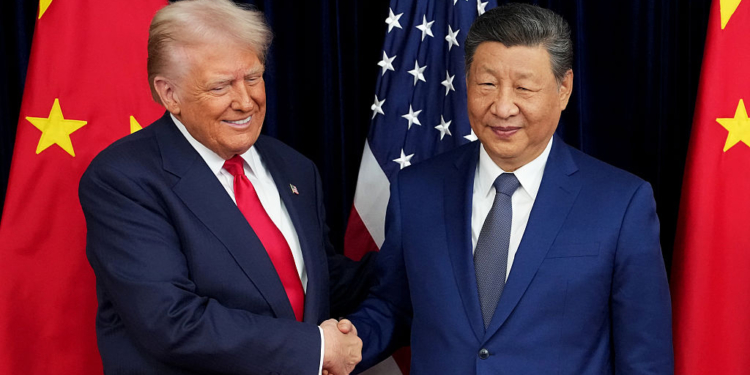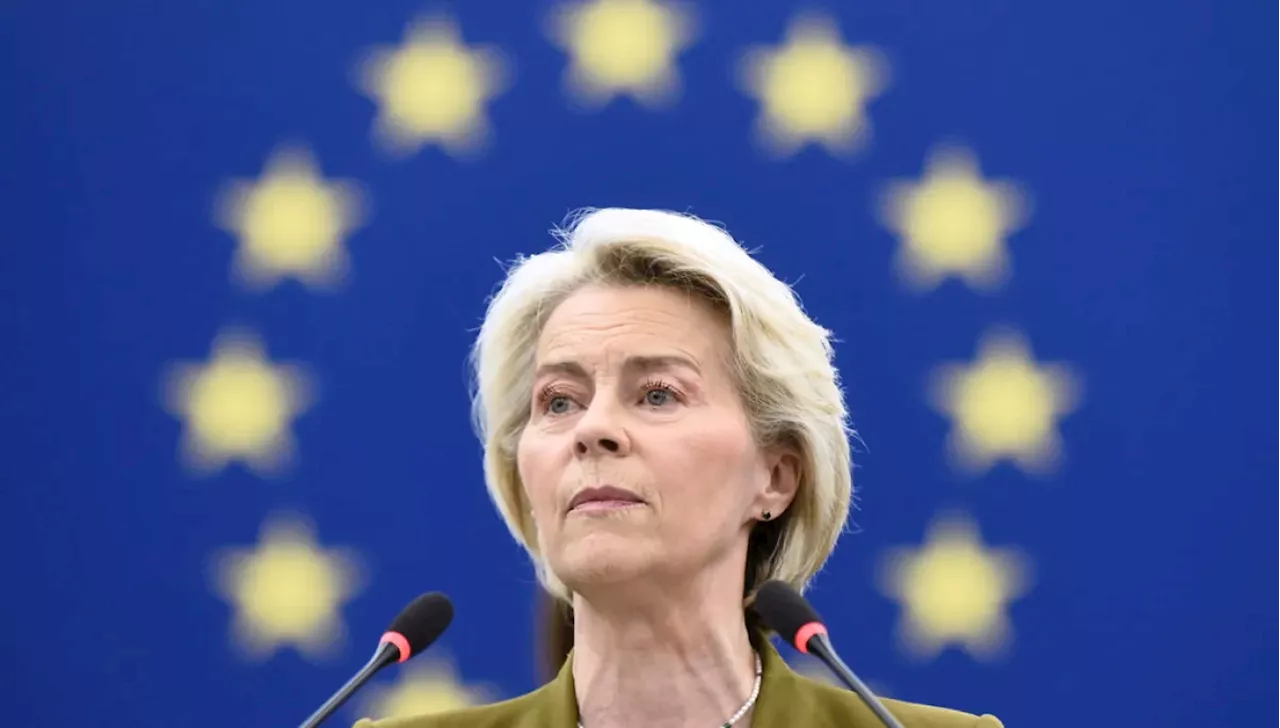
Ursula von der Leyen, President of the European Commission, articulated her vision for a more independent Europe during her address at the World Economic Forum on January 17, 2024. Her remarks came as a direct response to former U.S. President Donald Trump’s recent threats to impose tariffs on European goods, a move she described as detrimental to transatlantic relations.
In her speech, von der Leyen highlighted the importance of dialogue, aligning with this year’s theme, “A Spirit of Dialogue.” She emphasized that if Trump proceeds with the proposed tariffs, the EU will respond with an “unflinching, united, and proportional” reaction. Nevertheless, she underscored the need for cooperation over confrontation, stating, “Arctic security can only be achieved together. This is why the proposed additional tariffs are a mistake, especially between long-standing allies.”
The European Union and the United States reached a significant trade agreement in July 2022, which von der Leyen noted should be honored. “In politics as in business – a deal is a deal. And when friends shake hands, it must mean something,” she remarked. She cautioned that escalating tensions would only serve the adversaries both sides seek to exclude from their strategic landscape.
Emphasizing European Independence
Von der Leyen’s speech also addressed the changing global landscape and the necessity for Europe to adapt. She acknowledged that since the inaugural World Economic Forum in 1971, the world has undergone significant transformations. Yet, she affirmed that the core principle of fostering dialogue remains vital. “Geopolitical shocks can and must serve as an opportunity for Europe,” she stated, advocating for a renewed sense of independence that has been a long-standing necessity.
Reflecting on the skepticism surrounding her earlier call for “European independence,” von der Leyen noted that the growing consensus on this issue has emerged within just a year. “The sheer speed and almost unthinkable scale of the change have driven this, but the underlying imperative is still the same,” she explained.
She called for a proactive approach, urging Europe to embrace change rather than cling to nostalgia. “If this change is permanent, then Europe must change permanently too,” she asserted, highlighting the urgency of building a more autonomous Europe.
New Trade Agreements and Future Partnerships
During her address, von der Leyen announced a landmark trade agreement between the European Union and Latin America, which she described as the largest free trade zone in the world. “This market is worth over 20% of global GDP, comprising 31 countries with more than 700 million consumers aligned with the Paris Agreement,” she noted. This agreement signifies a strategic choice for the EU to prioritize fair trade and diversification of supply chains.
Von der Leyen also revealed her plans to negotiate a significant trade deal with India, referring to it as “the mother of all deals.” While still under negotiation, she expressed optimism about its potential impact. “This deal would create a market of 2 billion people, accounting for almost a quarter of global GDP,” she stated, emphasizing Europe’s commitment to engaging with dynamic economic regions.
As she concluded her address, von der Leyen reiterated the importance of moving towards a new economic framework that reflects the realities of the 21st century. “Europe wants to do business with the growth centers of today and the economic powerhouses of this century, from Latin America to the Indo-Pacific, and far beyond,” she affirmed.
In summary, Ursula von der Leyen’s address at the World Economic Forum outlined a clear vision for the European Union’s future, emphasizing the need for independence and collaboration in the face of external pressures. Her statements reflect a commitment to adapting to a rapidly changing global environment while fostering strong international partnerships.