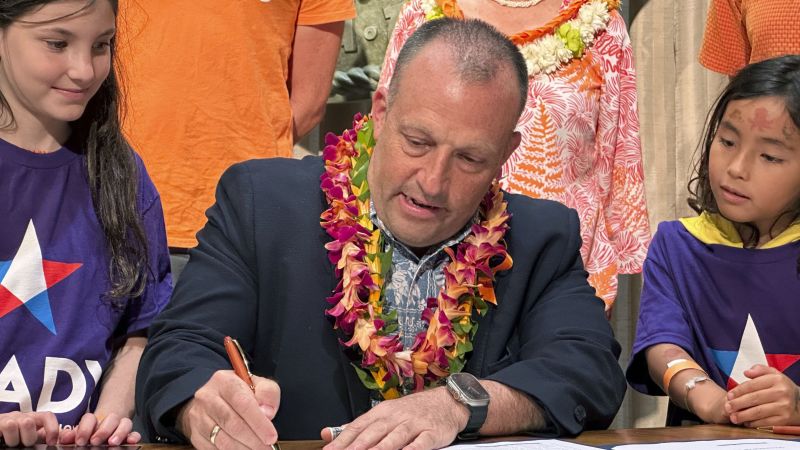
UPDATE: The US Supreme Court is set to hear critical arguments today regarding a controversial Hawaii law that bans individuals from carrying firearms onto private property without explicit permission from the owner. This measure aims to reduce gun presence in public spaces like retail stores, following a significant expansion of Second Amendment rights established in a 2022 ruling.
The case, Wolford v. Lopez, is pivotal in the ongoing national debate over gun rights and could reshape the legal landscape for firearm regulations across the United States. The Supreme Court’s conservative majority will weigh arguments about whether Hawaii’s law contravenes the recent precedent set in Bruen, which affirmed the right to bear arms outside the home.
Hawaii’s law requires that concealed carry permit holders obtain express consent from property owners to carry firearms in publicly accessible private spaces. Gun control advocates argue that this regulation respects property rights, stating that property owners have the right to dictate what is permissible on their premises. Douglas Letter, chief legal officer for the gun control group Brady, emphasized, “Private property rights have been foundational to American identity.”
Meanwhile, opponents of the law, including permit holders and gun rights organizations, contend that it effectively bans firearms in most public settings, undermining the Second Amendment. They argue that it is unconstitutional for Hawaii to impose a “default” prohibition on firearms, stating, “The right to prohibit firearms belongs to the property owner, not the State.”
The Supreme Court’s impending decision is particularly urgent, as it follows an earlier ruling where a trial court blocked the Hawaii statute. However, the Ninth Circuit Court of Appeals sided with the state, allowing the law to remain in effect pending this appeal. This case is especially notable as it pits state regulations against the backdrop of a landmark Supreme Court decision that broadened gun rights.
Hawaii’s Attorney General, Anne Lopez, defends the law by asserting it aligns with historical precedents, citing state laws that have long prohibited armed entry onto private property. “Both at the time of the Founding and in the Reconstruction Era, numerous state laws prohibited armed entry onto private property without the owner’s express consent,” Lopez stated in court filings.
As the Supreme Court prepares to deliberate, the implications of their ruling could resonate beyond Hawaii. Similar laws exist in California, New York, New Jersey, and Maryland, but Hawaii’s law is considered the most stringent. Gun rights advocates argue that a ruling against Hawaii could set a dangerous precedent for gun control measures nationwide.
Today’s hearing is anticipated to clarify whether states can impose such restrictions while adhering to constitutional standards. The court has not yet decided whether to consider only historical laws from the Founding era or to include laws from the mid- to late 1800s, a point that remains contested among legal experts.
This urgent hearing is crucial not only for Hawaii but also for the broader national conversation about gun rights and public safety. As the legal battle unfolds, the Supreme Court’s decision could influence how states navigate the balance between Second Amendment rights and property owners’ rights in the years to come.
Stay tuned for live updates as this developing story progresses, highlighting the ongoing tension between gun control and individual rights in America.