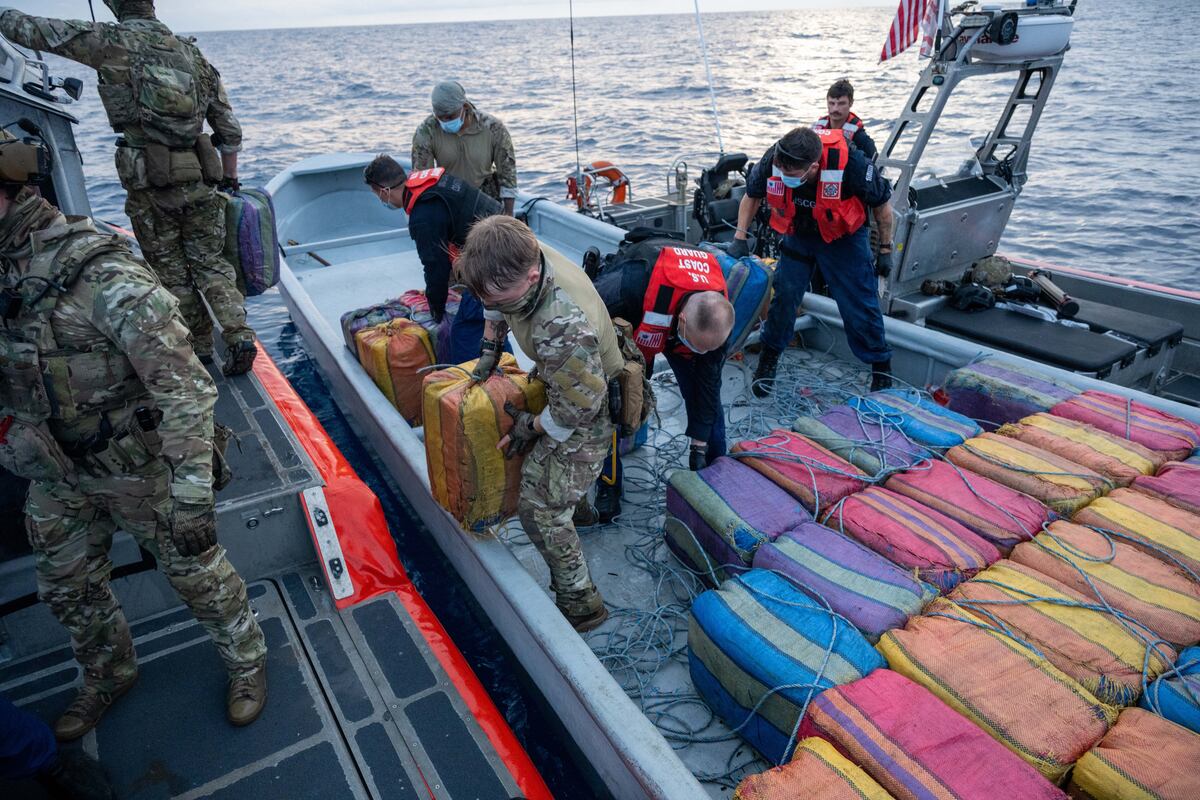
The U.S. Coast Guard has fallen short of its drug interdiction goals for the past ten years, primarily due to a shift in focus toward migrant interdiction. This finding comes from a report published by the Government Accountability Office (GAO) on October 3, 2023. The Coast Guard’s resource allocation towards migrant interdiction has significantly impacted its ability to effectively combat drug trafficking at sea.
Between 2015 and 2024, the Coast Guard missed its drug interdiction metrics while simultaneously failing to meet its migrant interdiction targets for six out of those ten years. The GAO report highlights that this redirection of assets stemmed from limited resources, including a shortage of vessels and aircraft, delays in acquiring replacements, and workforce shortages.
Performance Metrics Under Review
The GAO notes that the performance measures used to gauge the success of interdiction efforts were inadequate. In response, Coast Guard officials announced the development of six new drug interdiction performance measures as of July 2025. However, they are still in the early stages of creating new metrics for migrant interdiction.
Over the course of a decade, the Coast Guard adjusted its drug interdiction targets downward three times to simplify achievement. Yet, the agency still failed to meet these revised goals. According to the GAO, the service’s reliance on medium endurance cutters for drug interdiction was hindered by a decline in operational availability due to equipment failures.
The challenges did not end with vessel availability. The Coast Guard experienced significant wait times for new aircraft and vessels, coupled with affordability issues for new assets. Staffing problems further exacerbated the situation. Although the Coast Guard met its recruiting goals in fiscal 2024, it fell short of its targets from 2019 to 2023, leaving it approximately 2,600 personnel short by the end of 2024.
Migration Surge Complicates Operations
The situation worsened when the Coast Guard redirected assets from drug interdiction to address a surge in maritime migration in 2022. From fiscal 2022 to 2024, the agency faced the highest levels of maritime migration in three decades, with nearly 70,000 migrants attempting to reach the U.S. via the Caribbean Sea and Florida Straits. This figure sharply contrasts with the average of 8,200 migrants per fiscal year from 2015 to 2021.
During this migration surge, the Coast Guard deployed 80 cutters as part of Operation Vigilant Sentry, which focuses on interdicting both drugs and migrants in the Caribbean. Notably, 38 of these cutters were reassigned from other missions. Coast Guard officials characterized migrant interdiction as a “life-saving mission” and prioritized it over drug interdiction.
This operational shift is reflected in the statistics. Between fiscal 2021 and 2023, the Coast Guard increased operational hours for aircraft and vessels dedicated to migrant interdiction by 66%, while reducing hours for drug interdiction by 62%. This change resulted in a significant decline in drug seizures, which halved during that timeframe. In 2021, the Coast Guard executed 218 drug seizures, but this number dropped to 112 in 2023, coinciding with the peak of the migration crisis.
The amount of drugs seized also fell, from 143,000 kilograms in 2021 to 110,000 kilograms in 2023. The Coast Guard acknowledged that an uptick in search-and-rescue missions and improved evasion tactics by criminal organizations have further hampered their drug interdiction efforts.
Despite the redirection of resources, the Coast Guard only met its migrant interdiction performance targets in fiscal years 2016, 2017, 2022, and 2023. Each time, the service had adjusted its target numbers downward to facilitate goal achievement, yet still faced challenges.
The GAO report also pointed out that an increase in migrant interdiction efforts by other countries complicated operations. Additionally, there were instances where the Coast Guard detected migrants but required assistance from other agencies. Consequently, these missions did not count towards the Coast Guard’s performance statistics, impacting its ability to meet set targets.
To address these ongoing issues, the GAO recommended that the commandant of the Coast Guard develop new performance measures for migrant interdiction efforts. They also urged the Secretary of Homeland Security to ensure that the Operation Vigilant Sentry task force creates effective channels for sharing lessons learned with other federal agencies.
As the Coast Guard grapples with these multifaceted challenges, the implications for both drug interdiction and migrant safety remain significant, highlighting the need for a balanced approach to maritime security.