A research expedition off the coast of Sweden has brought the astonishing world of cold-water corals to the forefront, thanks to the collaborative efforts of marine biologist Rhian Waller and artist Alice Baker. Utilizing a robotic submarine, the team explored a vibrant underwater ecosystem in the North Sea, revealing a garden of sea pens around 1,600 feet below the surface. This exploration challenges common perceptions of coral habitats, emphasizing that cold-water corals, which make up 65 percent of all known coral species, thrive in the depths of the ocean, far from the tropical reefs most people envision.
Baker describes witnessing the underwater footage as akin to “flying to a different planet.” She, having been inspired by a feature on cold-water coral reefs in a BBC Science Focus issue, reached out to Waller during her studies at Design Academy Eindhoven. This initial contact blossomed into a partnership aimed at increasing public awareness of these often-overlooked marine organisms, which can live for thousands of years and play a critical role in marine ecosystems by providing habitats for numerous sea creatures.
For years, scientists thought the deep ocean was lifeless, but research has revealed rich ecosystems teeming with life. Despite this, deep-sea mining and industrial activities pose significant threats to coral habitats. Observing the corals in the Bratten Marine Protected Area, Baker noted, “They looked quite sad,” indicating the damage that has already occurred.
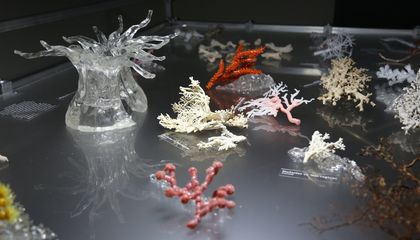
Baker’s artistic endeavor involved creating intricate glass models of 17 cold-water coral species, which she displayed at Dutch Design Week in October. These models were exhibited alongside real coral skeletons on loan from the Royal Netherlands Institute for Sea Research (NIOZ). Baker aims to bridge the gap between scientific research and public understanding, highlighting the beauty of these corals that are rarely seen alive outside of specialized research settings.
The tradition of creating glass models for marine study dates back to the 19th century, when artists Leopold and Rudolf Blaschka crafted detailed representations of marine life. Their techniques remain a mystery, inspiring Baker to honor their legacy by reviving this art form. “Each of my models is tentatively resurrecting a lost craft,” Baker stated, emphasizing her commitment to scientific accuracy in her work. Waller commended Baker’s dedication to detail, noting her determination to ensure that each model could be recognized by taxonomists as specific species.
The collaboration extends beyond Baker and Waller. Other artists, such as painter Lily Simonson, have also ventured into the deep sea to create artworks that bring awareness to the urgent need for conservation. Such artistic partnerships illustrate the critical role that creative expression plays in communicating scientific findings and fostering public support for marine conservation efforts.
In light of recent cuts to scientific funding in the United States and increased interest in deep-sea mining, the need for public engagement is pressing. Waller and Baker recognize that direct exposure to the intricacies of deep-sea ecosystems can cultivate a deeper appreciation for marine life. Baker envisions creating an immersive exhibition that reflects the North Sea’s underwater ecosystem as it once was, before human activity began to alter it significantly.
“I want to get people to experience the colorful, fantastical landscape it must have been,” Baker remarked. She aims to engage even those living near the North Sea, many of whom are disconnected from the vibrant life that exists beneath the waves. By showcasing the hidden beauty of cold-water corals, Baker hopes to inspire a new generation to advocate for the preservation of these invaluable marine ecosystems.