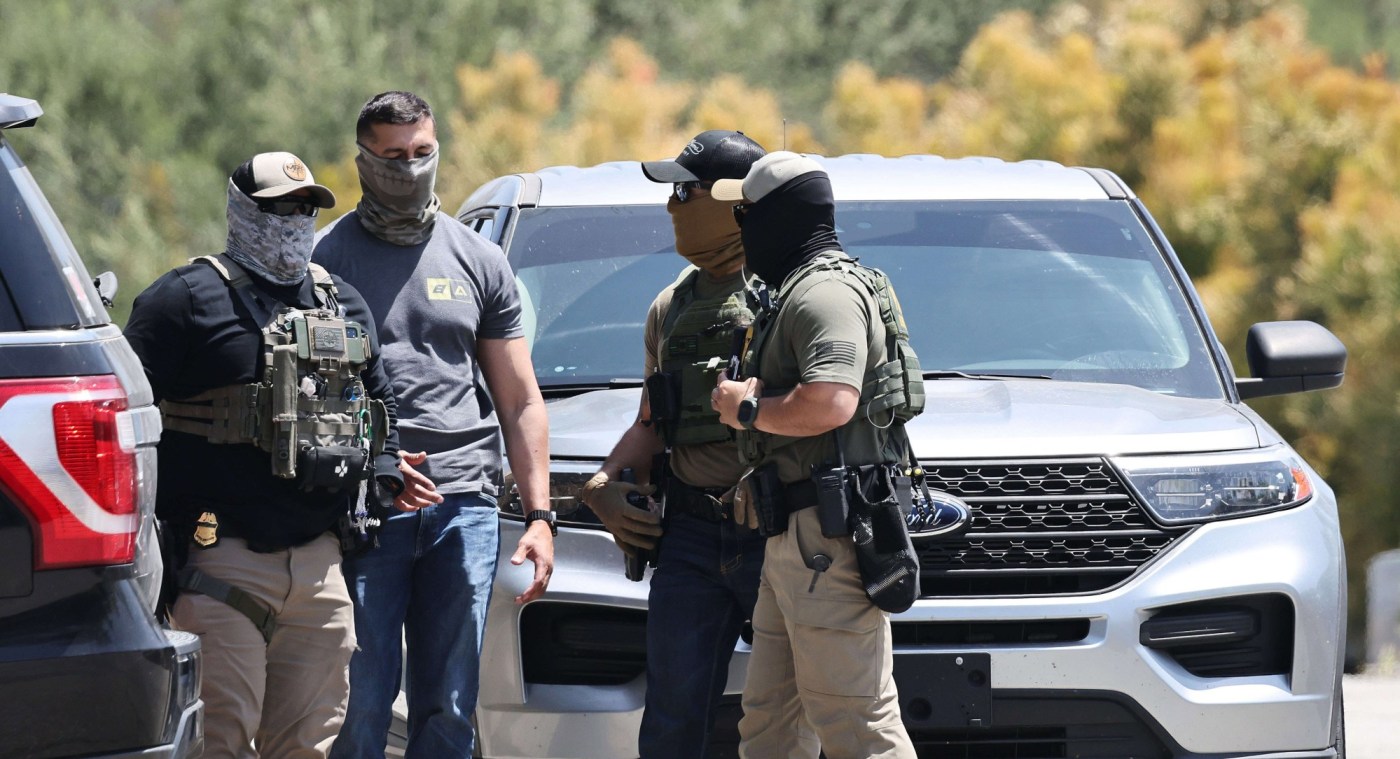
A Los Angeles judge recently heard arguments regarding the U.S. Department of Justice’s (DOJ) request to pause California’s new laws that prohibit federal officers from wearing masks and mandate identification during operations. The laws, effective January 1, 2024, were introduced in response to concerns about federal immigration raids conducted in Southern California, where masked agents detained individuals without visible identification.
The legislation, known as the No Secret Police Act and the No Vigilantes Act, was passed by the California state legislature and signed into law by Governor Gavin Newsom. These measures make California the first state to impose such restrictions on federal law enforcement, specifically affecting agents from U.S. Immigration and Customs Enforcement (ICE).
During the court hearing, Senior U.S. District Judge Christina Snyder did not issue an immediate ruling but listened to the DOJ’s arguments for a preliminary injunction. The DOJ claims the laws are unconstitutional and pose risks to the safety of federal officers, who may face harassment or violence while performing their duties.
In a statement, U.S. Attorney General Pam Bondi emphasized that the laws endanger federal officers and undermine their ability to operate effectively. She stated, “Law enforcement officers risk their lives every day to keep Americans safe, and they do not deserve to be doxxed or harassed simply for carrying out their duties.” The DOJ’s complaint argues that these laws violate the Constitution’s Supremacy Clause, which asserts that states cannot interfere with federal operations.
The DOJ filed the lawsuit in September 2023 against the state of California, Governor Newsom, and California Attorney General Rob Bonta. The complaint asserts that the federal government does not intend to comply with the new state laws, claiming they threaten the safety of officers engaged in law enforcement.
The controversy surrounding these laws stems from the heightened scrutiny of federal immigration practices and the increasing tension between state and federal authorities. According to First Assistant U.S. Attorney Bill Essayli, assaults against federal agents have surged, a situation he attributes to politically charged rhetoric aimed at delegitimizing federal enforcement efforts. He remarked, “Unconstitutional laws such as this one further endanger our brave men and women protecting our community.”
As the legal battle unfolds, the laws remain unenforced while their constitutionality is debated in court. The outcome of this case could have lasting implications for the relationship between state and federal law enforcement in California and beyond.
The situation continues to evolve, drawing significant attention from both supporters and opponents of the new legislation. Observers are keenly watching how the court will respond to the DOJ’s request and what this means for federal agents operating within California’s jurisdiction.