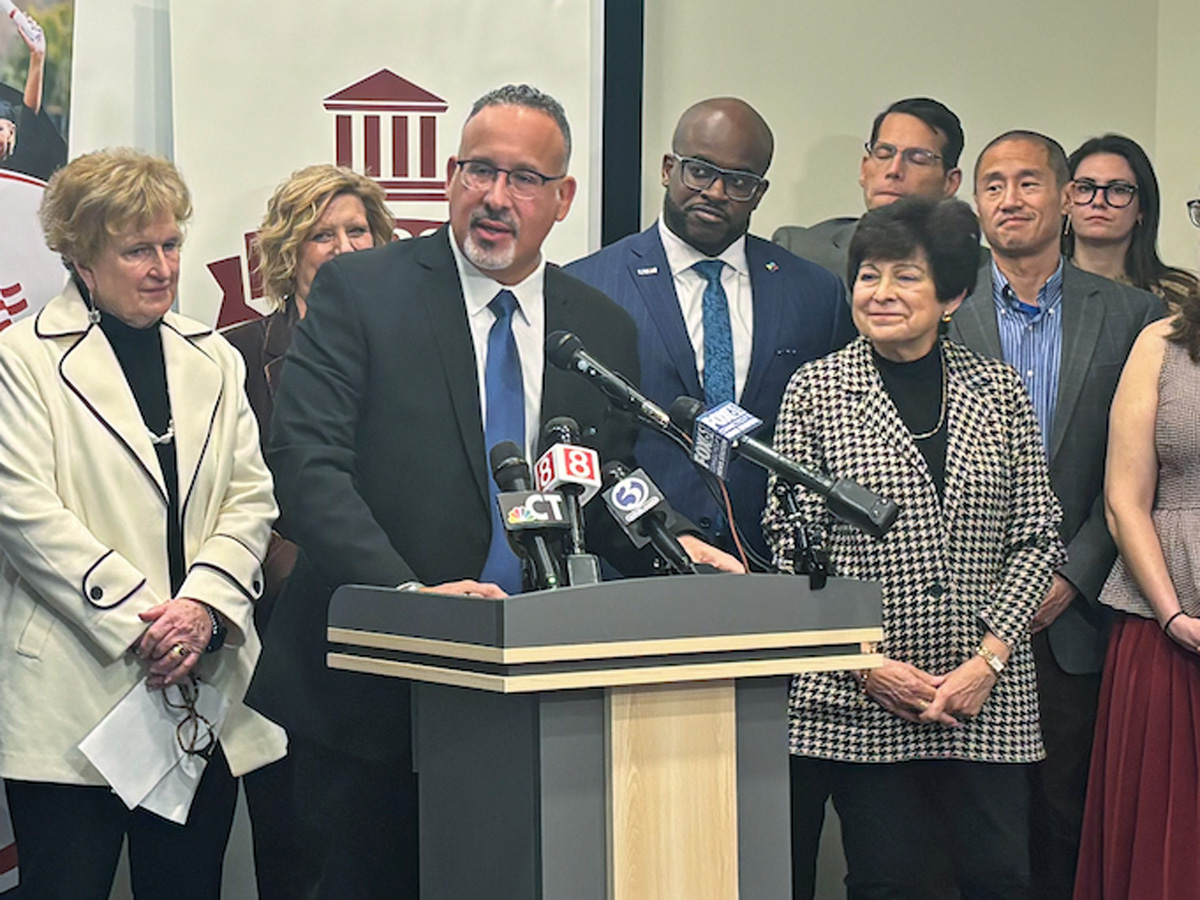
A significant new initiative aimed at boosting economic mobility for youth in Connecticut was announced on Monday. Education, workforce, and business leaders gathered at the Connecticut Association of Public School Superintendents office in West Hartford to introduce the College and Career Pathways Initiative. This program intends to align the state’s education system with the evolving demands of the workforce.
Fran Rabinowitz, executive director of the Connecticut Association of Public School Superintendents (CAPSS), emphasized the importance of this initiative. She stated, “This is a critical step toward ensuring Connecticut’s education systems are fully aligned with the realities of today’s economy and the opportunities of tomorrow.” The initiative aims to unite education, industry, and government to better serve both students and employers.
Linking Education with Career Opportunities
Christine Carver, the superintendent of Bethel School District, noted the powerful impact of connecting classroom learning with future career opportunities. She remarked, “This initiative helps close that gap, giving educators the tools to prepare students for real careers, while ensuring our education systems remain responsive, equitable, and aligned with the future of work in Connecticut.”
Miguel Cardona, former U.S. Secretary of Education and current president of Cardona Solutions, also highlighted the initiative’s significance. He stated, “This initiative is about building clear, equitable pathways that connect students to opportunity, while strengthening Connecticut’s long-term economic growth.”
The College and Career Pathways Initiative is designed to create a comprehensive, future-focused system that links K–12 education, post-secondary institutions, various workforce sectors, and state government. The primary goal is to ensure that Connecticut’s public education system meets labor-market demands, equips students with 21st-century skills, and improves equitable access to meaningful career opportunities.
Phased Implementation Over Next 18 Months
The initiative will be rolled out in multiple phases over the next 12 to 18 months. Key components will include research, framework development, pilot programs, and legislative recommendations. CAPSS, in collaboration with Cardona Solutions, will oversee the design and implementation of the statewide framework.
The initiative focuses on five core strategies:
“This initiative helps close that gap, giving educators the tools to prepare students for real careers.”
- Statewide Workforce-Development Research: Conduct comprehensive research to identify high-growth industries, future workforce skills, talent gaps, and barriers to equitable participation. Deliverables will include a Statewide Workforce Trends & Pathways Report, a Gap Analysis, and a Model Framework Draft.
- College and Career Pathways Framework: Develop a pathways framework aligned with Connecticut’s economic priorities, including advanced manufacturing, health sciences, information technology, green energy, business, and public service.
- Dual Enrollment and Microcredentialing: Create a uniform statewide dual-enrollment framework and microcredentialing structures to enhance access and credit portability, enabling students to earn college credentials, up to an associate degree, while still in high school.
- Policy and Legislative Alignment: Formulate model policy and legislative recommendations to support education and workforce alignment, addressing issues like credit transfer, funding structures, industry partnerships, labor-law modernization, and transportation access.
- Communications and Stakeholder Engagement: Initiate a statewide engagement campaign, including the formation of a College and Career Pathways Council and a public-facing “Pathways to Possibility” campaign to raise awareness and encourage participation.
Supporters of the initiative believe it will play a vital role in preparing Connecticut’s youth for the future workforce, ultimately contributing to the state’s economic development and sustainability. As the initiative progresses, stakeholders will work collaboratively to ensure that the education system evolves to meet the needs of both students and employers in a rapidly changing economic landscape.