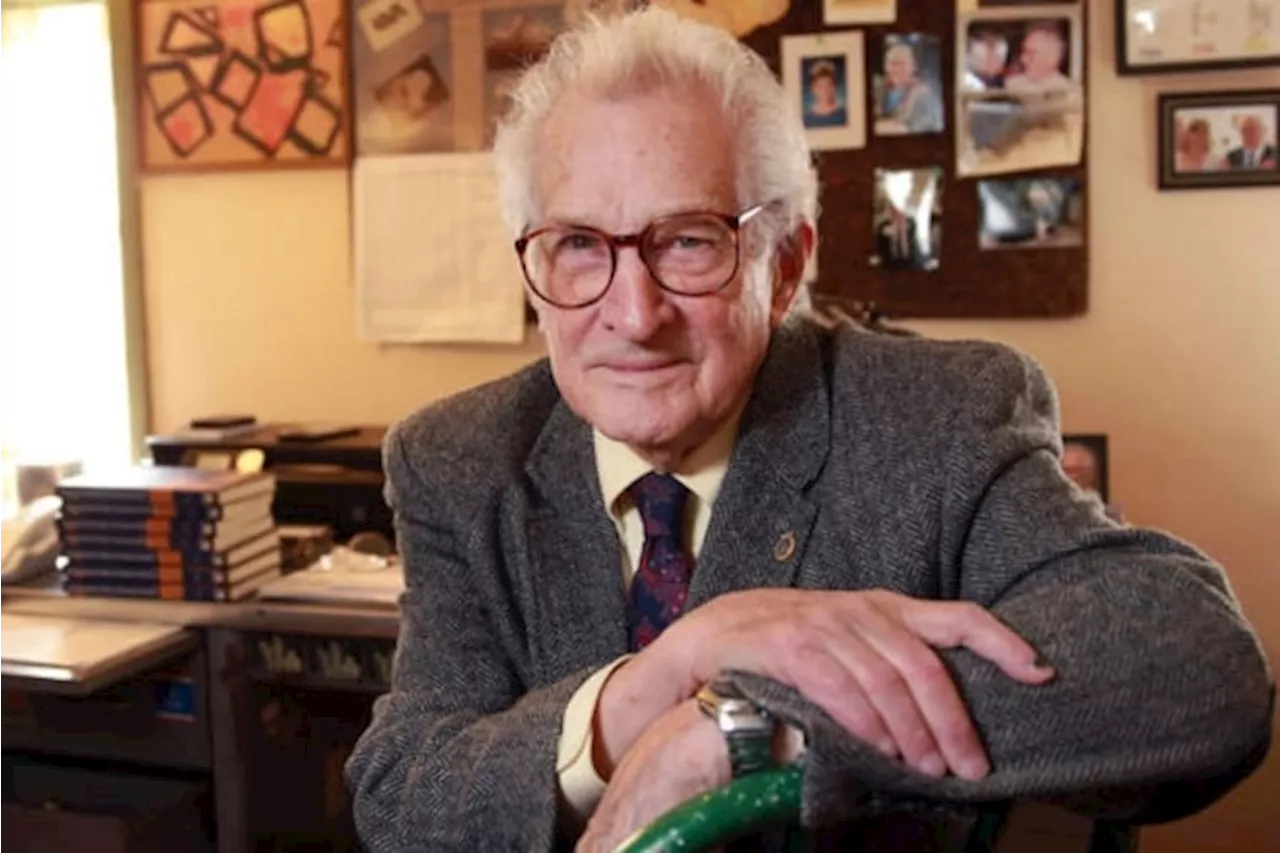
Kenneth W. Ford, a prominent physicist known for his contributions to the development of the hydrogen bomb, has passed away at the age of 99. He died on December 5, 2023, due to pneumonia at the Foulkeways retirement community in Gwynedd, Pennsylvania. Ford’s career spanned decades in research, education, and scientific collaboration, placing him among the giants in the field of physics.
Born on May 1, 1926, in West Palm Beach, Florida, Ford began his journey in physics as a graduate student at Princeton University. In 1950, at just 24 years old, he was recruited to work on the hydrogen bomb project, a decision he later reflected upon saying, “I was told if we don’t do it, the Soviet Union will, and the world will become a much more dangerous place.” His work at the Los Alamos National Laboratory in New Mexico involved critical calculations related to nuclear fusion and fission, culminating in the bomb’s successful testing in 1952.
Ford’s academic career was marked by his roles at several esteemed institutions. He served as president of the New Mexico Institute of Mining and Technology from 1975 to 1982, where he was instrumental in improving enrollment and faculty standards. His leadership extended to the American Physical Society, where he became an education officer in 1986, and later the executive director of the American Institute of Physics in 1987. He retired from the AIP in 1993 but continued to influence the field as a consultant and educator.
Throughout his life, Ford was surrounded by notable figures in physics. He attended lectures alongside Albert Einstein and had personal connections with Robert Oppenheimer and Frederick Reines. His extensive research focused on nuclear structure and particle physics, leading to numerous publications in reputable journals. In recognition of his contributions, he received accolades such as the distinguished service citation from the American Association of Physics Teachers in 1976 and an AAPT medal in 2006 for his notable teaching contributions.
Ford’s legacy is also characterized by his principled stance against the Vietnam War, during which he publicly declined to work on any secret or weapon-related projects. He described this decision as a “statement of principle,” reflecting his evolving views on the implications of nuclear weapons.
Family and friends remember Ford not only for his scientific contributions but also for his vibrant personality. He was an avid pilot, enjoyed folk dancing, and had a passion for word games like Scrabble. He is survived by his children, 11 grandchildren, and a great-grandson, leaving behind a rich legacy in both the scientific community and his family.
As the School of Physical Sciences honors Ford’s foundational role in its history, current leaders reflect on his impact. Michael Moloney, the current chief executive of the AIP, praised Ford’s “steady and transformative leadership.” His commitment to education and research has left an indelible mark, ensuring that his influence will be felt for generations to come.