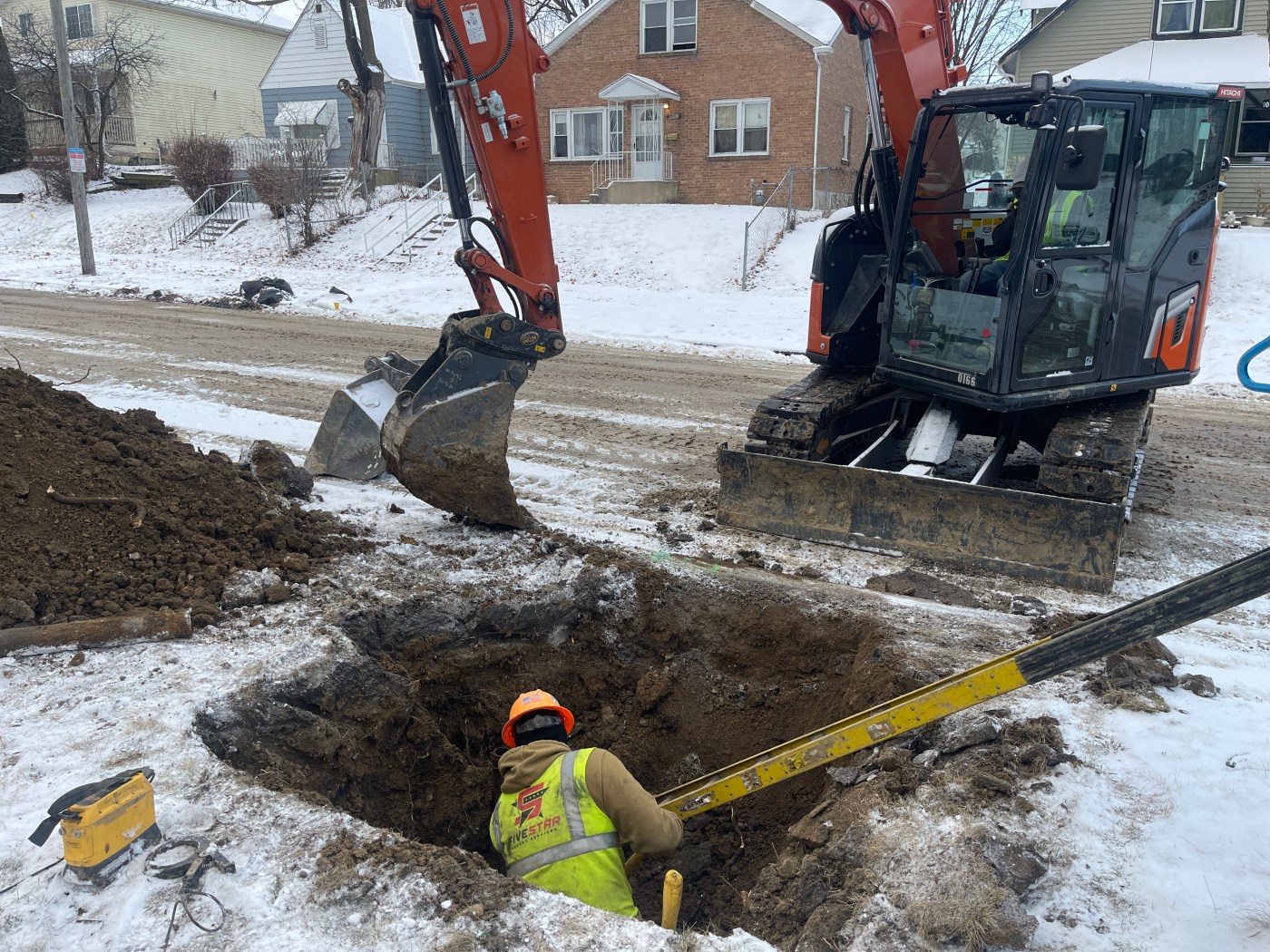
Waukegan is facing significant challenges in identifying and replacing lead pipes in older homes as part of its ambitious replacement program. The city aims to double the number of residences with copper piping by the end of April 2025. Initiated three years ago, the program employs educational outreach to encourage residents to report the type of plumbing they have, allowing the Water Department to assess and replace lead pipes effectively.
The city’s approach includes a user-friendly online platform where residents can take pictures of their pipes and submit them to the Water Department. Additionally, representatives from Robinson Engineering, the contractor managing the project, are conducting door-to-door visits in neighborhoods suspected to contain lead pipes. Despite these efforts, city officials report that community engagement has been lackluster.
Diane Moeller, a project engineer with Robinson Engineering, stated that the online educational campaign has yielded a mere 10% response rate. She noted, “People are afraid to open the door, though it has been more productive,” referring to the direct outreach attempts. The success of these initiatives is crucial for the city’s goal of replacing lead pipes in at least 500 homes by April 30, 2025, with plans to replace another 1,000 in the subsequent fiscal year.
Mayor Sam Cunningham emphasized the importance of the lead line replacement project, asserting that “Safe water is non-negotiable and that is why lead service line replacement is a top priority.” He added that the city is adopting a comprehensive approach to ensure all neighborhoods benefit from this critical infrastructure upgrade.
Funding for the project is secured through the Illinois Environmental Protection Agency (IEPA), with this year’s allocation amounting to $7 million. This financial support has enabled the city to enhance its pipe replacement efforts significantly. In the first two years, Waukegan successfully replaced 1,000 lead pipes with copper. Since the start of the current fiscal year on May 1, 2024, 350 lead pipes have been replaced, with an additional 150 replacements anticipated by the end of April.
Antonio Dominguez, the city’s director of water utilities, explained that lead pipes commonly connect the water main under the street to the buildings. The section from the city’s shutoff valve to the meter is the homeowner’s responsibility. He projected that approximately 8,000 homes still require replacement after May 2027.
To facilitate participation, the city encourages residents to visit waukegansurvey.com, where they can upload pictures of their water connections without requiring contractors to enter their homes. This method aims to streamline the data collection process and alleviate residents’ concerns about privacy.
In an effort to maximize efficiency, Mayor Cunningham outlined plans to synchronize infrastructure improvement projects with lead pipe replacements. “The replacements are being coordinated with road resurfacing projects to reduce costs and construction impacts,” he noted, emphasizing the importance of making financially responsible investments that safeguard public health.
David Motley, the city’s public relations director, expressed urgency in completing the project while IEPA funding remains available. Dominguez cautioned that if state funding ceases, homeowners could face costs ranging from $10,000 to $15,000 for their replacements.
Community resistance has been a more significant hurdle recently, particularly during the fall of 2024. The presence of immigration enforcement agents in the area caused heightened apprehension among residents, disrupting project efforts. Moeller remarked on how this environment affected outreach, stating, “Any time we saw them, we shut down.”
To improve community engagement, Moeller plans to conduct more outreach activities, including town hall meetings and open houses, to foster trust and collaboration. She reflected on her summer experiences, stating that as residents became more familiar with her, they were more willing to participate in the project.
As Waukegan moves forward, the city remains committed to ensuring that all neighborhoods are included in the lead pipe replacement initiative, aiming for a healthier community for current and future residents.