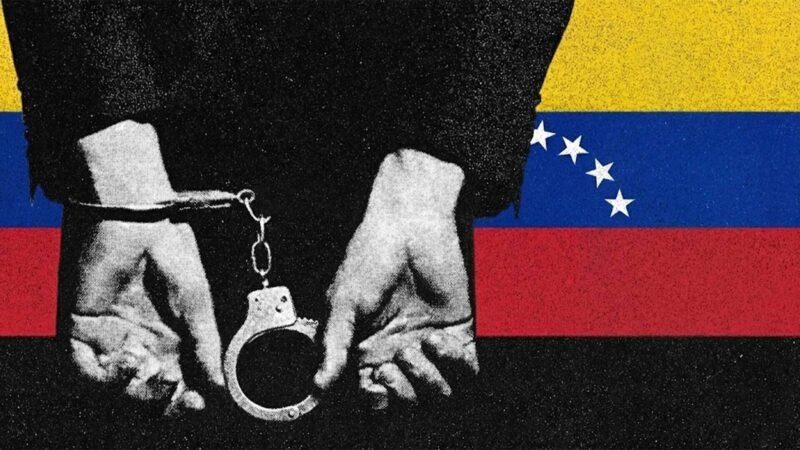
UPDATE: In a surprising move, the Venezuelan regime has just announced the release of a “number of important Venezuelan people and foreigners” as a gesture to promote peace. This announcement was made by Jorge Rodríguez, president of Venezuela’s National Assembly, earlier today.
While specific names of those released remain undisclosed, it has been confirmed that human rights lawyer Rocío San Miguel has been freed. San Miguel was detained in February 2023 at Caracas’ main airport, sparking widespread public outcry. She faced serious accusations of plotting against dictator Nicolás Maduro and was held at the notorious El Helicoide prison without access to her lawyer or family for months.
The fate of other prominent political prisoners remains uncertain. María Oropeza, a young libertarian activist arrested in 2024 after denouncing the regime, livestreamed her arrest on Instagram. Just two days later, chilling footage surfaced showing her in an armored vehicle, heightening concerns for her safety. No updates on her release have been provided yet.
In a troubling context, Pablo and Lubin Montilva recently faced arrest for allegedly celebrating Maduro’s kidnapping by firing a revolver into the air. They are charged with terrorism and treason, facing potential sentences of up to 30 years. It is currently unknown if they have been released.
According to Provea, a human rights organization, over 53,000 Venezuelans have been victims of political imprisonment under Maduro’s regime. The regime employs a “revolving door” tactic, frequently releasing political prisoners only to arrest new ones soon after.
The broader implications of this release are significant. Under Maduro’s rule, political repression has intensified, with reports of torture and inhumane treatment in prisons. Notably, former opposition councilman Fernando Albán died in custody after enduring severe torture. His family alleges he was suffocated and electrocuted before being thrown from a building.
As of now, the regime has declared a state of emergency, with police instructed to arrest anyone allegedly involved in opposing the government. This includes individuals like Marioxis Martínez, who was arrested for a social media post celebrating Maduro’s capture. Disturbing videos show her being detained by unidentified police officers, raising alarms about the regime’s crackdown on dissent.
Additionally, the regime has recently detained 14 journalists covering the swearing-in of the newly elected National Assembly, further illustrating the oppressive climate for media in Venezuela. Many were held for hours before release, while CNN correspondent Steffano Pozzebon was deported.
The release of political prisoners raises questions about the regime’s intentions. Is it a strategic move to ease international pressure or a genuine attempt at reform? The world watches closely as the situation develops.
Stay tuned for updates on this urgent situation and the implications for human rights and political freedoms in Venezuela.