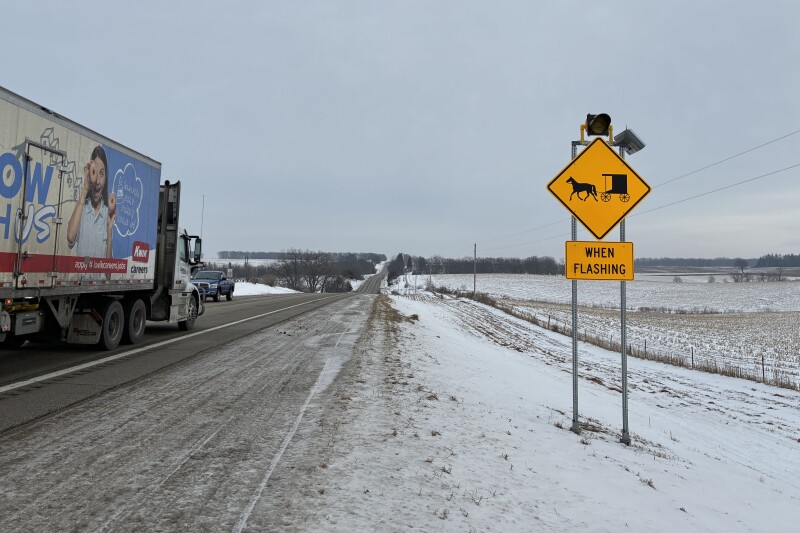
URGENT UPDATE: The Minnesota Department of Transportation (MnDOT) has just installed a critical new warning system on Highway 44 to enhance safety for Amish buggies, a move that comes after recent fatal accidents in the area. This development aims to significantly alert motorists about the presence of slow-moving horse-drawn buggies on a narrow stretch of road between Mabel and Canton in Fillmore County.
The new flashing driver alert signs were activated earlier today, designed to improve awareness among drivers navigating this well-traveled highway, particularly where the shoulder narrows and guard rails are present. Due to these conditions, buggies often have to travel on the road, increasing the risk of collisions.
The alert system employs a sensor that activates a flashing beacon when a buggy is detected approximately 150 feet away from the guard rail. Each direction on Highway 44 features one sign, which displays an Amish buggy symbol, warning drivers to remain vigilant. This innovative approach mirrors the technology used in MnDOT’s existing Rural Intersection Conflict Warning Systems.
This section of Highway 44, located east of its junction with Highway 52, is particularly significant as it runs close to the Highway 52 Amish Buggy Byway, an area known for its sizable Amish community, the largest in Minnesota. Tragically, this location has witnessed a fatal buggy-vehicle crash in 2023 and another serious incident in 2025, highlighting the urgent need for enhanced safety measures.
MnDOT’s new initiative marks the first deployment of this kind of system aimed specifically at protecting Amish buggies on state highways. Officials are optimistic that this timely intervention will reduce the risk of accidents and promote safer travel for all road users.
Motorists are encouraged to remain alert and adhere to the warnings as they navigate this stretch of Highway 44. The installation of these warning signals is a proactive measure that underscores the importance of safety in rural areas where traditional modes of transport coexist with modern vehicles.
Stay tuned for further updates as this story develops and as MnDOT monitors the effectiveness of the new alert system.