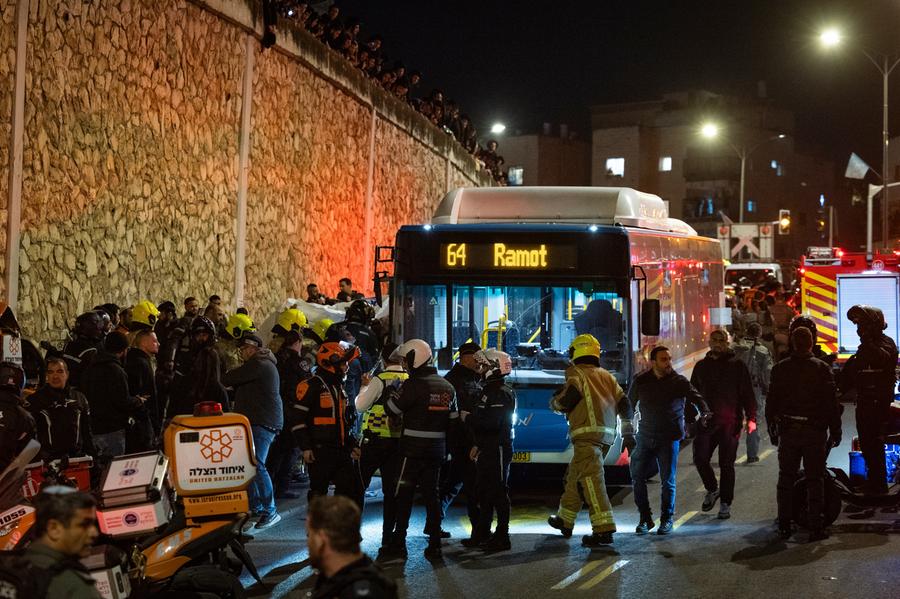
A tragic incident occurred on the evening of March 5, 2024, when a bus struck several anti-conscription protestors in Jerusalem, resulting in the death of a 14-year-old Charedi boy, identified as Yosef Eisenthal. According to Israeli police, the bus collided with three pedestrians on Shamgar Street before continuing onto Ohel Yehoshua Street, where it hit a fourth individual. Emergency services, including Magen David Adom, confirmed the fatality and reported multiple injuries among the protestors.
The incident happened amid a large-scale anti-enlistment demonstration, where Charedi protestors expressed their opposition to military conscription. Witnesses reported that demonstrators set fires, blocked roads, and allegedly confronted journalists during the protest. The bus driver has been arrested and, according to reports, told police he was attempting to avoid protestors obstructing his path. He is set to appear in court later today on a charge of aggravated murder.
The event has sparked outrage among Charedi members of the Knesset, who have attributed the incident to a climate of anti-Orthodox sentiment. Meir Porush, a representative of United Torah Judaism (UTJ), stated, “It is impossible to ignore the fact that more than once during demonstrations by the strictly-Orthodox public, there is a public atmosphere that it is permissible to harm the demonstrators.” Fellow UTJ leader Yitzhak Goldknopf expressed condolences to the victim’s family and emphasized the need to prioritize human life.
In response to the tragic event, Shas, another prominent Charedi political party, condemned the incident as “horrific” and demanded a thorough investigation. They asserted that the “blood of Charedi men is not cheap,” highlighting the need for accountability in cases of violence against their community.
The protests are rooted in a broader controversy surrounding the conscription of Charedi citizens. In 2024, Israel’s Supreme Court invalidated a religious exemption that had been in place for 80 years, leading to significant public unrest. Recently, Shas announced it would not support the government’s upcoming state budget unless an acceptable version of the Charedi draft bill is passed. A modified version of this bill, which would limit conscription to yeshiva graduates and include milder penalties for draft dodgers, is currently under consideration by the Knesset Defence Committee.
The political landscape has shifted, with UTJ having already left the coalition over the draft bill dispute in July. As a result, Prime Minister Benjamin Netanyahu now holds a fragile majority in the Knesset, with only one additional MK supporting his government.
Rabbi Dov Lando, a notable figure within UTJ, criticized the detention of yeshiva students resisting conscription orders. He remarked, “When a yeshiva student is placed in prison solely because he wishes to study Torah, it is not he who is in prison! The Torah itself, God forbid, is in prison.” His comments reflect a deep-seated concern among the Charedi community regarding the implications of enforced military service on their religious practices.
As tensions rise, the Israeli government faces a pressing deadline. Without a compromise with Shas, it must secure the passage of the draft bill by March 31, 2024, to avoid the possibility of new elections. The situation remains fluid, with the potential for further protests and political ramifications as the deadline approaches.