Bac Ninh, a city in northern Vietnam, has rapidly evolved into a major manufacturing hub as companies seek alternatives to China. The shift, driven by rising tensions between Washington and Beijing, has attracted significant foreign investment, particularly from South Korean and Chinese firms. This transformation has changed the economic landscape of Bac Ninh, once known for its rice fields and traditional music.
In recent years, Bac Ninh has seen a surge in factory construction, especially after Samsung established its first phone factory in the area around 2008. This move marked the beginning of a new chapter for the city, making it a key player in Vietnam’s manufacturing sector. As additional companies relocate operations to evade U.S. tariffs, Bac Ninh continues to attract investment, with numerous Chinese companies diversifying their manufacturing bases.
Bac Ninh’s rapid rise is not without challenges. The region faces increasing labor costs and worker shortages, which have surged by 10% to 15% since 2024. Additionally, the city’s infrastructure struggles to keep pace with its growth. As competition intensifies from countries like Indonesia and the Philippines, Vietnam aims to enhance its manufacturing capabilities by focusing on higher-value products.
The Vietnamese government is investing in infrastructure improvements, such as a new highway to the Chinese border that reduces travel time significantly. Furthermore, a railway connection from Hanoi to Haiphong, Vietnam’s largest seaport, will facilitate trade. On December 19, 2024, Bac Ninh commenced the expansion of its industrial zone dedicated to high-tech manufacturing, including electronics and clean energy.
As the city embraces this new identity, it also reflects the broader economic strategies of Vietnam. The nation launched 234 major projects worth over $129 billion just prior to a pivotal National Party Congress in January 2025, where leaders will determine the country’s future direction.
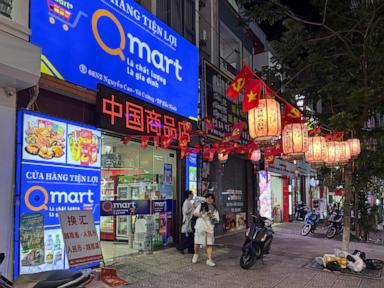
Bac Ninh’s downtown area showcases this transformation. Convenience stores bearing the name Tmall, after Alibaba’s flagship online marketplace, have emerged, while Chinese-language schools are being established to facilitate communication between local Vietnamese and Chinese investors.
Despite the influx of investment, experts caution that Vietnam cannot fully replace China’s manufacturing ecosystem, which benefits from decades of government support and a vast labor pool. Jacob Rothman, co-founder and CEO of Velong Enterprises, highlighted the difficulties in recreating China’s manufacturing advantages overnight.
The race for labor has intensified as companies compete for skilled workers, leading to increased wages and bonuses, including incentives like instant noodle packages for new hires. As Brian Bourke, global chief commercial officer at SEKO Logistics, noted, while Vietnam remains an attractive destination for factories producing footwear, furniture, and technology, it still lags in logistics capabilities compared to China.
Despite these challenges, Vietnam continues to be a favored destination for foreign investment. As of September 2024, cumulative foreign investment reached $28.5 billion, a 15% increase from the previous year. However, concerns about the country’s role in transshipping goods to circumvent tariffs have prompted some manufacturers to diversify their production locations.
Vietnam’s leaders have set ambitious goals to become a prosperous economy by 2045, aspiring to join the ranks of Asia’s economic powerhouses. To achieve this, the country is shifting from low-cost assembly work to producing higher-value goods, including electronics and clean energy equipment. Incentives, such as tax breaks on imported machinery and reduced rents, are being offered to encourage modernization within the manufacturing sector.
As Bac Ninh and Vietnam grapple with rising costs and competition, the stakes are high. Prime Minister Pham Minh Chinh emphasized the need for Vietnam to innovate and expand its horizons, stating, “we must reach far into the ocean, delve deep underground and soar high into space.” The outcome of these efforts will determine how far Bac Ninh and Vietnam can progress in the global manufacturing landscape.