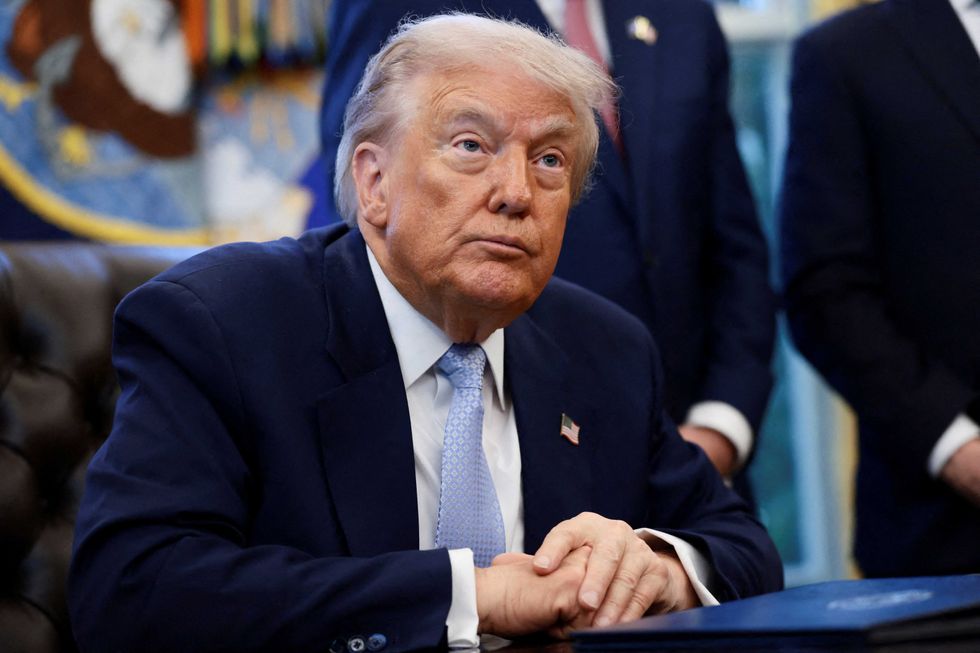
U.S. President Donald Trump has intensified his rhetoric regarding control over Venezuela, asserting that the United States is now effectively “in charge” following the recent operation that ousted former president Nicolás Maduro. During remarks made on March 15, 2024, Trump hinted at potential U.S. actions against neighboring countries, particularly Colombia and Mexico, as part of a broader campaign to combat criminal networks and regional instability.
Trump’s comments followed a weekend operation that saw the removal of Maduro, which he framed as a governance and security initiative rather than a singular military intervention. He indicated that U.S. authorities are collaborating with officials recently sworn into a transitional government, signaling a long-term commitment to stabilizing Venezuela. Despite this, Trump emphasized that the U.S. would not allocate public funds for rebuilding efforts. Instead, he noted significant interest from private-sector energy firms eager to re-enter Venezuela’s oil market, which has seen production declines due to sanctions and years of mismanagement.
The president’s statements extended beyond Venezuela, raising concerns about Colombia’s situation. When asked about the possibility of U.S. action in Colombia, Trump responded positively, describing the country as “very sick” and attributing its troubles to its current leadership. He warned that the existing conditions cannot persist for long, an indication that the U.S. might intervene if it perceives inadequate responses to criminal or insurgent activities.
Trump also directed his attention to Mexico, where he criticized the power of drug cartels. He stated that the U.S. “has to do something” about the situation and claimed to have offered military assistance to President Claudia Sheinbaum on multiple occasions. He argued that cartel influence poses a direct threat to U.S. security, insisting that Mexico must “get its act together” to effectively combat this challenge.
While no formal announcements regarding military operations in Colombia or Mexico were made, Trump’s remarks represent a notable escalation in regional rhetoric following the intervention in Venezuela. The combination of claims of governance in Caracas and explicit warnings to neighboring states suggests that Washington is aiming to deter resistance while expressing a readiness to extend its influence throughout the region.
For financial markets, these comments introduce a new layer of geopolitical risk across Latin America. Investors are likely to reassess implications for energy investments, currency volatility in emerging markets, and overall regional risk premiums. As the situation develops, the international community will be closely watching how these dynamics unfold and what actions the U.S. might take next, particularly in light of Trump’s recent rhetoric.