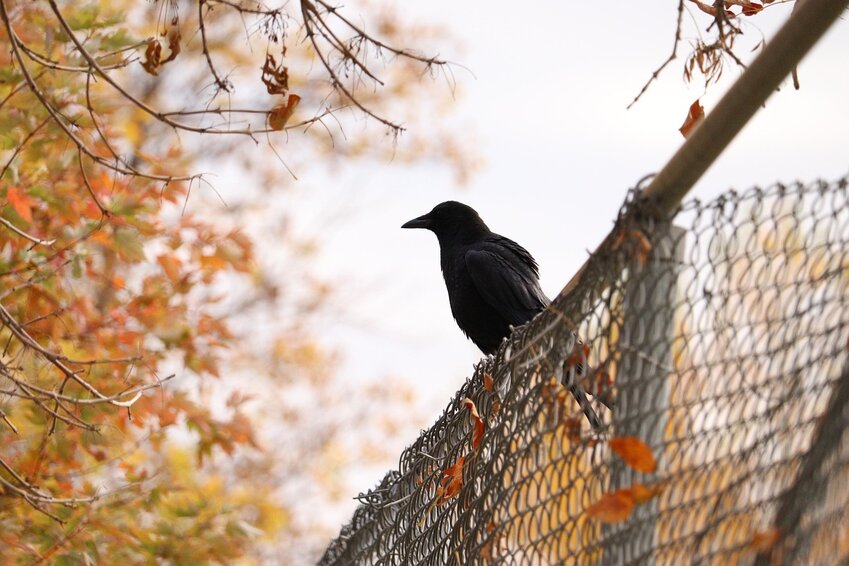
URGENT UPDATE: Homeowners in Washington State are facing a serious threat to their lawns as crows are increasingly digging up grass in search of grubs, the larvae of the invasive European chafer. New reports confirm that this destruction signals a deeper ecological issue that homeowners need to address immediately.
Residents have noticed their once pristine lawns turned into patches of dirt, with crows at the center of the commotion. However, experts assert that these birds are not the culprits causing the damage; they are actually hunting for the grubs responsible for the devastation. “(The crows are) killing the invasive pest that’s really destroying the lawn,” said John Marzluff, an emeritus professor of wildlife science at the University of Washington.
The European chafer larvae feed on turf roots, leading to significant lawn damage and an ecological imbalance that many homeowners are unaware of. This invasive species has spread across Washington State over the past decade, making timely action crucial for homeowners.
Raccoons and skunks are also on the prowl for these destructive beetles, but their nocturnal habits make them less visible during the day. “They’re just there because of the grubs,” Marzluff stated, highlighting the crows’ role in natural pest control.
So, what should homeowners do to protect their lawns? Experts recommend several immediate actions:
1. **Water Your Lawn**: Keeping your grass hydrated may help deter the European chafer, as the beetles tend to mate and lay eggs in the summer. “When the lawn is the most susceptible is also when the beetles are expanding their territory,” said Jim Kropf, Director of the Washington State University Pierce County Extension.
2. **Use Registered Insecticides**: Timing is critical. Spraying in fall or winter will not be effective. Homeowners are urged to treat their lawns during the active season.
3. **Diversify Plant Life**: Marzluff suggests that planting a variety of native plants can significantly reduce the chances of a pest outbreak. “Having a diverse ecosystem in your lawn reduces the chance of a pest getting in there,” he explained.
For those looking for guidance on native plants, King County offers an online resource at green2.kingcounty.gov/gonative, featuring a list of plants native to Western Washington and care tips.
As homeowners face the immediate aftermath of crow activity, it’s essential to remember: Do not feed wildlife. Kropf warns that feeding raccoons can lead to aggressive behavior if feeding stops.
Stay informed and take action now to protect your lawn from these hidden threats. The battle for your grass is on, and knowledge is your best defense!