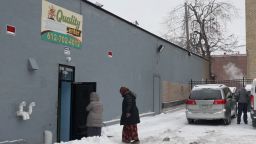
In Minneapolis, a wave of harassment and declining business has enveloped the Somali community following a controversial video alleging fraud at local day care centers. Fardowsa Ali, owner of Albi Kitchen, reported receiving threatening phone calls after content creator Nick Shirley accused day care facilities within the Somali community of fraudulent activities. With her restaurant typically bustling with customers seeking Somali cuisine, Ali now faces an unsettling atmosphere that has left her business nearly empty.
Ali shared her distress, stating, “It’s really sad. I called police because one guy called here and said he was going to come here and break everything.” This situation reflects a broader pattern of intimidation faced by Somali residents in Minneapolis, where threats, social media harassment, and vandalism have surged since Shirley’s video was posted. Families are increasingly fearful, with reports of a day care facility being vandalized and parents hesitant to send their children to school.
Jaylani Hussein, the executive director of the Council on American-Islamic Relations (CAIR) in Minnesota, commented on the detrimental impact these events have had. “This climate of fear is disrupting livelihoods, separating families, and undermining the sense of safety and belonging for an entire community,” he stated. This anxiety has been compounded by previous incidents, including derogatory remarks made by former President Donald Trump about the Somali community and the subsequent deployment of immigration enforcement in the area.
Impact on Day Care Providers and Community
The fallout from Shirley’s allegations has particularly affected day care centers, which serve many working-class families reliant on their services. Kassim Busuri, a day care owner near Minneapolis, reported a significant increase in phone calls from individuals seeking information about his center. Many of these inquiries, he noted, seem disingenuous and detract from the essential work of caring for children. Busuri stated, “It’s just random calls, extra things that we don’t need to focus on.”
On March 10, 2024, the Minnesota Department of Children, Youth, and Families confirmed that investigators had visited the facilities in question and found them to be operating normally, aside from one that was not yet open for families.
The Somali community in Minnesota, which has been established for nearly three decades, has a rich cultural history and a strong emphasis on small business ownership. Following the collapse of the Somali government in the early 1990s, many sought refuge in Minnesota due to job opportunities, particularly in the meatpacking industry. Today, the Minneapolis-St. Paul area is home to approximately 84,000 individuals of Somali descent, making it the largest Somali population in the United States.
Community Response and Advocacy
Advocates within the community are striving to defend the image of Somali people, emphasizing that they are not more prone to criminal behaviour than any other group. The allegations have sparked concern among community leaders who argue that the actions of a few should not define an entire community.
While Shirley’s claims remain unverified, investigations into fraudulent activities in Minnesota have been ongoing. Last year, Governor Tim Walz faced backlash from fraud cases involving some Somali residents, notably a scandal linked to the nonprofit Feeding Our Future, which falsely claimed to provide meals to children during the COVID-19 pandemic. Out of the numerous defendants charged, many were identified as Somali, although it is unclear how many pleaded guilty.
Khalid Omar, a community organizer with the nonprofit ISAIAH, expressed concern over the scapegoating of the Somali community. He stated, “If someone commits fraud, they should be held accountable, period. But to frame a whole community, it’s wrong, and it’s un-American.”
Edward Ahmed Mitchell, deputy director of CAIR, criticized the generalization of an entire community based on the alleged actions of a few. He asserted that such narratives reflect systemic racism, stating, “It’s racism that would never be tolerated against any other community.”
Hussein highlighted the contributions of Somali residents to Minnesota’s economy, describing them as “hardworking families, small business owners, healthcare workers, students, and taxpayers.” He noted that the stigmatization of an entire community leads to immediate negative consequences, including fear, business decline, and eroded trust in public institutions.
As the Somali community in Minneapolis navigates this challenging landscape, leaders and advocates remain committed to fostering understanding and ensuring that their voices are heard.