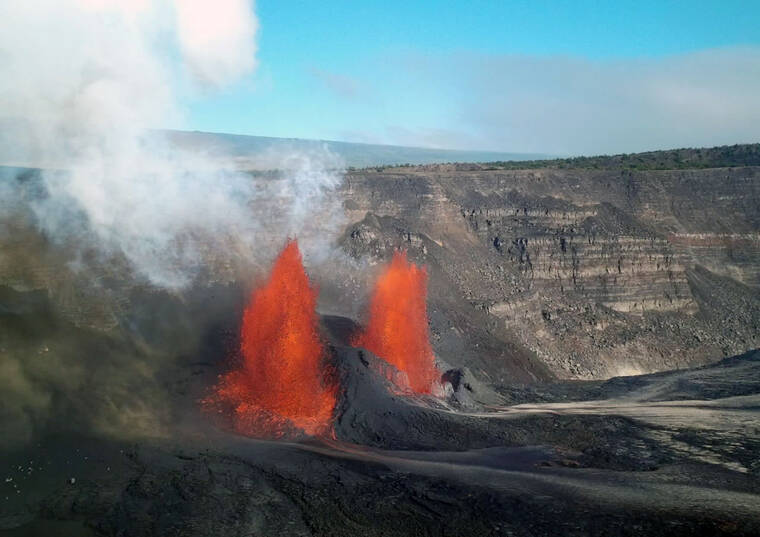
UPDATE: Kilauea Volcano is making headlines as it erupts spectacularly with lava fountains reaching heights of approximately 1,400 feet (425 m) during the latest episode on December 23-24, 2024. This event marks the culmination of a year filled with stunning volcanic activity on the Big Island of Hawaii.
The eruptions have been relentless since December 23, 2024, with the volcano showcasing a total of 39 lava fountaining episodes within the Halemaʻumaʻu crater. The US Geological Survey (USGS) has classified the alert level as WATCH, indicating ongoing volcanic activity that demands attention.
This latest wave of eruptions follows an impressive trend; fountain heights have surged dramatically throughout the year, with the most significant leap occurring during episode 15 on March 25-26, when heights jumped to 1,050 feet (320 m). Since then, fountaining episodes have consistently reached between 1,050 and 1,250 feet (320–381 m), culminating in the record-breaking height of 1,574 feet (480 m) on October 17, 2025.
The impact of Kilauea’s eruptions is profound, with nearly 200 million cubic meters (300 million cubic yards) of lava expelled since the onset of this eruption—a volume more than double the annual average from Puʻu ʻōʻo between 1983 and 2018. The crater floor has been raised by an average of 225 feet (69 m), while the vent bases have risen by nearly 450 feet (137 m), pushing the limits of lava fountain heights even higher.
As the spectacle unfolds, the USGS remains vigilant, noting that while current patterns suggest stability, the nature of volcanic activity can change rapidly.
“There are no signs of imminent change, but these signs could arise quickly,”
stated Ingrid Johanson, a research geophysicist at the USGS Hawaiian Volcano Observatory.
Looking ahead, another fountaining episode is anticipated between January 8 and 14, 2025, as the summit continues to reinflate. However, no unusual activity has been detected along Kilauea’s East or Southwest Rift Zones, and Mauna Loa remains quiet with a NORMAL alert level.
The exceptional lava activity not only fascinates scientists but also draws visitors eager to witness nature’s power. However, safety remains paramount. The ongoing eruptions are confined to Hawaii Volcanoes National Park, where the growing puʻu on the caldera rim is a stark reminder of the volcano’s dynamic nature.
Stay tuned for further updates as Kilauea continues to captivate and challenge our understanding of volcanic activity. For the latest on Kilauea and Mauna Loa, visit the USGS website or email inquiries to [email protected].