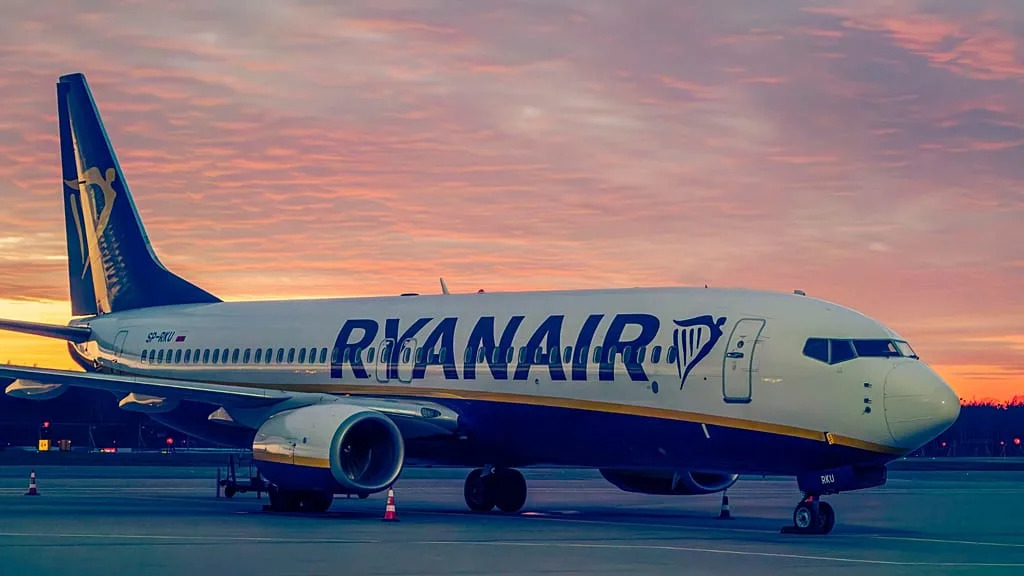
Ryanair announced significant route cuts for 2026, affecting multiple European destinations. The budget airline’s decision stems from rising operational costs, including increased aviation taxes and air traffic control fees. As a result, the airline will eliminate approximately three million seats, impacting travel options for many passengers, particularly from smaller cities.
The airline’s changes come after a year of expansion and operational challenges. Ryanair has been updating its winter schedule, especially in the UK, Finland, and Italy, while also facing delays from Boeing and criticism regarding its management of physical boarding passes. Despite these expansions, the cuts are poised to alter the travel landscape significantly.
Route Reductions in Germany and Spain
In Germany, Ryanair plans to cut 24 routes, reducing capacity by nearly 800,000 seats for the Winter 2025/2026 schedule. Airports affected include major hubs such as Hamburg, Berlin, and Frankfurt-Hahn. Operations will cease at Leipzig, Dresden, and Dortmund beyond winter 2026. Ryanair cited high air traffic control fees, aviation taxes, and frequent airport changes as reasons for the cuts.
CEO Michael O’Leary criticized the German government for its lack of competitiveness compared to other European nations. He stated, “Germany remains among the worst recovered air traffic markets in Europe, operating at just 88 percent of pre-Covid levels.” He emphasized that if the government addresses the high costs, Ryanair would consider increasing capacity again.
Spain will also see a reduction in routes, with Ryanair cutting around 1.2 million seats from its summer 2026 schedule. Key destinations like Asturias and Vigo will lose all flights, while the airline will cease operations at its base in Santiago de Compostela. Ongoing disputes with the Spanish airport operator Aena over rising taxes and fees have prompted these reductions.
Ryanair claims that Aena’s pricing policies make regional Spanish airports less competitive compared to lower-cost alternatives in countries like Morocco and Italy. The airline stated, “Aena’s monopoly approach to pricing is that small underused regional airports should charge similar rates as busy main airports,” leading to a shift in capacity to larger Spanish airports.
Impact on Other European Destinations
Ryanair’s cuts extend to France, where the airline has already eliminated 750,000 seats and 25 routes for Winter 2025. Although flights to Bergerac are set to resume in summer 2026, services to Brive and Strasbourg remain suspended. Further cancellations are expected if French aviation taxes continue to rise.
Belgium faces a similar fate, with Ryanair planning to remove 20 routes and one million seats from Brussels and Charleroi. This decision is primarily due to the doubling of the Belgian aviation tax to €10 per passenger. The airline has urged the Belgian government to abolish this tax to stimulate traffic and tourism.
Portugal will witness the termination of all six routes to the Azores by the end of March 2026, affecting around 400,000 passengers annually. The airline attributes these cuts to higher air traffic control fees and new travel taxes. Ryanair’s warnings highlight that the operational costs in Portugal have been rising, compounded by staff strikes at airports.
In Bosnia and Serbia, Ryanair will also scale back operations. The airline plans to reduce flights from Banja Luka and Niš to reallocate resources to growing demand areas, such as Croatia.
Ryanair’s decision to cut routes across Europe underscores the challenges facing budget airlines due to increasing costs and regulatory pressures. The impact on passenger travel is significant, as the airline continues to adapt to a changing aviation landscape.