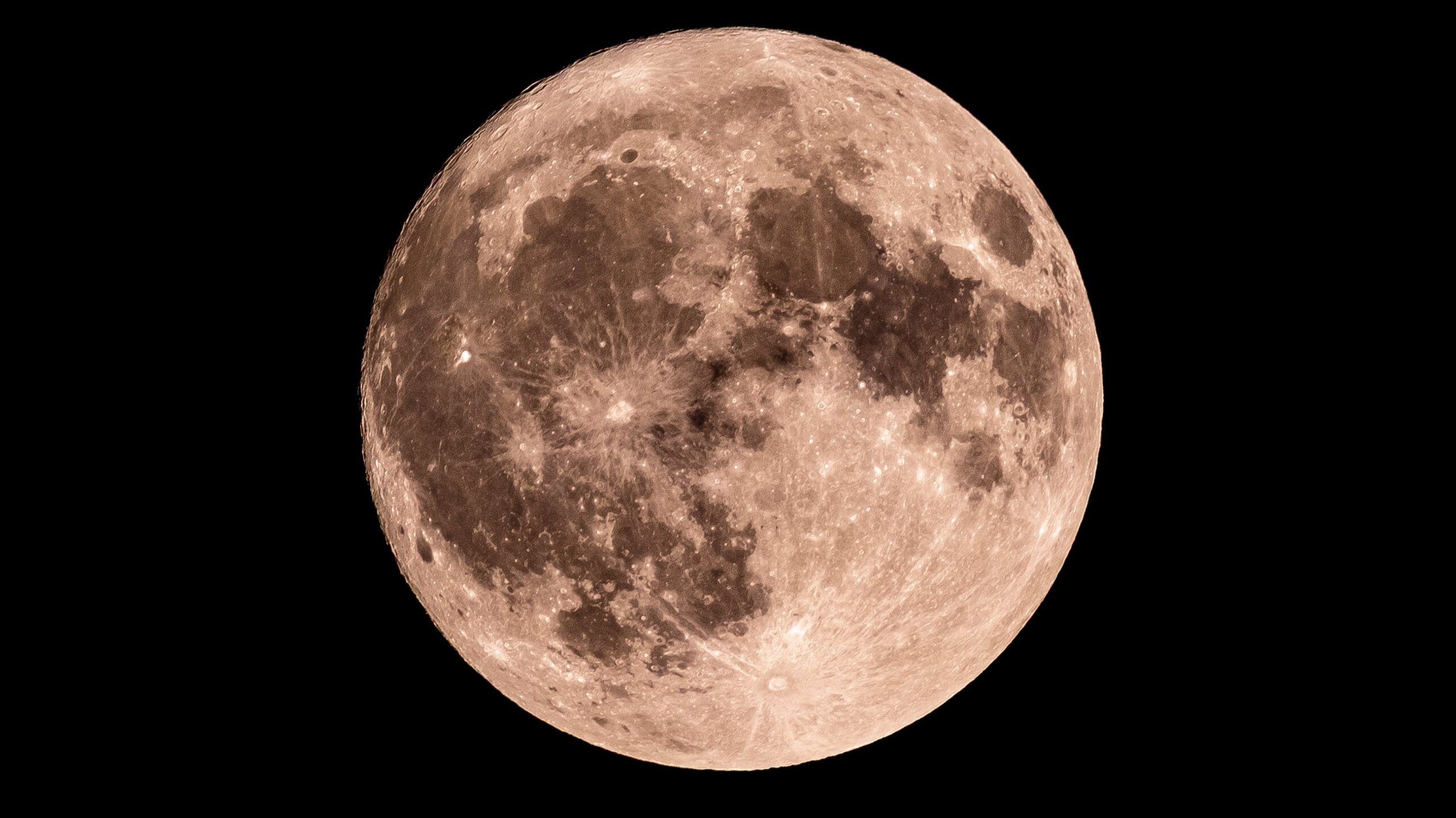
The night of January 3 features a Full Moon, marking the fourth consecutive supermoon of the season. This particular Full Moon is commonly referred to as the Wolf Moon, a name derived from the traditional practice of naming moons based on seasonal changes and wildlife behavior.
As confirmed by The Sky Live, the moon will be entirely illuminated tonight, with 100% visibility of its surface. The next full moon is scheduled for February 1, allowing stargazers just weeks to prepare for another celestial display.
Understanding Moon Phases
The moon undergoes a complete cycle approximately every 29.5 days, a process known as the lunar cycle, according to NASA. During this time, the moon transitions through various phases as it orbits the Earth. As it travels, the sunlight reflecting off its surface changes, causing the moon to appear fully lit, partially illuminated, or completely dark, depending on its position relative to the Earth and the sun.
The lunar cycle is divided into eight main phases:
– **New Moon**: The moon is positioned between Earth and the sun, leaving it invisible from our perspective.
– **Waxing Crescent**: A small sliver of light begins to appear on the right side in the Northern Hemisphere.
– **First Quarter**: Half of the moon’s surface is illuminated on the right, resembling a half-moon.
– **Waxing Gibbous**: More than half of the moon is lit but it has not yet reached full brightness.
– **Full Moon**: The entire face of the moon is illuminated and fully visible.
– **Waning Gibbous**: The moon starts to lose light from the right side.
– **Third Quarter (or Last Quarter)**: Another half-moon occurs, this time with the left side lit.
– **Waning Crescent**: A thin sliver of light remains on the left side before the cycle resets to the New Moon.
These phases create a dynamic display that captivates skywatchers around the world. As the Wolf Moon casts its glow tonight, it serves as a reminder of the intricate dance between Earth and its natural satellite, providing an opportunity for reflection and appreciation of the cosmos.