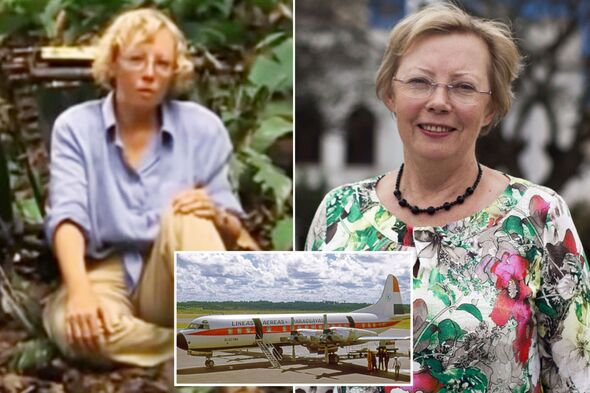
On Christmas Eve in 1971, Juliane Koepcke, then just 17 years old, survived a harrowing plane crash in the Amazon Rainforest after plunging 10,000 feet from the sky. The flight, which originated from Lima, Peru, was filled with passengers eager to reach their holiday destinations. Tragically, it marked the last moments Juliane would share with her mother, who was also on board.
As the aircraft encountered turbulence and entered a thick cloud, the situation rapidly deteriorated. Within ten minutes, Juliane witnessed a flash from the engine, prompting her mother to exclaim, “that is the end, it’s all over.” The plane suddenly nosedived, and amidst the chaos, Juliane lost consciousness.
When she regained awareness, she found herself on the rainforest floor, still strapped to a seat from the plane. Her mother was missing, and Juliane quickly realized she had sustained serious injuries, including a fractured collarbone and substantial gashes on her legs. Despite her injuries, she managed to walk and began a desperate struggle for survival in the dense jungle.
Days of Struggle and Survival
Over the next ten days, Juliane faced extreme challenges. Alone and wearing only a mini dress, she battled hunger, cold nights, and worsening injuries. Reflecting on her isolation, she later said, “I felt so lonely, like I was in a parallel universe far away from any human being.”
During this time, Juliane encountered a boat on the water, initially believing it to be a mirage. Upon discovering it was real, she followed a path that led her to a hut containing an outboard motor and a liter of gasoline. In a moment of ingenuity, she recalled a lesson from her father about treating infections. When she noticed maggots infesting a wound on her arm, she used gasoline to remove them, enduring intense pain as she extracted about 30 maggots.
Despite these horrific conditions, Juliane remained determined to survive. Her first encounter with other humans came when she stumbled upon deceased passengers from the flight. The sight of them marked a terrifying moment, as she recognized the grim reality of their fate. “When I turned a corner in the creek, I found a bench with three passengers rammed headfirst into the earth,” she recalled in an interview with the BBC.
Rescue and Aftermath
On the 11th day, Juliane heard voices that she described as “hearing the voices of angels.” These were local men who initially believed she might be a water goddess from folklore. After communicating in Spanish, they provided her with help and took her to safety.
Once her injuries were treated, she was reunited with her father, who had been desperately searching for her. The emotional moment was bittersweet, marked by overwhelming relief but shadowed by the loss of her mother. On January 12, it was revealed that her mother had survived the crash but succumbed to her injuries days later. Juliane expressed her sorrow, stating, “I dread to think what her last days were like.”
Following her traumatic experience, Juliane returned to West Germany and made a remarkable recovery. She pursued her education at the University of Kiel, graduating in 1980 with a degree in biology. After earning her PhD from the Ludwig Maximilian University of Munich, she returned to Peru for research focused on bats. In 1989, she married German entomologist Erich Diller.
Today, Juliane Koepcke serves as a librarian at the Bavarian State Collection of Zoology in Munich. Her incredible survival story remains a testament to resilience and the human spirit’s capacity to endure even the most harrowing circumstances.