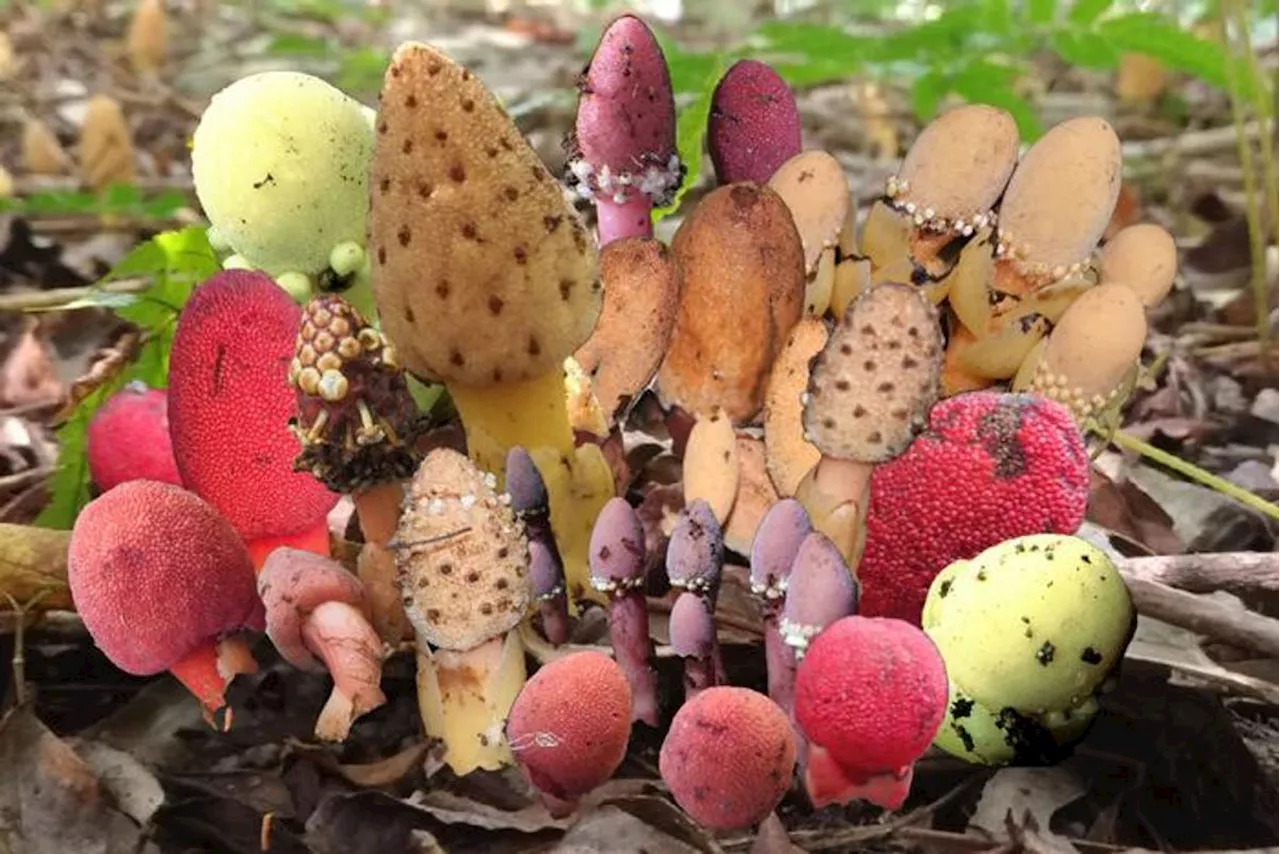
A recent genetic study has uncovered intriguing insights about Balanophora, a rare parasitic plant that thrives underground without the ability to photosynthesize. This plant, found in humid regions of Japan, Taiwan, and Okinawa, relies entirely on specific host trees for energy and has developed unique reproductive strategies, including asexual reproduction.
The research, published in the journal New Phytologist, highlights how Balanophora has adapted to its environment, evolving traits that enable it to survive in conditions that would be inhospitable for most plants. While typical plants harness sunlight for energy through photosynthesis, Balanophora has abandoned this process, instead drawing nutrients directly from the roots of its host trees.
Challenges in Studying Balanophora
Balanophora’s life cycle presents significant challenges for researchers. The plant remains predominantly underground, emerging briefly to flower, which makes it difficult to observe and study. Its rarity and preference for steep terrains further complicate research efforts. Past studies often focused on isolated traits, but the new research takes a comprehensive approach. It combines field surveys with genetic and evolutionary analyses, revealing how Balanophora’s parasitic lifestyle has influenced its cellular biology and reproductive methods.
The study’s authors, including Dr. Kenji Suetsugu from Kobe University, emphasize the importance of understanding the interconnectedness of these traits. “By examining the plant’s evolutionary history, we gain insights into how it has maintained its existence despite losing characteristics once deemed essential for survival,” said Dr. Suetsugu.
Adaptations Without Photosynthesis
One of the most remarkable findings pertains to Balanophora’s plastids, the organelles responsible for photosynthesis in most plants. Typically, when plants abandon photosynthesis, plastids lose functionality and genes. However, in Balanophora, the plastid genome has been significantly reduced to around 20 genes, compared to nearly 200 in photosynthetic plants. Yet, contrary to expectations, the plastids remain functional.
Dr. Suetsugu noted, “It is exciting to see how far a plant can reduce its plastid genome, which at first glance seems close to disappearing. Our findings show that many proteins continue to be transported to the plastid, indicating it plays a vital role in the plant’s metabolism, even without photosynthesis.”
Genetic analyses reveal that Balanophora’s plastids support essential metabolic processes unrelated to sunlight capture, demonstrating a remarkable example of adaptation.
Reproductive Strategies of Balanophora
The study also sheds light on Balanophora’s reproduction, highlighting variations across different populations. While some populations engage in traditional sexual reproduction, others utilize a process known as apomixis, allowing them to produce seeds without fertilization. This reproductive strategy is particularly advantageous in isolated environments, where finding mates or pollinators may be challenging.
The researchers found that asexual reproduction has evolved multiple times within Balanophora, especially in island populations. This ability to reproduce independently offers a significant advantage, enabling these plants to persist in their narrow ecological niches.
Balanophora stands out as one of the oldest fully parasitic plant lineages, illustrating how it has survived while defying conventional expectations of plant life. The findings from this study not only expand our understanding of plant evolution but also challenge our perceptions of what is necessary for survival in the natural world.