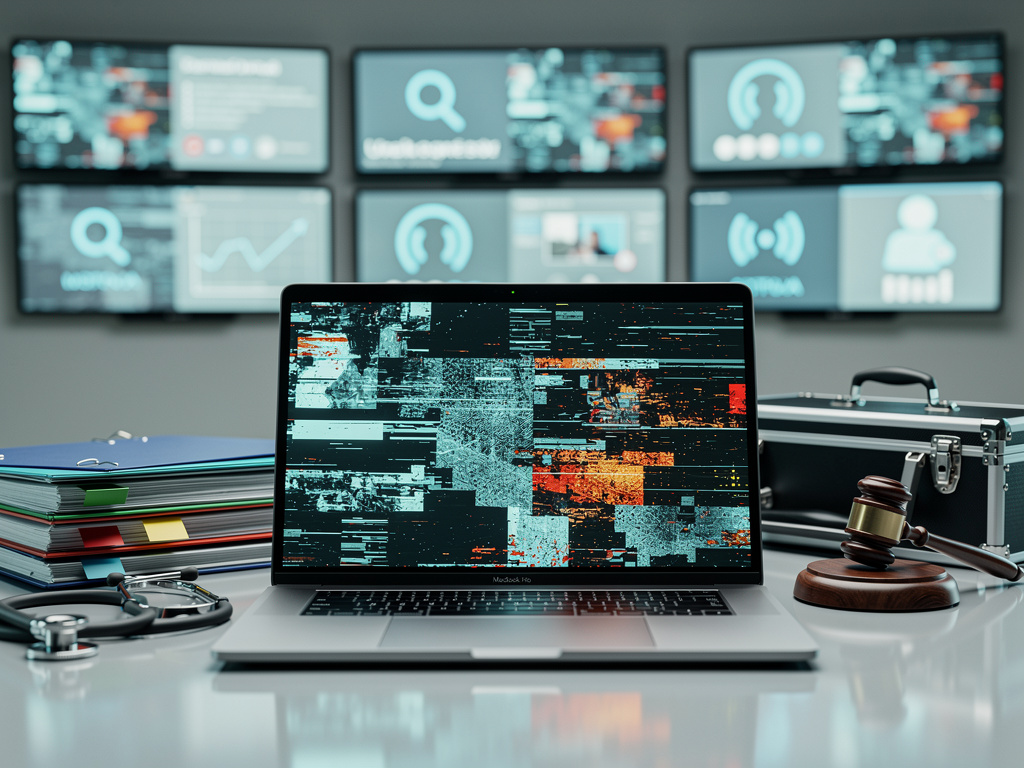
A recent study conducted by researchers at Cornell University reveals that glitches during video calls can significantly erode trust and affect critical decision-making processes. Published in the journal Nature, the research indicates that even brief disruptions, such as a frozen screen or audio stutter, can create feelings of “uncanniness.” This effect can lead to negative outcomes in situations ranging from job interviews to parole hearings, highlighting a hidden bias in digital communication.
The Cornell study involved experiments with both live and recorded video interactions. Participants exposed to glitches rated their counterparts as less trustworthy, competent, and likable. Specifically, candidates in simulated job interviews with technical issues were found to be 20% less likely to receive favorable hiring recommendations, despite identical responses. Furthermore, archival data from virtual parole hearings indicated that inmates who experienced technical difficulties faced a 15% lower chance of gaining release.
As platforms like Zoom and Microsoft Teams become increasingly integral to telemedicine and legal proceedings, these findings raise important questions about the implications of technology on human interactions. Malia Mason, a professor at Columbia Business School and co-author of related research, emphasized that while nonverbal cues are crucial in face-to-face meetings, video communication introduces distortions that can be perceived as deception.
The Psychological Impact of Glitches
Delving into the psychology behind these perceptions, the study suggests that our brains are evolutionarily wired to detect inconsistencies in human behavior. Technical disruptions mimic unnatural movements, activating the same responses as encountering a lifelike but imperfect android. Participants reported feelings of mistrust, often unconsciously linking these feelings to the technological issues.
Supplementary studies demonstrated that in telehealth scenarios, doctors were more likely to discount patients who appeared glitchy, potentially leading to misdiagnoses. In simulated medical consultations, providers exposed to disruptions were 18% more inclined to dismiss patient concerns, according to data from over 500 virtual sessions. These findings resonate with anecdotal evidence, as users have voiced discomfort during disrupted calls, attributing their feelings to broader mental fatigue.
Consequences in Justice and Healthcare
The ramifications extend to sensitive sectors such as criminal justice. Archival footage from virtual parole hearings indicated that technical issues correlated with harsher judgments. Inmates who appeared via glitchy video were often perceived as evasive, influencing board decisions significantly.
In healthcare, the stakes are equally high. Telemedicine has gained traction since the pandemic, yet glitches can undermine the trust necessary for effective patient-provider relationships. Reports have cited instances where minor interruptions led to premature terminations of therapy sessions, negatively affecting mental health outcomes. This issue highlights systemic biases, as marginalized groups often face connectivity challenges that exacerbate disparities.
Technical underpinnings of video platforms contribute to these challenges. Compression algorithms prioritize efficiency, resulting in artifacts like pixelation and desynchronization. As users have pointed out, even premium services can falter under variable network conditions. To address these issues, companies like Zoom have invested in AI-driven error correction, while Microsoft Teams has introduced “glitch detection alerts” to notify users of potential problems before calls.
Addressing Inequities and Future Innovations
As remote work becomes a staple in corporate culture, the intersection of glitch-related challenges and equity debates becomes increasingly apparent. Women and minorities, who often face biases in evaluations, may be disproportionately affected by perceptions of uncanniness.
Moreover, educational institutions are recognizing the need to account for technical issues in virtual classrooms and admissions interviews. Some universities are training evaluators to consider connectivity problems, though implementation remains uneven. Policymakers in the European Union are exploring regulations under the Digital Services Act to mandate glitch-minimizing standards for platforms used in official proceedings.
Looking ahead, innovations are on the horizon. Startups like Polyhedra are developing blockchain-verified video streams to ensure authenticity, while established players such as Apple are experimenting with enhanced technologies that promise to reduce latency and improve trust in virtual interactions.
As experts warn, without addressing the underlying inequalities in connectivity, advancements risk widening existing gaps. Future developments, such as hybrid AI-human interfaces, could normalize glitch-free communication by 2030, provided ethical guidelines evolve alongside technological progress.
In the meantime, organizations are implementing best practices to mitigate the immediate impacts of glitches. Human resources departments are recommending backup audio-only options for interviews, while legal advocates push for in-person alternatives in high-stakes hearings. Public awareness campaigns aim to educate users about optimizing their setups, highlighting the critical need for a societal reckoning regarding the merging of real and virtual interactions.
Ultimately, the research from Cornell University sheds light on a significant flaw in our growing reliance on virtual communication. The imperfections inherent in technology reflect our own vulnerabilities, and addressing these issues is essential for fostering equitable digital environments. By confronting the challenges posed by video call glitches, we can work towards ensuring that connectivity does not dictate opportunities or outcomes.