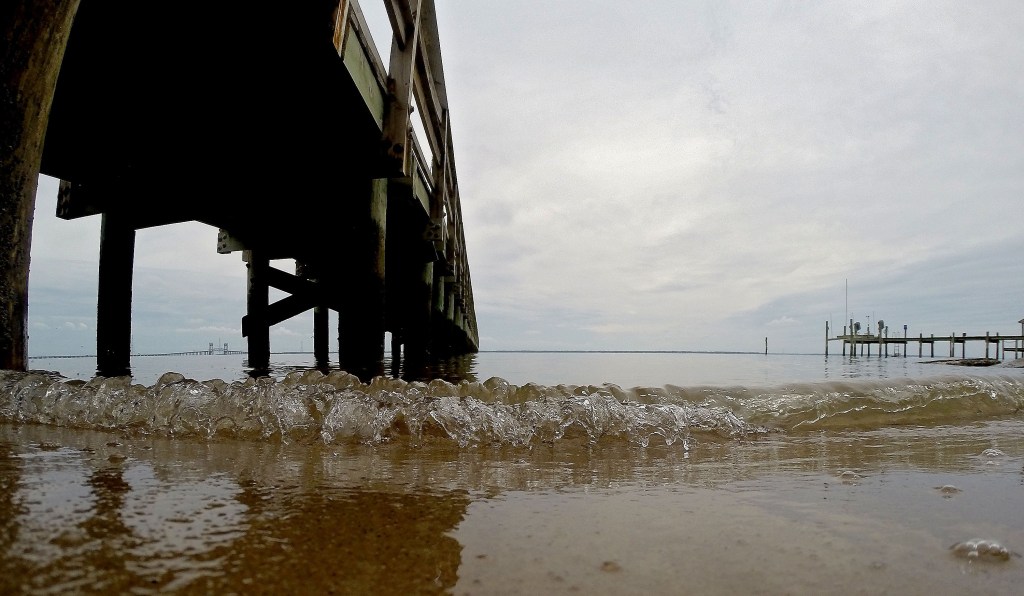
UPDATE: Today marks the 50th anniversary of the devastating Kepone disaster that forever altered the James River, prompting significant health concerns and economic turmoil for Virginia’s fishing industry. On December 17, 1975, then-Governor Mills Godwin announced an immediate ban on commercial and recreational fishing in the river due to alarming contamination levels from the pesticide Kepone (chlordecone), posing a serious threat to public health.
The Virginia State Board of Health issued the closure after discovering the unauthorized release of Kepone into the river, with estimates indicating between 20,000 to 40,000 pounds of the toxic substance contaminating the waterway. This drastic measure aimed to protect citizens from potential health hazards, as the pesticide was linked to severe health issues including cancer and endocrine disruption.
The fallout from the Kepone crisis devastated local economies. The fishing industry suffered an estimated loss of $18 to $20 million in the late 1970s, equivalent to around $80 million today. J.C. Hudgins, president of the Virginia Waterman’s Association, recalls the financial strain on watermen, many of whom were already struggling to survive. “Kepone had a huge impact on many watermen,” he stated, highlighting the immediate human toll of the disaster.
Officials from the Virginia Institute of Marine Resources found that the contamination was not confined to the vicinity of Hopewell, where Kepone was produced. Instead, the toxic substance spread downstream, infiltrating aquatic life and ecosystems. Despite the ban, the legacy of Kepone continues to haunt the region, as the pesticide lingers in river sediment, buried but still present.
In response to this environmental catastrophe, the James River Association (JRA) was founded in 1976 by concerned citizens who recognized the urgent need for advocacy and protection of the river. Executive Director Bill Street reflects on the disaster’s impact, calling it “rock-bottom” for the James River. Fifty years later, the JRA continues its mission to restore and protect the watershed, achieving a grade of B in its latest State of the James Report. Street emphasizes the importance of ongoing efforts to improve the river’s health, stating, “We want to hit a grade A James River.”
The Kepone disaster not only spurred grassroots activism but also led to significant policy changes. The incident catalyzed the enactment of the Toxic Substances Control Act of 1976 and amendments to the Clean Water Act, aimed at preventing future ecological disasters. Today, vigilance remains high among those whose livelihoods depend on the water, as they advocate against new threats such as PFAs from biosolids.
Despite progress, concerns about pollutants like Kepone remain relevant, particularly in areas where the pesticide was still used until the late 1990s, such as banana plantations in the French Caribbean. Gregory Wilson, a professor and author, warns that vigilance is crucial in monitoring the use of hazardous substances to prevent public health crises.
As Virginia reflects on the Kepone disaster, the lessons learned continue to shape environmental policies and advocacy. The enduring legacy of this crisis is a testament to the power of community action and the importance of protecting natural resources for future generations. The James River, a vital source of drinking water for many Virginians, stands as a reminder of the past and a call to action for continued stewardship.