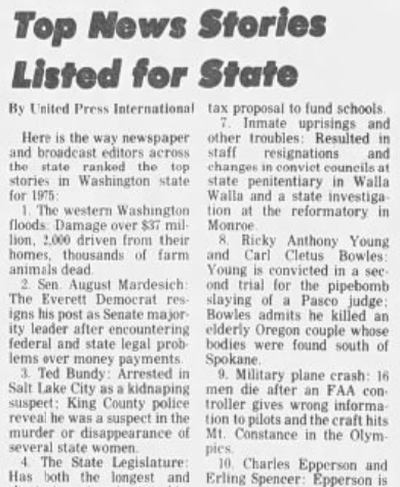
On December 27, 2025, Washington State reflects on a catastrophic event that has re-emerged in the headlines: flooding in Western Washington. This disaster echoes a similar tragedy from 1975, when severe floods displaced 2,000 residents, resulted in the deaths of countless farm animals, and inflicted damages estimated at $37 million. The persistence of this issue highlights the region’s vulnerability to natural disasters and the ongoing challenges it faces.
Historical Context of Flooding
In 1975, the floods were the most significant news story, as reported by the Associated Press. The devastation left a lasting impact, not only on the affected communities but also on the broader political landscape. The second most notable story that year involved a scandal leading to the resignation of State Senator August Mardesich from his majority leader position. Following closely was the arrest of Ted Bundy in Salt Lake City, raising suspicions of his involvement in a series of murders and disappearances across Washington.
Another noteworthy incident from that year was the conviction of Ricky Anthony Young, who was found guilty of the pipe-bomb murder of a Pasco judge. These events, alongside the floods, shaped the narrative of 1975 and underscored significant societal issues, from natural disasters to crime and political scandal.
Political Turmoil and Governance Challenges
The historical context of Washington State is further enriched by events from 1925. On this date, four of the five Spokane city commissioners expressed a lack of support for Commissioner Charles Hedger, who faced a recall petition. He was accused of failing to control the rise of liquor, prostitution, and gambling in Spokane, which fell under his jurisdiction as the public safety commissioner. The other commissioners asserted that they had previously warned Hedger of potential consequences should his department remain ineffective.
This lack of accountability and governance issues resonates with contemporary challenges in managing disaster responses and ensuring public safety. With flooding once again emerging as a pressing concern, the lessons of the past remain relevant today.
Further, December 27 marks additional historical milestones. In 1934, Shah Mohammad Reza Pahlavi declared that Persia would henceforth be known as Iran. This announcement signified a crucial shift in national identity. Additionally, on this day in 1978, King Juan Carlos ratified Spain’s first democratic constitution, marking the end of a 40-year dictatorship and ushering in a new era of governance.
As Washington State navigates the complexities of its environmental challenges, understanding the historical context of similar events can inform strategies for future disaster management and political accountability. The cyclical nature of these issues emphasizes the need for resilience and preparedness in the face of inevitable natural disasters.