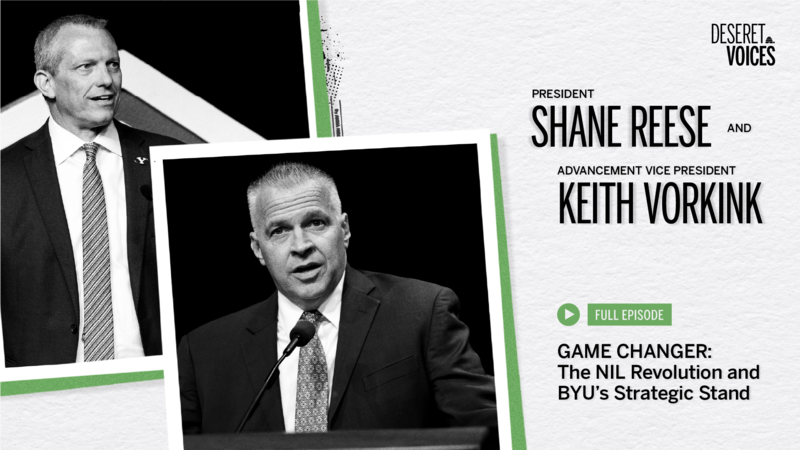
The introduction of the NCAA’s “Name, Image and Likeness” (NIL) rule in 2020 has fundamentally transformed college athletics, presenting both opportunities and challenges for institutions. In a recent episode of Deseret Voices, Brigham Young University (BYU) President Shane Reese and Vice President Keith Vorkink discussed these changes, emphasizing how BYU navigates this new landscape while adhering to its unique mission and values.
The NIL rule allows student-athletes to profit from their personal brands, a significant shift from the previous restrictions. This change has enabled schools to share revenue directly with players, raising numerous questions about fairness and equity in college sports. Reese highlighted the initial developments leading up to this moment, referencing a lawsuit initiated by Grant House, a swimmer from Arizona, who argued that student-athletes deserved compensation for their contributions to college sports.
With the recent settlement, colleges can now distribute up to $20 million annually to student-athletes, a figure that reshapes financial dynamics within athletic departments. Reese pointed out that many athletic programs operate on tight budgets, balancing costs associated with facilities, coaching salaries, and other operational expenses. He noted that while this revenue-sharing model is a permissive benefit, it poses questions about sustainability for universities.
BYU has chosen to participate in this revenue-sharing initiative, benefiting from a history of financial stability that many other institutions lack. Vorkink explained that BYU’s successful financial model is built on various revenue streams, including media rights, ticket sales, and donations, rather than on tithing funds from the Church of Jesus Christ of Latter-day Saints. This commitment to financial independence distinguishes BYU in the evolving landscape of collegiate sports.
The university’s approach to NIL deals is also shaped by its adherence to an honor code, which governs student-athletes’ behavior and academic performance. Both Reese and Vorkink emphasized that any revenue-sharing agreements would be contingent on student-athletes meeting these standards. Vorkink elaborated on the importance of creating a positive morale within teams, acknowledging that disparities in earnings could create challenges but also asserting that transparency and communication among players help mitigate potential issues.
Reese and Vorkink also addressed the impact of NIL on female athletes. They highlighted a recent initiative where a donor provided funds specifically for female athletes, ensuring equity in opportunities for women in sports. This commitment reflects BYU’s dedication to supporting all athletes, including those in non-revenue generating sports, through fair participation in revenue sharing.
As BYU continues to build its athletic programs within the Big 12 Conference, the leadership team maintains a focus on their mission. Reese stated that success will be measured not just in financial terms but by the university’s ability to remain true to its values. He expressed optimism about the future, envisioning a vibrant athletic culture that resonates with both athletes and fans.
In closing, Reese shared a personal moment from a recent BYU-Utah football game, where he was joyfully celebrated by students. He emphasized that building connections with students is the most rewarding aspect of his role, reinforcing the university’s commitment to fostering a supportive and engaging environment for all its athletes. The conversation reflects the dynamic nature of college athletics today, as institutions like BYU strive to balance competitive success with their foundational principles.