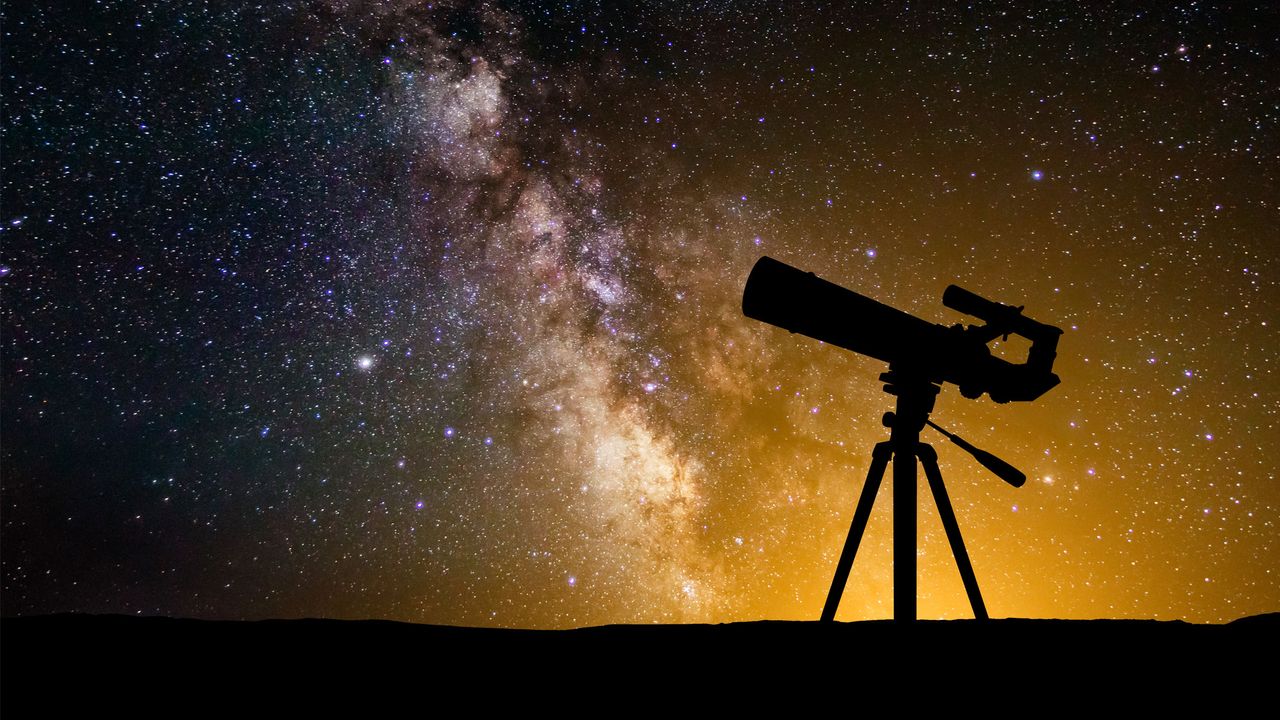
For those who unboxed a telescope this holiday season, the stars have aligned for a thrilling astronomical experience. Between Christmas Day and New Year’s Eve in December 2025, a waxing crescent moon will grace the evening sky, while Jupiter shines brightly, resembling a “Christmas Star.” Additionally, early January 2026 will bring the Wolf Supermoon, offering a spectacular view.
Starting your journey in astronomy means embracing patience and taking time to familiarize yourself with your new equipment. Instead of attempting to observe every celestial body at once, focus your initial nights on understanding the telescope’s setup, choosing the right magnification, and targeting bright, easily identifiable objects.
Setting Up Your Telescope for Success
Before venturing out under the night sky, ensure your telescope is ready to use during daylight hours. Follow the assembly instructions carefully, and once outside, level the tripod and tighten all clamps. Familiarize yourself with the various knobs and levers, and align the finder by targeting a distant object, such as a tree. Achieving a match between the finder and eyepiece ensures you are prepared for your astronomical adventure. Notably, setting up during daylight allows the telescope to cool down, leading to sharper views at night.
Many beginner telescopes come equipped with two eyepieces — typically 10mm and 25mm. Start with the low-power 25mm eyepiece, which offers a wider field of view to locate objects easily. When you spot the crescent moon, adjust the focus until it is sharp, and concentrate on the terminator, where shadows cast by craters and mountains come to life. As you grow comfortable, switch to the 10mm eyepiece for a closer look.
Exploring the Night Sky
The winter sky is a treasure trove of iconic constellations and deep-sky objects. While telescopes can see beyond the patterns of stars that form constellations, understanding these patterns is crucial for navigation. Consider constellations as regions within which fascinating objects such as star clusters and galaxies reside.
During late December and January, the Northern Hemisphere is treated to prominent constellations including Orion, Taurus, Auriga, and Gemini. Notably, Jupiter will be exceptionally bright in this region, creating a convenient guide for new telescope users. Locate Orion’s Belt with the naked eye, trace it to Capella in Auriga, and then over to the Pleiades open cluster (M45) in Taurus.
In the Southern Hemisphere, Orion appears inverted, positioned in the northeast, with the bright stars Sirius and Canopus visible low in the south. Familiarity with these constellations simplifies the process of finding clusters and nebulae within them.
Planets like Jupiter and Saturn offer some of the most rewarding targets for telescope users. Jupiter will reach opposition on January 10, 2026, making it the brightest object in the night sky. Observers should step outside in the early evening and look east for this prominent “star.” Center it using the finder, then switch to the 25mm eyepiece for a clearer view. Upgrading to the 10mm eyepiece may reveal cloud bands and up to four of its moons: Ganymede, Callisto, Europa, and Io.
Saturn can also be observed, though it is lower and fainter than Jupiter. It will be visible in the southwestern sky shortly after sunset. Locate it with the red dot finder and adjust to a higher magnification to view its iconic ring pattern.
Noteworthy Observations for Beginners
For those observing from the Northern Hemisphere, the winter sky presents numerous classic sights ideal for novice astronomers, including the Orion Nebula (M42), the Pleiades (M45), and the Andromeda Galaxy (M31).
In the Southern Hemisphere, the Carina Nebula shines brightly during this period, alongside other fascinating targets such as the Large Magellanic Cloud and Omega Centauri (NGC 5139).
After your initial observations, take time to deepen your understanding of the night sky. Gradually expand your knowledge, using clear nights—preferably during moonless periods—to explore the vast expanse of stars. As you continue to observe regularly, what may initially seem like an overwhelming infinity of stars will transform into a recognizable map, turning into a familiar landscape over time.
This holiday season, as you embark on your celestial journey, remember to embrace the joy of discovery and the beauty of the universe unfolding before your eyes.