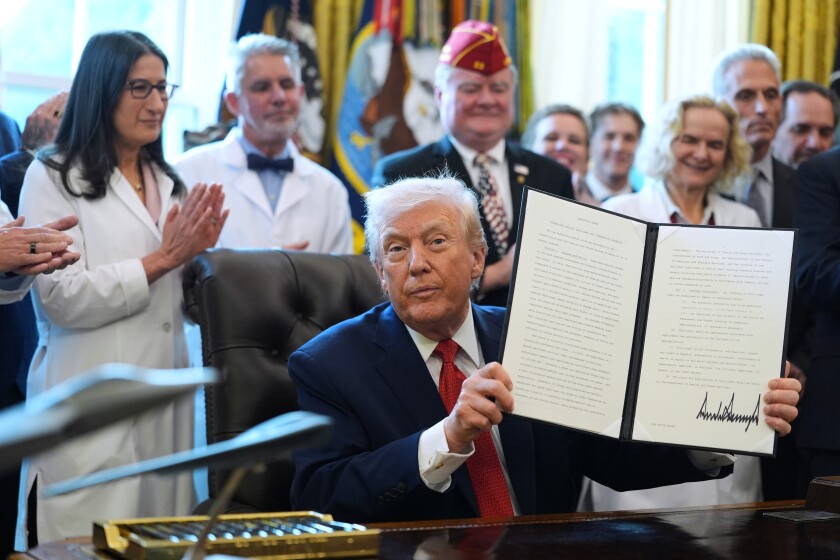
President Donald Trump has issued an executive order to reclassify marijuana from Schedule I to Schedule III of the Controlled Substances Act. This change signifies a major shift in the federal government’s approach to marijuana, which has long been categorized alongside substances like heroin and LSD. The reclassification acknowledges both the therapeutic potential of marijuana and the federal government’s previous stance on its dangers.
Historically, marijuana has been deemed a high-risk substance with no accepted medical use, a classification that has been in place since 1970. This decision was first challenged nearly four decades ago by Francis Young, then chief administrative law judge at the Drug Enforcement Administration (DEA). Young concluded that marijuana did not belong in the most restrictive category of drugs, citing its therapeutic benefits for conditions such as chemotherapy-induced nausea and multiple sclerosis-related spasticity. Unfortunately, his findings were initially disregarded by the DEA.
The recent executive order signals a shift in federal policy, particularly following a review conducted by the Department of Health and Human Services (HHS) ordered by President Joe Biden. The review found “credible scientific support” for marijuana’s medical use in treating pain, nausea, and conditions such as anorexia. HHS concluded that the evidence indicated marijuana’s medical use was now “currently accepted,” prompting the reconsideration of its classification.
Under the new Schedule III designation, marijuana will still not be fully legalized. The reclassification allows for more robust medical research by removing the stringent regulatory requirements that apply to Schedule I drugs. While this change promotes research opportunities, it does not legalize medical marijuana without the specific approval of the Food and Drug Administration (FDA). Additionally, state-licensed marijuana businesses will remain illegal under federal law, although they may face less severe penalties.
The implications of this reclassification extend to the financial landscape for marijuana businesses. By moving marijuana to Schedule III, these businesses can claim standard deductions on their income tax returns, potentially alleviating burdensome tax rates that have plagued the industry. Trump framed the change as a positive step for “American patients suffering from extreme pain, incurable diseases, aggressive cancers, seizure disorders, neurological problems and more.”
Despite this significant alteration in classification, Trump emphasized that the order “doesn’t legalize marijuana in any way, shape or form.” This statement reflects ongoing tensions between state laws and federal prohibition. Currently, 40 states have legalized marijuana for medical use, and 24 states have also permitted recreational use, creating a complex legal landscape that many Americans view as misaligned with public sentiment.
The reclassification marks a pivotal moment in the ongoing debate over marijuana policy in the United States, as advocates continue to push for broader reforms. With public support for legalization growing, the future of marijuana legislation remains a critical issue in American politics. The changes initiated by Trump’s executive order may pave the way for further discussions regarding the regulation and legalization of cannabis.