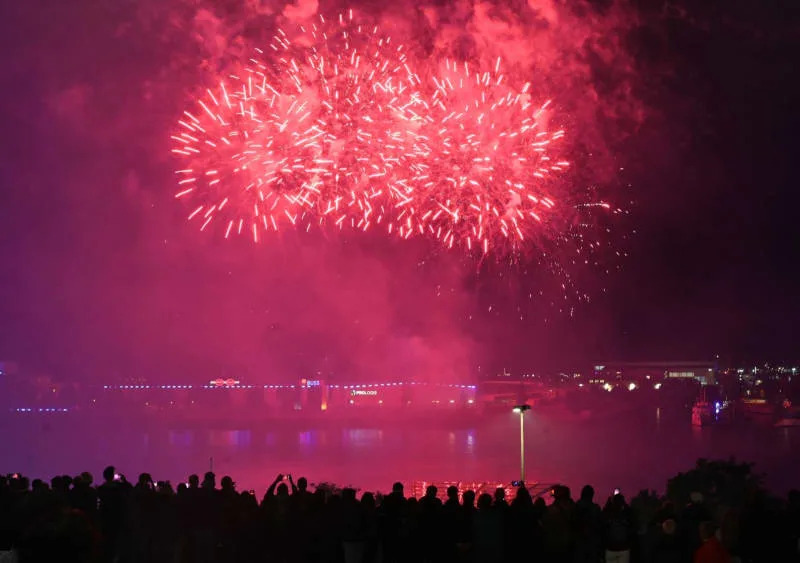
As the end of the year approaches, demand for fireworks in Germany is on the rise, despite increasing criticism from various groups advocating for stricter regulations. According to the largest fireworks manufacturer in the country, WECO, the supply of rockets, firecrackers, and other pyrotechnics available for purchase has increased by approximately 10% compared to last year. Another major player, COMET, has also reported a moderate uptick in its supply levels.
The growth in availability aligns with a broader trend observed in recent years. The German Association of the Pyrotechnics Industry anticipates that overall stock levels will continue to rise across the sector. Fireworks can be legally sold in Germany from December 29 to 31. Unsold items are typically returned to manufacturers, although WECO noted that the rate of returns was lower than expected last year.
WECO, which employs around 260 staff in Eitorf and Kiel, produces only 15% of its fireworks domestically, sourcing the majority from China. The company reported a turnover of over €136 million (approximately $160 million) in the 2023-24 financial year. Other retailers in the market primarily import their entire inventory from Chinese manufacturers.
Conflicting Perspectives on Fireworks
Despite the increasing demand, fireworks remain contentious in Germany. Animal welfare and environmental groups express concerns about the negative impact of fireworks, particularly on wildlife. The loud noises and chaos can frighten animals, potentially leading to depletion of their energy reserves during the winter months. In urban areas like Berlin, New Year’s Eve celebrations are sometimes likened to war zones due to the noise and debris generated by fireworks.
Supporters of a fireworks ban include the GdP police union, which has raised alarms over incidents where police officers have faced attacks involving fireworks. The interior ministers of Germany’s 16 states have yet to reach consensus on imposing a nationwide ban, and a recent court decision overturned a prohibition on private fireworks displays on the North Sea island of Föhr.
Industry Leaders Defend Tradition
Despite the backlash, the fireworks industry maintains that pyrotechnics are an essential part of New Year’s Eve celebrations in Germany. Klaus Gotzen, head of the pyrotechnics sector association, emphasizes a growing trend towards combined fireworks, where a single fuse ignites a box that releases multiple fireworks in a coordinated display lasting several minutes.
Oliver Gerstmeier, WECO’s head of sales, views the rising demand as evidence that a significant portion of the population supports continuing the tradition of fireworks. He stated, “Ringing in the New Year with a colourful firework is a beautiful thing for many people. One should respect that instead of discrediting it with repeated debates on a ban.”
The fireworks industry contends that issues arise from a minority of individuals engaging in dangerous behavior, while the majority of consumers wish to see colorful displays lighting up the sky as they welcome the New Year.