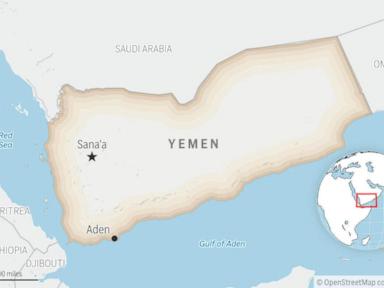
Saudi Arabia has formally called on the Southern Transitional Council (STC) to withdraw its forces from the governorates of Hadramout and Mahra, escalating tensions within a coalition engaged in a protracted conflict against Houthi rebels in Yemen. The announcement from the Saudi Foreign Ministry, made on December 25, 2023, signals a significant shift as the kingdom seeks to exert pressure on the Emirati-backed group, which has been pivotal in the ongoing war since its inception in 2015.
The statement emphasizes the necessity for cooperation among all Yemeni factions and urges restraint to prevent actions that could further destabilize the region. “The kingdom stresses the importance of cooperation among all Yemeni factions and components to exercise restraint and avoid any measures that could destabilize security and stability, which may result in undesirable consequences,” the ministry warned.
The STC has established a strong presence in the areas of Hadramout and Mahra, raising flags associated with South Yemen, which existed as an independent nation until 1990. In response to Saudi Arabia’s call, the ministry outlined ongoing mediation efforts aimed at having the STC return to its previous positions outside the two governorates and transfer control of military camps back to the National Shield Forces, which are also part of the coalition fighting the Houthis.
Demonstrations were reportedly planned for Thursday in Aden to support political entities advocating for South Yemen’s secession. The outcome of these planned events remains uncertain, particularly in light of Saudi Arabia’s recent announcement. Aden has served as a critical stronghold for forces opposing the Houthis and remains central to the political dynamics in Yemen.
This development not only strains the coalition’s internal unity but also places additional pressure on Saudi Arabia’s relationship with the United Arab Emirates. Both countries share close ties and are members of the OPEC oil cartel, but they have increasingly competed for influence and business interests in the region.
The conflict in Yemen began in earnest when the Houthis seized the capital, Sanaa, in September 2014, forcing the internationally recognized government into exile. Despite Tehran’s denials regarding support for the Houthis, evidence of Iranian-manufactured weaponry has emerged on the battlefield and in shipments intercepted en route to Yemen, raising concerns amidst a United Nations arms embargo.
The Saudi-led coalition, equipped with U.S. weaponry and intelligence, intervened in March 2015 to assist Yemen’s exiled government. Since then, the protracted conflict has resulted in over 150,000 deaths, including both fighters and civilians, and has precipitated a dire humanitarian crisis, pushing Yemen to the brink of famine.
In recent months, the Houthis have escalated their attacks on vessels in the Red Sea, disrupting regional shipping. Although recent weeks have seen a slight uptick in maritime traffic, many shipping companies are opting for longer routes around Africa to avoid potential conflict in the Red Sea and Gulf of Aden.
The potential for further chaos in Yemen raises concerns about renewed U.S. involvement. Earlier this year, the U.S. conducted an extensive bombing campaign targeting the Houthis, which was halted just before President Donald Trump’s trip to the Middle East. The Biden administration later executed strikes against Houthi positions, employing advanced military capabilities, including B-2 bombers.
As the situation unfolds, the Houthis have intensified threats against Saudi Arabia and taken numerous workers from U.N. agencies and other aid organizations hostage, alleging without substantiation that they are spies. These claims have been vehemently denied by the U.N. and other involved parties, highlighting the increasingly complex and volatile environment in Yemen.
This latest call from Saudi Arabia marks a pivotal moment in the ongoing struggle for control and influence within Yemen, as the coalition grapples with internal divisions and the urgent need for a unified front against the Houthi insurgency.