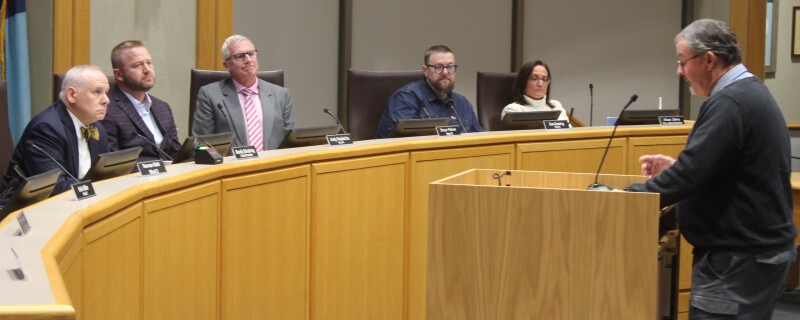
UPDATE: Rochester’s planned sports and recreation complex is advancing after a critical 5-2 vote by the City Council to override Mayor Kim Norton’s vetoes, allowing the initial $65 million phase to proceed. Supporters passionately rallied on Monday, urging the council to move forward with construction expected to commence in the spring.
During the meeting, local voices echoed the importance of this project, with Clark Jones, Head Baseball Coach at Rochester Community and Technical College, emphasizing the economic and community benefits it would provide. “Providing a quality tournament in Rochester, on turf fields during March, for us would be a game changer,” he stated, highlighting the potential savings of $20,000 to $30,000 annually for the local college team.
The facility aims to eliminate the need for teams to travel out of state for early season games, which require turf fields. Supporters argue this complex will not only host local events but also boost tourism, benefiting Rochester’s hospitality industry significantly.
While the council’s decision marks a pivotal moment for the sports complex, Mayor Norton raised concerns that the current plans do not align with what the community expected. “The project before you is not a year-around, community-focused, indoor-outdoor and economically viable sports and recreation facility,” she insisted, urging a reconsideration of the project’s direction.
“If you are going to pivot so much from what was promised publicly to the voters, it should go back to the voters,” said resident Jane Shellum, reflecting the sentiments of several community members.
Despite opposition, several council members and former officials defended the modified plans, asserting that the adjustments to focus on outdoor facilities still fulfill the initial vision of a regional sports complex aimed at economic development. Former council member Ed Hruska explained that the project’s scope had to be recalibrated due to rising costs, contrasting it with a similar project in Iowa.
Supporters also highlighted the complex’s expected role in fostering community engagement through various sports activities, from baseball to lacrosse. Mike Vance, a member of the Rochester Youth Baseball board, noted that the facility would benefit a broad range of sports, serving families and youth alike.
However, skepticism remains among some residents. AJ Colapinto questioned the sustainability of the outdoor-focused model, expressing concern over the lack of indoor facilities and limited year-round usage.
Council President Randy Schubring emphasized the importance of the voters’ decision in 2023, which supports moving ahead with the complex. He stated, “For me, it’s hard to get past the popular vote.” This sentiment underlines the urgency for the city to deliver on its commitments to the community.
As the council prepares to finalize plans for the complex, all eyes are on Rochester as it navigates community expectations while striving to enhance local sports infrastructure. The next steps will be crucial in determining how the facility will serve the needs of its residents and the broader region.