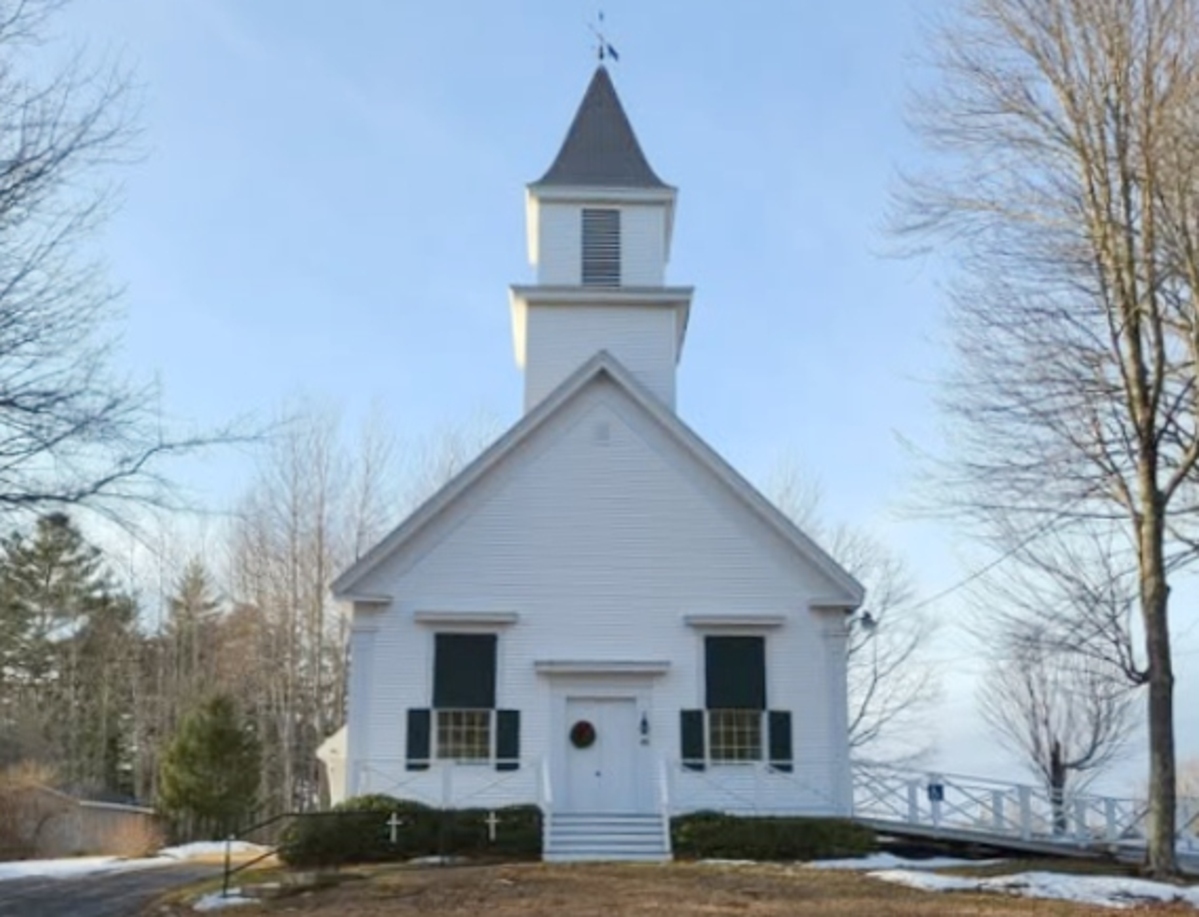
An independent church in Cushing, Maine, is challenging the ownership claims made by the New England Annual Conference of the United Methodist Church, Inc. Broad Cove Church, which has served the community for over 170 years, filed a complaint on December 3, 2023, in Knox County state court. The church aims to prevent the conference from taking control of its property, asserting that this action represents an unwarranted “religious land grab.”
In its legal filings, Broad Cove Church describes itself as a small independent entity that has welcomed members from various Christian denominations since its founding. The church’s attorney, in a motion requesting a preliminary injunction, argues that the United Methodist Church (UMC) is attempting to expand its holdings amid a significant decline in membership due to an internal schism earlier in 2023. The document states, “UMC seeks to expand its shrinking holdings by fiat, declaring that Broad Cove is a Methodist-only community and forcing its non-Methodist members either to submit or find other churches.”
Broad Cove Church emphasizes its independence, noting that it has been incorporated in Maine since 1969 and that its congregation has never voted to affiliate with the UMC. The church is seeking the injunction to prevent potential irreparable harm if the UMC were to assume control over its meetinghouse. The lawsuit highlights the risk that non-Methodist members would be left without a place to worship in Cushing.
While Broad Cove has historically maintained a cooperative relationship with various Methodist denominations, it has held onto its non-denominational status to ensure inclusivity for all Christian believers. The church has often relied on part-time ministers assigned by the UMC, with Broad Cove providing financial assistance to support these arrangements. However, tensions escalated in 2023 when the UMC assigned a minister, identified in court documents as “Mr. Leonard,” whose approach began to emphasize Methodist practices.
The situation intensified by June 2025, during a contentious revision of the church’s bylaws. The lawsuit claims that Leonard insisted on removing the term “non-denominational” from the church’s description, prompting a vote by the congregation to terminate his employment. Following this, the UMC sent a letter asserting that Broad Cove had never owned the church property but rather held it in trust for UMC, a claim that the church argues contradicts its deeds and incorporation papers.
Currently, no hearing has been scheduled regarding Broad Cove’s request for an injunction. The church is represented by attorney Daniel Dalton from the Michigan law firm Dalton and Tomich, alongside Joshua Mitchell from Wilkie Farr & Gallagher, who is providing his services pro bono due to personal connections with the church. The UMC’s legal representation includes attorneys Adam Shub and Michael Melusky from Preti, Flaherty, Beliveau & Pachios in Portland.
This legal battle underscores the complexities surrounding church governance and property rights, particularly in the context of shifting denominational affiliations and the implications for local congregations. Broad Cove Church’s fight to maintain its independent status continues to unfold in the courtroom, as it seeks to protect its long-standing mission and community role in Cushing.