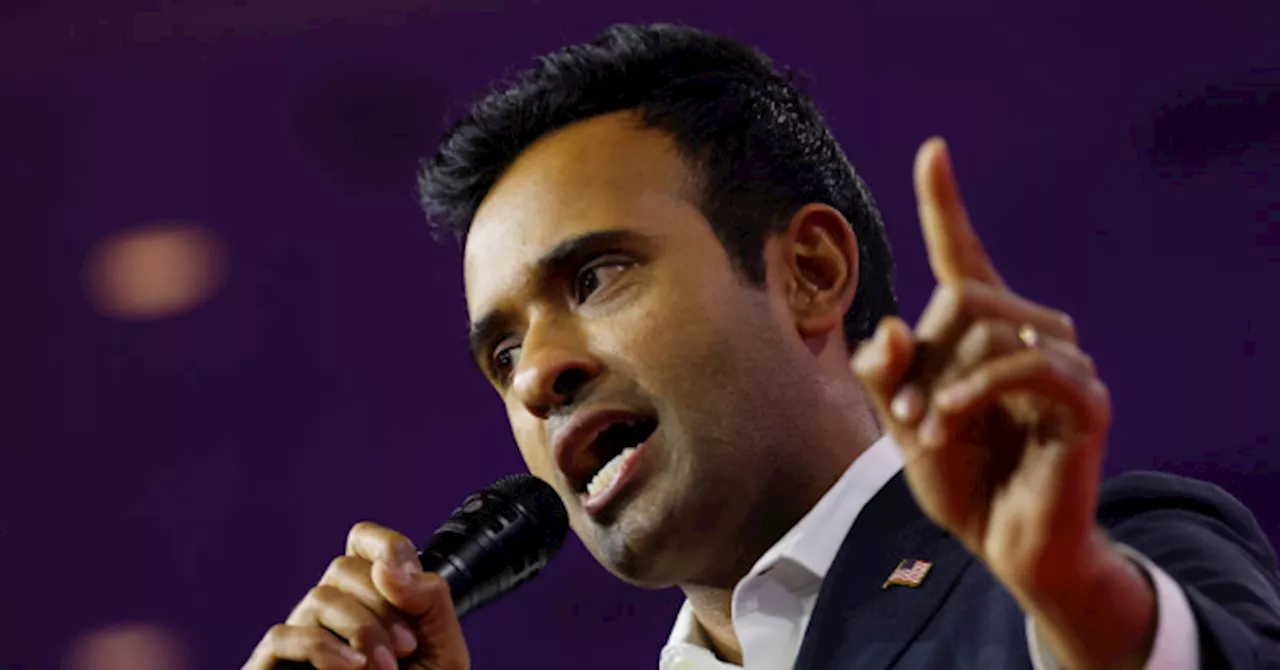
Vivek Ramaswamy made headlines on December 15, 2025, during his speech at Turning Point USA’s AmericaFest 2025 in Phoenix, Arizona, by dismissing the concept of “Heritage Americans.” He argued that the idea, which suggests that American identity is defined by lineage and ancestry, is both misguided and divisive.
During his remarks, Ramaswamy noted that this perspective is gaining traction within certain segments of the online conservative community. “There’s a different vision of American identity that’s emergent in certain corridors of the online right,” he stated, highlighting a belief that one’s status as an American is contingent on their ancestry and duration of habitation in the country.
Ramaswamy specifically criticized the notion that the most authentic Americans are those descended from families present during or before the Revolutionary era. He described this viewpoint as “about as loony as anything the woke left has actually put up,” affirming that, in his opinion, “there is no American who is more American than somebody else.”
His comments reflect a broader ideological battle over national identity within the conservative movement. Ramaswamy framed his view of American identity in binary terms, stating, “It’s not like the left. They believe in this nonbinary stuff. There’s no nonbinary American. It is binary. Either you’re an American or you’re not.” This stark delineation underscores Ramaswamy’s commitment to a singular definition of what it means to be an American, diverging from the more nuanced discussions currently taking place in political discourse.
Ramaswamy’s address at AmericaFest, held on the second day of the conference, is indicative of his rising profile within the political arena as he positions himself as a voice against what he perceives as radical interpretations of American identity. His remarks have sparked discussions among attendees and observers alike, reflecting ongoing tensions in defining American values and identity, particularly in the context of a diverse and changing demographic landscape.
As the conference continues, it remains to be seen how these discussions will shape the future of conservative thought and its direction moving forward. The event has attracted significant attention, with leaders and thinkers from across the political spectrum engaging in debates over the core principles that define the nation. Ramaswamy’s challenge to the “Heritage American” narrative is likely to resonate with many who share his views, while also raising questions among those who advocate for a more inclusive understanding of American identity.